

Goldman's upgrade points to selective exposure, not broad regional buying
Goldman's message is that the current Asia ex-Japan rally is best played selectively. The bank lifted its MXAPJ target to 990 from 920, but made Korea its highest-conviction market in the region. That suggests the clearest upside comes from concentration in AI-linked earnings leaders rather than from owning the region indiscriminately.
Why Korea is the core call
Korea is the center of Goldman's view. The Kospi is already up roughly 77% this year and was recently near 7,498, yet Goldman still raised its 12-month target to 9,000. After such a large move, that kind of upgrade points to earnings durability, not just momentum.
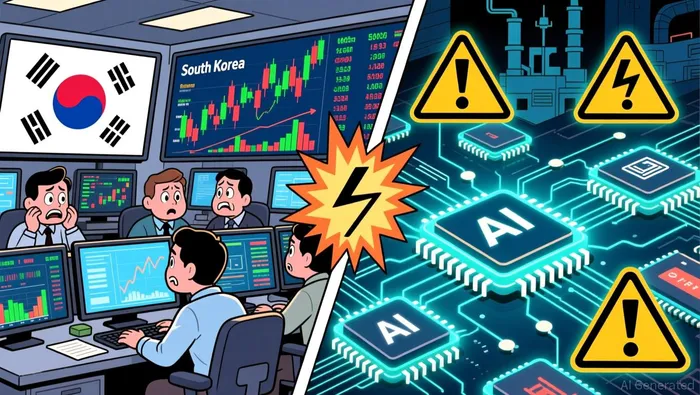
The main support is the memory-chip cycle. Goldman links the rally to AI-driven demand for memory chips and a semiconductor memory supercycle, while also citing cheaper valuations and improving shareholder returns as factors that could support a broader rerating.
The selectivity filter across Asia
Goldman also said tariff imposition and easing monetary policy will be important macro influences for Asian equities. That makes the portfolio split fairly clear: favor markets and names with direct exposure to AI earnings and favorable liquidity, while staying more cautious where tariff sensitivity or energy costs could pressure margins before earnings recover.
Korea's case rests on memory-chip earnings durability
From price strength to earnings power
Goldman sees record shortfalls in memory chips against strong hyperscaler demand and AI compute buildout, which it says is pushing memory prices higher. In memory markets, that kind of pricing leverage can lift margins and net income quickly, which helps explain why Goldman views Korea's rally as more earnings-driven than a simple momentum trade.
That is also why valuation still looks reasonable. Goldman says Korean chip stocks still trade at low single-digit forward price-to-earnings ratios despite the scale of the upcycle. In other words, investors are paying for near-term earnings strength, but not obviously for a fully extended run of above-normal memory profits.
Duration matters in the memory cycle
Goldman's more constructive tone also depends on how long the cycle lasts. Tim Moe said he sees the semiconductor memory cycle lasting three to five years. If that timeframe holds, earnings have more time to catch up to price, which makes the setup more compelling than a short-lived sentiment spike.
The trade-off is concentration risk. A focused position in liquid leaders such as Samsung and SK Hynix can capture the core earnings engine, but it also makes the trade more exposed to a slowdown in memory pricing or hyperscaler spending.
Taiwan fits the overweight for different reasons
Taiwan is not the pure memory story that Korea is, but it still fits Goldman's selective overweight. The bank said the Philippines and Taiwan are the other regional markets "most positively sensitive" to the Fed's easing cycle, with tariff developments and monetary policy seen as key drivers in the third quarter. That gives Taiwan a useful macro angle alongside its AI and semiconductor exposure.
Taiwan's tech concentration cuts both ways
Goldman notes that tech-oriented stocks make up around 80% of Taiwan's index. That means Taiwan is not a broad regional beta trade; it is a concentrated way to own AI-linked semis and the local supply chain. It also means the market remains sensitive to the same themes driving Korea, even if the near-term catalyst mix includes more liquidity support from a softer dollar and Fed easing tied to the Fed rate-cut path.
The main bull-and-bear split
The bullish case is that North Asia's AI-led markets have some insulation from energy shocks and are benefiting from stronger fiscal buffers. The bearish case is that the same concentration can become a liability if tariff or energy shocks spread more broadly. Goldman-linked commentary also warned of a possible rude awakening if an energy supply shock hits harder.
That is why Taiwan is better framed as a selective exposure. It can complement Korea, but mainly through liquid AI and semiconductor leaders rather than as a blanket market bet.
Positioning: concentrate first, then diversify selectively
How the setup compares across Asia
Goldman's broader framing favors North Asia over more energy-vulnerable parts of the region. The bank said North Asian markets have greater buffer stocks and more fiscal room to absorb higher energy costs, while South Asian markets have far fewer buffers. That helps explain why the clearest overweight calls remain Korea and Taiwan, while Malaysia and weaker South Asian markets look less attractive.
What would confirm or challenge the call
- Memory prices keep rising or stay firm
- Record shortfalls in memory chips continue to support earnings expectations
- Tariff imposition and easing monetary policy remain supportive for risk appetite
- The semiconductor memory cycle lasting three to five years proves broadly accurate
The positioning would come under pressure if memory pricing peaks and rolls over sooner than expected, or if an energy or tariff shock spreads beyond regional noise and starts squeezing margins in North Asia's tech-heavy markets.