

Grand Gulf Energy has issued a notice under the Corporations Act for a significant, high-cost tactical move: the proposed grant of 100 million unlisted options. This is not a routine equity offering; it is a cash-burn stopgap. The company is trading at a microscopic scale, with a stock price of A$0.0020 and a market cap of ~A$9.4 million. In this context, the option grant is a desperate attempt to conserve its dwindling cash reserves by offering future upside instead of immediate dilution.
The immediate market context is one of severe financial pressure. The company has not reported revenue from its core oil asset, the Desiree field, in recent months. While it did net AUD$101,000 in revenue last December, that figure is a distant memory in a stock that has been trading in the A$0.0010 to A$0.0045 range over the past year. The option grant, therefore, is a direct response to this revenue drought. It is a bet that the company can generate near-term cash flow from its oil and helium projects before the options are exercised, making the high cost of the grant worthwhile.
The risk here is acute. The grant itself is a high-cost liability, and its success hinges entirely on the company's ability to turn its assets into revenue. Without that, the options will likely expire worthless, and the company will have spent significant administrative and legal costs for no tangible gain. This event sets up a clear, binary catalyst: either Grand Gulf can rapidly monetize its Desiree field or its Red Helium Project, or the option grant will be remembered as a costly distraction.
Financial Reality: A Cash-Strapped Operator
The numbers tell a stark story of a company operating on a knife's edge. Its sole source of recent cash is the Desiree field, which produced 3,428 barrels of oil in December 2025 and generated a net revenue of AUD$101,000. That's a mere A$0.02 per barrel, a figure that underscores the field's suboptimal production. The company is already reviewing work-over and re-completion options at Desiree to enhance revenue, a clear admission that current operations are not sufficient.
This financial pressure is the direct driver behind the option grant. With no meaningful revenue stream, the company is forced to seek alternative capital. The Red Helium Project offers a potential long-term solution, but it remains unmonetized. The project's maiden well found a 1% helium column, which is a technical success, but the company has not yet tapped into the 12.7 bcf recoverable helium resource. The path to revenue here is not immediate.
The bottom line is that Grand Gulf is a pure-play asset play with a severe cash flow problem. Its financial health is defined by a single, low-yielding oil asset and a helium discovery that is still in the assessment phase. The option grant is a tactical response to this reality, a way to stretch its runway while it tries to improve the cash flow from Desiree and advance the Red Helium Project. The cost of that grant is high, but the alternative-a complete capital shortfall-would be terminal.
Valuation & Risk: The High-Stakes Setup
The option grant creates a clear, high-stakes setup. On one side, the potential reward is a revenue inflection from helium. On the other, the risk is catastrophic dilution if the company fails to generate cash. The immediate risk/reward hinges on two near-term catalysts.
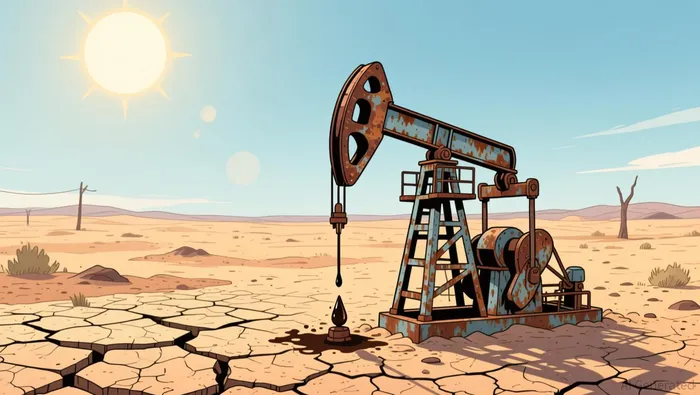
The first is the massive potential dilution from the grant itself. The company is proposing to issue 100 million unlisted options. Given the current market cap of ~A$9.4 million and a stock price of A$0.0020, this represents a staggering increase in shares outstanding. Even if the options are not exercised immediately, they are a high-cost liability that will dilute existing shareholders if they are ever converted. This is the primary near-term risk: the grant could become a permanent drag on equity value if the company cannot generate the cash flow to justify it.
The primary near-term catalyst that could change the thesis is a commercial helium discovery at the Red Helium Project. The project's maiden well found a 1% helium column, which is a technical success. More importantly, the company has a 12.7 bcf recoverable helium resource and is reviewing the project due to high helium prices. The key is monetization. The project has multiple pathways to near-immediate production, including the Jesse-3 new-drill and the Jesse-1A sidetrack, which could leverage an existing gathering system and offtake agreement. A successful commercial discovery here could provide the revenue inflection the company desperately needs, making the option grant a worthwhile gamble.
The key risk, however, is failure on both fronts. The company must generate meaningful revenue from its oil asset, the Desiree field, which currently nets only AUD$101,000 from 3,428 barrels. It is already reviewing work-over options to improve that. If it cannot boost oil cash flow, and if the Red Helium Project does not yield a commercial discovery, the company will continue to burn cash. This would force further dilution to fund operations, making the initial option grant look like a costly distraction. The setup is binary: either helium provides a lifeline, or the company faces a terminal cash shortfall.