

Great American Media will livestream Turning Point USA's Women's Leadership Summit on Pure Flix starting June 5 - accessible to subscribers at $9.99 a month. It's a neat cultural play. But if you're looking at the public company behind this ecosystem, the livestream is the wrong headline. The one that matters: Trump Media & Technology Group (DJT) reported $871,000 in net sales for Q1 2026 alongside a $406 million quarterly loss. Less than one million dollars in revenue against four hundred and six million in losses. That ratio is the story.
The debate is not whether Great American Media's content is a smart fit for Truth+'s audience. It is whether DJT's platform architecture - a political social network trying to become a streaming service - can ever close the gap between distribution and revenue at scale.
The platform transition nobody is pricing in
DJT launched Truth+ streaming in August 2025, pairing it with the Great American Media video catalogue - faith-based films, documentaries, family entertainment. Now they're layering in live event programming like the Turning Point USA summit. The strategy mirrors what every streaming platform attempted during the last transition: build a content layer, attach it to an existing distribution network, and convert community members into subscribers.
I've watched this play before. The transition from Market A - a free social feed - to Market B - a paid entertainment subscription - looks plausible on a deck. In practice, it requires audience overlap, willingness to pay, and a content engine that doesn't just acquire users but retains them. DJT has the first piece. The other two are where the model breaks.
Truth Social has roughly 6 million active users, up from about 607,000 monthly users at the end of 2025. That growth is real - but it's political engagement growth, not entertainment consumption growth. The people scrolling Truth Social for political content are not the same cohort that auto-renews a $9.99 streaming subscription. I don't have DJT's Truth+ subscriber numbers - they don't publish them - and that silence is itself a signal.
$871,000 versus $406 million
Here's what the Q1 2026 earnings tell me about the economics. Net sales of $871,200, up 6% year over year. The net loss: $405.9 million, largely driven by $244 million in unrealized losses on cryptocurrency holdings and infrastructure spending. Even stripping out the crypto swings, the operating burn is enormous relative to revenue.
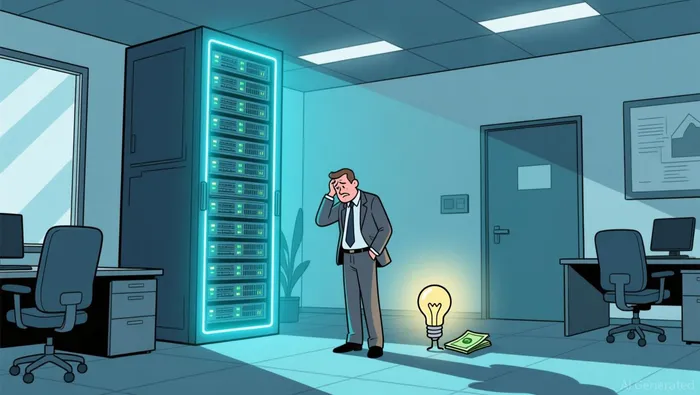
What this means: DJT is building a platform that costs hundreds of millions per quarter to operate, and generates less than a million in sales. The infrastructure spend - server costs, content licensing, platform development - is a massive leading indicator of ambition. But it's also a leading indicator of leverage risk, because the revenue engine hasn't materialized to match it.
The Great American Media deal is a content-acquisition strategy, not a revenue solution. It gives Truth+ something to show prospective subscribers. It doesn't tell me whether those subscribers actually pay.
What I'm watching
I deal with facts, not opinions, so let me list what I can verify:
- Revenue is negligible. $871K in quarterly sales for a company with a market cap of US$3.65 billion. The stock is pricing in a future that hasn't shown up in any financial statement.
- User base is growing but narrowly defined. ~6 million active Truth Social users, concentrated around political engagement. Whether this audience converts to a paid streaming product is unproven.
- Infrastructure costs are surging. DJT is spending like a serious platform builder - server infrastructure, content partnerships, Truth+ development. A near-90% sequential jump in commitments would be a warning signal at any company. At DJT, where revenue is invisible, the supply-side spending is the dominant data point.
- Content strategy is building. The Great American Media catalogue, the Truth+ streaming layer, the Patriot Package bundling - this is a real architecture being assembled. But architecture without monetization is a cost center, not a business.
Where this sits in the broader platform transition
The market is shifting from platform A - political social media as a communication tool - to platform B - integrated entertainment and commerce ecosystems. That's the transition DJT is attempting. It's the same structural move that every legacy media company tried during the streaming wars: take an existing audience and build a paid subscription layer on top.
Most of those attempts failed. Not because the content was bad, but because the audience didn't want to pay, or the switching cost wasn't high enough, or the revenue couldn't cover the infrastructure. DJT faces all three risks simultaneously.
The capital allocation question
Here's what separates a thesis from a position: I could believe in DJT's long-term vision - a self-sustaining media ecosystem built on its political community - and still conclude that the current return profile doesn't justify allocation.
The return curve on DJT is almost entirely back-half weighted. The revenue is nowhere near the infrastructure spend. The subscriber conversion from Truth Social to Truth+ is unproven. The Great American Media livestream is a nice data point about content partnerships - but it doesn't change the fundamental math.
Demand for the content is real. The Turning Point USA summit will draw viewers. Pure Flix subscribers exist and pay. But the question for DJT investors isn't whether the programming is compelling. It is whether the platform architecture can generate enough revenue to justify the burn - and right now, $871,000 per quarter says it can't.
I'd watch for two signals before taking this seriously as an investment: first, actual Truth+ subscriber numbers that show meaningful conversion from the social base, and second, a quarter where net sales approach even $10 million. Until then, the livestream content deals are marketing, not monetization - and the gap between the two is where this position lives on the sidelines.