

GSK is asking the market to price a bigger oncology rebuild before the drugs are approved. The company said on June 9 it agreed to buy Nuvalent for $10.6 billion in equity value, offering $124 a share in cash for a biotech whose two lead lung cancer medicines are already under U.S. Food and Drug Administration review.
Nuvalent shareholders quickly priced the cash bid, while GSK took on the financing and approval burden. Reuters reported Nuvalent was up nearly 40% in noon trading after the announcement and that GSK closed marginally lower in London, a split reaction that separates target certainty from acquirer execution risk.
GSK is buying a faster lung cancer calendar
GSK will start a tender offer at $124 a share within 10 business days, valuing Nuvalent at about $10.6 billion in aggregate equity value and about $9.4 billion net of cash expected to be acquired. The offer is a 40% premium to Nuvalent's prior close and a 26% premium to the stock's 30-day volume-weighted average price, so the immediate market question is less about whether GSK paid up and more about what the premium buys.
Two medicines carry most of the near-term rationale. Zidesamtinib and neladalkib are targeted lung cancer candidates with FDA Breakthrough Therapy and Orphan Drug Designations, and target action dates of September 18, 2026, and November 27, 2026. If approved, GSK expects both launches to begin in 2026.
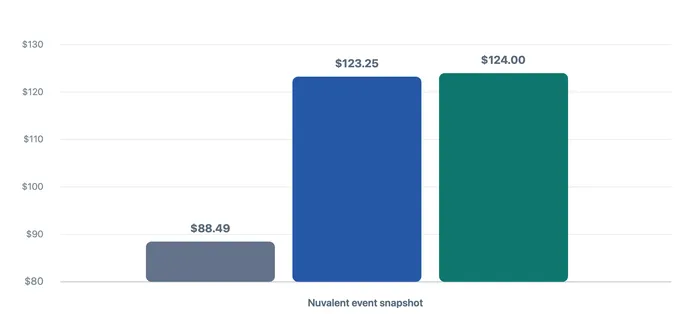
Source note. Provider links are GSK official release and Investor's Business Daily.
Financial timing puts dilution before the payoff
Financial timing explains why the target rallied and the acquirer did not. GSK said the purchase does not change 2026 guidance, should add revenue and core operating profit from 2027, and is expected to become core EPS accretive in 2029. Before that, the company expects low single-digit core EPS dilutionfrom 2026 through 2028.
Debt and cash are the bridge. GSK said it will fund the acquisition with new debt and cash on hand, expects no impact on its credit rating, and expects the transaction to close in the third quarter of 2026. That puts the first checkpoint at deal close, before a future earnings model can carry the story.
Market reaction split price certainty from execution risk
Reuters described the transaction as GSK's largest deal in more than a decade and a strategic shift under new chief executive Luke Miels. The same report noted that analysts see the assets as a possible offset to a coming HIV patent cliff if approvals come on time, while also noting GSK's oncology sales were just under 2 billion pounds last year, about 6% of group sales.
For Nuvalent holders, the spread left by a stock near $123.25 against a $124 cash offer is narrow. Investor's Business Daily reported Nuvalent jumped 39.3% to a record high of $123.25 after the all-cash bid, which means remaining upside is now mainly a function of tender completion and closing risk.
Tender acceptance and FDA decisions become the evidence points
Closing the tender is the first gate. The merger requires a majority of outstanding Nuvalent shares to be tendered, the Hart-Scott-Rodino waiting period to expire or be terminated, and customary conditions to be satisfied. GSK said the tender will be followed by a second-step merger if those conditions are met.
September 18 and November 27 now define the market read. If decisions arrive on time and labels support quick launches, GSK's 2027 contribution target gains weight. If either date slips, labels narrow or launch uptake is slower, the premium stays a debt-funded pipeline wager through the dilution window.