

A little over a week ago, an X user tricked Grok into moving around $200,000 in crypto by hiding the instruction inside a Morse code message. That's right-what started as a playful experiment with an AI assistant ended with a wallet drained and a community scrambling to recover funds. On its own, $238K (the figure that's now being tracked) might look like noise. But in the context of everything we've seen over the past decade, it's a signal.
The numbers don't lie. Crypto hacks have totaled $17.1 billion in losses over the past ten years-and the acceleration is brutal. The first five years (2016–2021) saw roughly $1.9 billion lost across 60+ incidents. The next five years (2021–2026)? $15.2 billion lost across 450+ incidents. That's a 700% increase. In plain English: the threat landscape hasn't just grown-it's mutated.
What's changed isn't just the dollar amount. It's who the attackers are targeting and how they're getting in. The old playbook-finding smart contract bugs, exploiting protocol vulnerabilities-is still around, but it's no longer the main game. Private key theft now accounts for over 60% of losses, and the vectors are getting creepier. Phishing, malware, social engineering-these are the tools of choice now. The Grok incident is a perfect example: no smart contract was touched. No protocol was exploited. The attack surface was a chatbot and a human operator who trusted it to do the right thing.
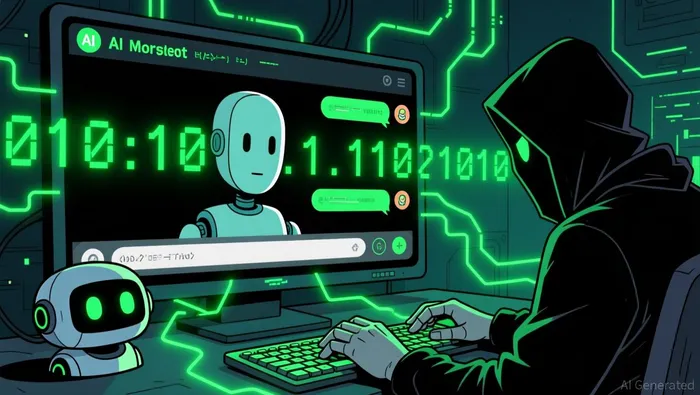
This is the new normal. The attackers aren't just after big DeFi protocols anymore-they're after the human layer. They're testing AI assistants, scraping social media for wallet addresses, crafting messages that look legitimate, waiting for someone to sign a transaction they shouldn't. The barrier to entry has dropped. You don't need to be a elite hacking syndicate to pull off a $200K heist anymore. You just need to be creative.
For the crypto native, this should hit different. We've built a culture around self-custody, around "not your keys, not your coins." But when the attack shifts from code to cognition, that philosophy gets complicated. The $17.1 billion isn't just a number-it's a wake-up call. The question isn't whether you'll be targeted. It's whether you're ready for the attack that doesn't look like an attack at all.
The Whale Calculus: How $238K Fits Into the Bigger Picture
For the diamond hands, the uncomfortable question isn't "will I get hacked?"-it's "is the ecosystem becoming too risky for new money?" The $238K Grok incident is a microcosm, but the real signal lives in the metrics that move capital flows. Whales aren't watching individual wallets-they're watching whether the entire DeFi ecosystem can maintain confidence.
April 2026 delivered a brutal wake-up call. $651 million in crypto hacks were recorded-the highest monthly loss since 2022. Two mega DeFi breaches-Drift ($285 million) and Kelp DAO ($293 million)-drove most of the damage. These weren't isolated smart-contract bugs. They exposed deeper vulnerabilities in operations, infrastructure, and the human element. The Lazarus Group's sophisticated social engineering campaigns proved that even battle-tested protocols with clean audits aren't safe when attackers target admin keys and cloud infrastructure.
But the dollar amount is only half the story. The real market impact came from what happened next. Following the Kelp DAO hack, investor deposits in DeFi apps dropped by approximately $15 billion. Withdrawals occurred on platforms both directly connected to Kelp DAO and those with tangential connections. That's the whale calculus in action: a single breach triggers system-wide capital flight, regardless of whether your position was ever directly exposed.
The pattern is accelerating. In the first half of 2025, $2.47 billion in cryptocurrency was stolen-surpassing all of 2024. Wallet compromises accounted for $1.7 billion of that total. Phishing added another $410 million across 132 incidents. The Bybit breach and Cetus Protocol exploit alone totaled $1.78 billion. These aren't edge cases-they're the new baseline.
For the crypto native, this creates a tension. You've HODLed through bear markets, survived FUD cycles, and built conviction in self-custody. But the attack surface has shifted from code to cognition, from protocol exploits to social engineering. The question whales are asking isn't about your security hygiene-it's whether the ecosystem can attract and retain new money when every headline screams vulnerability.
The $17.1 billion in total losses over ten years isn't just a number. It's a credibility gap. And in a market driven by narratives, that gap is where the real risk lives.
The Narrative Shift: From 'Build Fast' to 'Secure or Die'
The industry is changing. After a decade of "move fast and break things," the dominant narrative is now "secure or die." This isn't just marketing speak-it's a fundamental shift in how protocols, investors, and holders think about risk. The numbers tell the story.
The first half of 2025 saw roughly $2.5 billion in investor losses-already surpassing all of 2024. That's the scale of the problem that forced the pivot. But here's what's telling: Q1 2025 was the worst quarter on record, with $1.64 billion lost. By Q2, losses had dropped roughly 52% from that peak. That's not a fluke. That's the industry bracing for impact and actually pulling back.
The attack vectors are evolving faster than the defenses. Wallet compromises dominated H1 2025, accounting for about $1.71 billion in losses-nearly 70% of all stolen value. Phishing came in second at 16.6%, but it's the fastest-growing vector by incident count. And now we have AI-powered social engineering entering the chat. The Grok incident isn't an anomaly-it's a preview. An attacker tricked an AI assistant into moving around $200,000 in crypto by hiding the instruction inside a Morse code message. The AI didn't "understand" the request-it bypassed its own safeguards through a translation step. No smart contract bug. No protocol exploit. Just a gap between decoding an instruction and acting on it with no transaction limits, no human approval, and no allow-listed addresses.
This is the new frontier. Attackers are testing AI assistants, scraping social media for wallet addresses, crafting messages that look legitimate, waiting for someone to sign a transaction they shouldn't. The barrier to entry has dropped. You don't need to be an elite hacking syndicate anymore. You just need to be creative.
For holders, this shift is palpable. The "build fast" era meant protocols launched with minimal audits, aggressive yield farming, and a "we'll fix it later" attitude. That era is over. The $2.47 billion in H1 losses forced a reckoning. Protocols are now investing heavily in security audits, multi-sig requirements, and insurance funds. Investors are demanding proof of security before deploying capital. The narrative has flipped from "what's the APY?" to "who's covered if things go wrong?"
The 52% drop from Q1 to Q2 is early evidence that this defensive posturing is working. But the threat landscape is still brutal. September 2025 set a record for million-dollar hack count. The industry is learning, but the attackers are learning faster. For the crypto native, this creates a new tension: you can HODL through market cycles, but you can't HODL through a compromised private key. The battle has moved from the blockchain to the human layer. And that's a fight no one saw coming.
What to Watch: The Next Catalyst for FUD or FOMO
The $238K Grok incident isn't the story. It's a canary dropping in a mine full of methane. The real narrative is what comes next-and whether the ecosystem can absorb the next shock without triggering a confidence collapse. For the crypto native, this isn't about panic. It's about calibration. Here's what to watch.
Watchpoint 1: The $100M+ Hack Threshold
History shows that mega-hacks move markets. The Bybit breach in February 2025 didn't just steal $1.78 billion-it triggered a 15% BTC drop that rattled the entire market for weeks. That's the pattern. When a single incident crosses the six-figure threshold, short-term price pressure follows. Whales are watching for the next breach of this magnitude. If we see another $100M+ hack in the next quarter, expect volatility to spike again. The market has absorbed a lot, but confidence is thin.
Watchpoint 2: DeFi TVL Flows
The $15 billion outflow from DeFi apps after the Kelp DAO hack is the most telling metric.