

Rating: Upgrade. Hansa Biopharma (HNSA.ST) trades at roughly half of analyst consensus while stacking three catalysts within 90 days. The Q1 revenue miss is real - but the setup underneath is arguably the opposite of what the price suggests.
What more does the market need before it stops treating Hansa Biopharma like a clinical-stage biotech with no visibility? The ConfIdeS Phase 3 kidney transplant data has already met its primary endpoint, the BLA is filed with the FDA, the PDUFA decision date is set, and now the data has been selected as a late-breaking oral abstract at the American Transplant Congress - the premier transplant conference - happening June 20-24 in Boston. Late-breaking abstracts are the highest honor ATC gives. The data is so new and so compelling it didn't make the regular review cycle. Investors would be hard pressed to find a more credible pre-PDUFA signal.
Yet Hansa's stock is trading around SEK 33-34 - roughly 55% below the analyst consensus average price target of SEK 76.
The Q1 revenue problem the market won't forget
I won't pretend the near-term financials are clean. Q1 2026 revenue came in at SEK 34.6 million, a 48% decrease from Q1 2025. The company burned through approximately SEK 157 million in operating cash flow for the quarter. Revenue volatility in organ allocation is a real headwind - it's lumpy by nature, and you can't schedule kidney transplants on a quarterly earnings calendar. Q1 was simply a soft quarter in that cycle.
But here's what the market is missing. On May 19, Hansa announced a €115 million licensing agreement with SERB Pharmaceuticals for IDEFIRIX in Europe and MENA · Winstedt L, et al. Hansa sold the European and MENA commercialization rights to IDEFIRIX (imlifidase, already commercially available in Europe under conditional approval) for an upfront payment of €110 million and a €5 million payment upon acceptance of the filing for full approval of IDEFIRIX by... That €110 million upfront alone covers more than seven quarters of cash burn.
Analyst revenue forecasts for 2026 have been revised from SEK 246.5 million to SEK 670.7 million - a 172% increase driven almost entirely by the SERB upfront. The cash and short-term investment position stands at SEK 677 million in cash and cash equivalents, and the €110 million influx will nearly double that. The burn problem isn't being ignored; it's being solved.
The catalyst calendar is compressing, not stretching
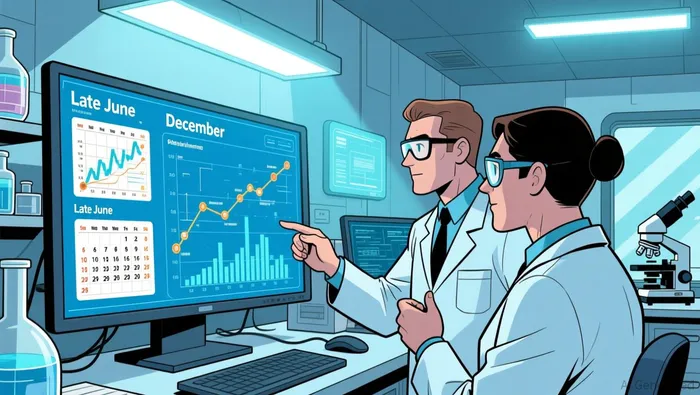
This is the part that makes the risk/reward tilt. Three catalysts land inside a ~90-day window:
ATC 2026 (June 20-24): Late-breaking oral presentation of the ConfIdeS Phase 3 data. The trial met its primary endpoint - kidney graft function at 12 months, measured by mean eGFR - in September 2025. This oral presentation will walk transplant specialists through the full dataset, not just the headline. It's peer credibility before the regulators speak.
EU full-approval filing: That €5 million SERB milestone triggers when the EU filing for full marketing authorization is accepted. Conditional approval already exists; the full approval filing is a procedural step, not a binary cliff.
PDUFA decision (December 19, 2026): The FDA's action date for the imlifidase BLA. PDUFA Action Date... Set for December 19, 2026. This is the single most important event in Hansa's timeline. Approval would make imlifidase the first treatment for desensitization in highly sensitized kidney transplant patients in the US - a population with essentially no treatment options today.
The market is pricing this stock as if the path to December is a long, uncertain slog. It's not. The data is done. The application is filed. The presentation slot is confirmed. The cash position is being fortified. Each catalyst de-risks the next.
What the bears keep saying, and why it's easier said than done
The bear case has two legs. First, revenue volatility will continue to suppress earnings. Fair enough - but the SERB deal neutralizes that as a valuation driver. The €110 million upfront is not contingent on future IDEFIRIX European sales; Hansa has already banked it. Going forward, the company's thesis rests almost entirely on the US, which is where the largest kidney transplant market sits.
Second, the PDUFA could disappoint - the FDA could request additional data or delay. That's a genuine binary risk. But it's a risk that exists at every biotech near a decision date. The question isn't whether risk exists; it's whether the reward justifies sitting through it. At SEK 33, with a consensus target of SEK 76 and a high estimate of SEK 108, the market is pricing in a rejection scenario that hasn't been warranted by any new negative evidence.
The valuation disconnect
Hansa has 101.76 million shares outstanding, putting the market cap at roughly SEK 3.4 billion (about $290 million). The company holds SEK 677 million in cash with another ~SEK 1.2 billion incoming from the SERB upfront. That leaves a net equity valuation closer to SEK 1.6-1.8 billion. For a company with a potential first-to-market US regulatory pathway in a niche with no current treatment standard, that's arguably dirt cheap - especially with the revenue revision nearly tripling the 2026 outlook.
The stock has underperformed because it's a small-cap Swedish biotech with no US exchange listing, burning cash quarterly, with revenue that looks messy in any given quarter. But the fundamentals that matter - data quality, regulatory pathway, cash runway, and the binary catalyst - are intact and accelerating.
What to do
I'm upgrading Hansa to a Buy. The setup isn't about chasing momentum. It's about a catalyst-dense, asymmetric risk/reward window. If the PDUFA lands in December and the data holds up, the re-rating could be swift. If the FDA delays, the €110 million SERB cash cushion gives Hansa the runway to absorb it without a dilutive financing.
The ATC presentation in late June is the first live data readout investors will see. Use it as a signal check: if the oral presentation is well-received by the transplant community, the bear case loses its footing further. If there's meaningful pushback on the eGFR endpoints or graft survival, the thesis weakens and you reassess.
I would reassess if the EU full-approval filing encounters unexpected regulatory hurdles or if the Q2 revenue miss compounds beyond a single-quarter volatility pattern. But right now, the market is pricing a revenue blip while ignoring a catalyst avalanche. Don't let this buying opportunity go to waste.