

Trump declared the U.S.-Iran deal complete on Sunday. The naval blockade ends. The Strait of Hormuz is reopening. Brent crude dropped 4% to around $84 a barrel in the first session, and WTI fell nearly as hard. Oil ETFs USO and UCO sold off with it.
Everyone is pricing a supply flood. Bloomberg warned about 10,000 wells restarting as soon as Hormuz reopens. The market is selling oil the way it sells a name after a short report - in advance of the worst case.
The headlines say flood. The infrastructure says otherwise.
The old story
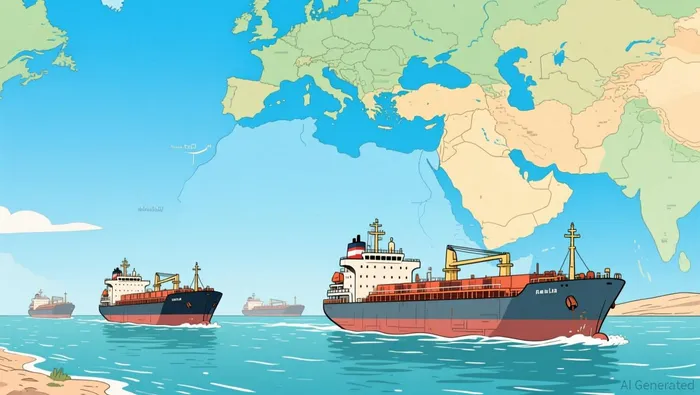
For four months, oil has been propped up by a single fear: the Strait of Hormuz, the chokepoint through which roughly a fifth of the world's oil passes, was blocked by Iran since February. Goldman Sachs raised its Q4 2026 Brent forecast to $90. J.P. Morgan pushed its full-year average to $96. The war risk premium baked into every barrel was real.
Now that premium has evaporated. The deal ends the blockade, and trading resumes through the strait. That alone should bring prices down.
The one number that matters
Everyone is focused on Hormuz. Nobody is looking at what Iran's own production actually collapsed to.
Iran's crude output in April was roughly 2.85 million barrels per day, down from a pre-war average closer to 3.4 million. Then it fell further - May production dropped to about 2.33 million barrels per day. Exports in May fell to below 300,000 barrels per day, the lowest level in at least six years.
That's the bridge. Iran can't physically ramp back to pre-war levels in weeks or even months. Its wells have been damaged, its export infrastructure has been degraded, and its storage situation is strained. The theoretical supply surge from reopening Hormuz won't come from Iran itself coming back online at full throttle. It'll come from the broader Gulf region - UAE, Saudi, Kuwait - shipping freely again without the premium on risk.
That's very different from a supply deluge.
The surplus was already there
Here's what the market keeps forgetting: the structural oil surplus didn't appear because of the Iran deal. It was always there, hidden beneath the Hormuz fear premium.
The IEA forecast global oil demand growth of just 0.2 million barrels per day in 2026 - nearly zero growth in a world that consumes roughly 105 million barrels daily. Supply is set to grow faster, creating a surplus the IEA itself flagged back in October of nearly 4 million barrels per day at its peak estimate. Even conservative forecasts put the 2026 surplus at 2 million barrels per day or more.
The war risk premium masked a market that was already soft underneath. Strip away the premium - which is exactly what Trump's announcement did - and you see the underlying imbalance return to center stage.
What $80 actually means
Commerzbank was already expecting Brent to average $85 by year-end, down from its crisis-era forecasts. That's close to the $80 the competitor article's analyst is targeting. The math isn't complex: remove a $10-15 war risk premium from current prices, factor in a stagnant demand outlook, and the surplus does the rest.
This isn't a supply-side collapse story. It's a normalization. The market just needs to forget about Hormuz and remember about fundamentals - sluggish demand growth, rising non-OPEC supply from the Americas, and a surplus that the IEA and every major bank already saw coming.
Where the risk sits
I can be wrong again. The deal could fracture. Hormuz could face fresh disruption. That's always a possibility in the Gulf.
But if the deal holds - and the signature ceremony is scheduled - the old story is over. The proof point is Iran's own production data: a country that can't even restart its own wells can't single-handedly flood the market. The surplus does the work.
The tripwire
Brent back above $95 with no new geopolitical escalation would mean the market is repricing in a demand recovery that the data doesn't support yet. That would break the surplus thesis and signal something stronger on the consumption side than the IEA currently sees.
Until then, the path is clear. The war premium is gone. The fundamentals underneath are soft. Simple arithmetic from here doesn't require a DCF or a geopolitical crystal ball.