

- Hyperliquid activates the AQAv2 framework to manage USDC treasury yields, channeling 90% of returns into buybacks.
- The integration enables nearly $200 million in annual protocol revenue, directly linking platform activity to native token demand and circulating supply reduction .
- Nansen embeds native Hyperliquid perpetual futures trading into its analytics dashboard, bridging the operational gap.
- Founder Arthur Hayes warns that the fee-driven buyback model may face increasing competitive pressure as traditional financial entities expand.
The decentralized perpetual futures exchange Hyperliquid has fundamentally restructured its treasury operations by partnering with Coinbase to manage its substantial stablecoin reserves . This strategic alignment activates the AQAv2 framework, allowing the platform to institutionalize its yield generation while maintaining the trustless nature of its underlying blockchain infrastructure . The move signals a broader trend of decentralized protocols seeking robust, compliant mechanisms to manage treasury assets without sacrificing operational autonomy .
By deploying this framework, Hyperliquid can now systematically leverage its platform holdings to benefit the broader ecosystem . The protocol intends to direct roughly 90% of the yields generated from its USDC reserves toward active buybacks and subsequent burns of its native HYPE token . This mechanism is projected to generate between $135 million and $200 million in annual protocol revenue, translating to daily buyback volumes ranging from $370,000 to $550,000 . Such a structured approach to revenue distribution aims to create a sustainable feedback loop that supports token valuation while reducing the overall circulating supply .
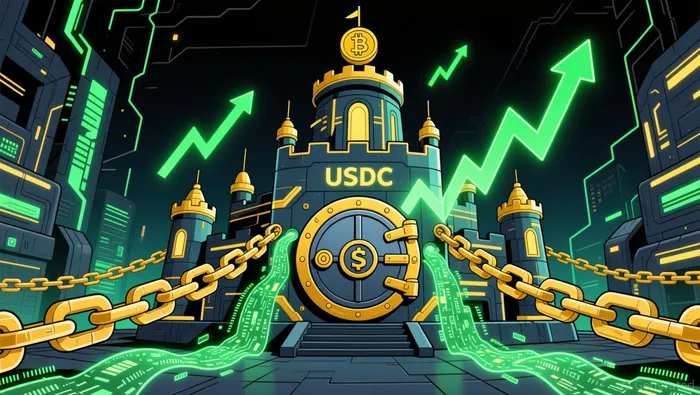
The activation of this treasury framework also involves significant staking commitments from major industry players . Coinbase has staked at least 500,000 HYPE tokens to activate the AQAv2 framework, demonstrating institutional confidence in the platform's long-term economic model . Additionally, the agreement includes provisions for Native Markets, which granted Coinbase the right to purchase USDH brand assets . This transition aims to consolidate liquidity by making USDC the primary quote asset for canonical markets, addressing fragmentation that has previously hindered the trading experience .
How Does Hyperliquid Combine Institutional Yield With Decentralized Execution?
Hyperliquid distinguishes itself in the decentralized finance landscape by operating on a custom Layer 1 blockchain optimized for high-frequency trading. This infrastructure allows the platform to process over 200,000 transactions per second with block times as short as 0.2 seconds. The combination of sub-second execution and fully on-chain order book transparency provides traders with the speed of centralized exchanges while retaining self-custody and privacy .
The platform's economic model relies on competitive fee structures to drive volume and, consequently, treasury yields . Spot trading fees are set at 0.04% for makers and 0.07% for takers, while perpetual futures fees are 0.015% and 0.045% respectively . These rates are significantly lower than many competing decentralized exchanges, positioning Hyperliquid as a cost-effective alternative for high-volume traders . The integration of TradFi assets, including silver and oil, has further expanded the platform's appeal, contributing to substantial trading volumes .
The recent partnership with Nansen further enhances the platform's utility by integrating native perpetual futures trading directly into its analytics dashboard . Users can now execute leveraged positions based on on-chain signals without leaving the research environment . This unification reduces operational friction for both retail and institutional investors, allowing for immediate action on whale accumulation signals and flow data . However, this integration also introduces counterparty risks, as technical issues on the Hyperliquid infrastructure could directly impact the trading experience within Nansen .
What Risks Could Impact The Sustainability Of The HYPE Buyback Model?
Despite the robust economic incentives, Hyperliquid's founder has highlighted potential vulnerabilities in the platform's current model . Arthur Hayes warns that the fee-driven buyback mechanism may face increasing pressure as traditional financial exchanges and major crypto venues expand their offerings in the perpetual futures market . This expansion by established players introduces heightened competition that could impact Hyperliquid's ability to sustain its current fee structure and buyback dynamics .
The entry of traditional financial entities into the decentralized space could erode market share, particularly if these competitors offer superior capitalization or regulatory clarity . Hyperliquid must continuously innovate to maintain its edge in speed and transparency against larger, more capitalized rivals . The platform's reliance on trading fees for its buyback model means that any significant decline in volume could directly impact the economic viability of the HYPE token .
Furthermore, the integration of leveraged trading into analytics platforms like Nansen blurs the line between neutral data provision and trading venue operations . This convergence raises potential conflicts of interest if analytics favor assets available through the integrated trading interface . Users must remain aware of these structural risks when participating in the ecosystem, as the platform's success is closely tied to its ability to navigate an increasingly competitive landscape .
The evolution of Hyperliquid's treasury and operational strategies reflects the broader maturation of the decentralized finance sector . By aligning with institutional partners and optimizing its economic model, the platform aims to secure a lasting position in the high-performance trading niche . However, the ongoing competition from both decentralized innovators and traditional financial institutions will test the resilience of its unique approach to perpetual futures trading .