

IBM beat Q1 2026 earnings estimates with revenue reaching $15.92 billion and adjusted profit of $1.91 per share, surpassing Wall Street expectations. The company's software and infrastructure segments posted double-digit growth, fueled by strong demand for hybrid cloud solutions and the z17 mainframe. Analysts are now evaluating whether the accelerated acquisition of Confluent will lead to an upward revision of the full-year revenue guidance. Despite a 14% year-to-date stock decline, the core business remains resilient with expanding margins and a 31st consecutive annual dividend increase.
Wall Street's skepticism regarding artificial intelligence replacing legacy systems is being tested by IBM's actual performance, which shows that AI is instead driving consumption on mainframes. The tech giant reported a 9% year-over-year revenue increase in the first quarter of 2026, a figure that defies the broader narrative of slowing enterprise IT spending. This resilience is largely attributed to a strategic pivot where AI tools are used to modernize and accelerate workloads on existing infrastructure rather than replace it. As the market digests these results, the focus shifts to whether the early integration of Confluent can sustain this momentum through the rest of the fiscal year.
Did IBM Beat Q1 2026 Earnings Expectations And What Drove The Growth?
IBM delivered a robust first quarter that silenced many of the bearish whispers circulating since the start of the year. The company reported revenue of $15.92 billion, a significant increase from the $14.54 billion recorded in the same period a year prior. This growth rate of 9% was accompanied by an adjusted earnings per share of $1.91, which comfortably beat the consensus estimate of $1.81. The financial results were not just a statistical win; they represented a fundamental validation of IBM's hybrid cloud and AI strategy. The company's ability to generate $2.2 billion in free cash flow, an increase of roughly $300 million year-over-year, further underscores the health of its balance sheet and its operational efficiency .
The engine behind this performance was a broad-based expansion across key business units. The software segment, which includes the high-margin Red Hat business, grew by 11% to reach $7.05 billion. This growth was particularly impressive given the challenging macroeconomic environment. Within software, the hybrid cloud segment saw a 13% surge, while data revenue jumped 19%, indicating that enterprises are actively investing in the data infrastructure required to train and deploy AI models. The infrastructure segment also performed exceptionally well, rising 15% to $3.33 billion. This segment's strength was heavily anchored by the z17 mainframe, which saw revenue surge by 51% as major financial institutions and retailers upgraded to the latest generation of servers to handle increased transaction volumes and AI workloads .
How Are The Confluent Acquisition And Z17 Mainframe Sales Reshaping IBM's Growth Trajectory?
A critical factor in IBM's recent success is the strategic integration of its $11 billion acquisition of Confluent, which closed in March 2026, roughly three months ahead of initial projections. This early closure has allowed IBM to begin realizing synergies sooner than anticipated, specifically in the realm of real-time data streaming and AI agent integration. The acquisition positions IBM to offer a comprehensive smart data platform that enables clients to manage the massive data flows required for generative AI applications across hybrid cloud environments. Analysts at Morgan Stanley noted that the early close of the deal, combined with the strong performance of Red Hat, supports a projection of 9.9% growth in software revenue for the quarter, outpacing the broader consensus .
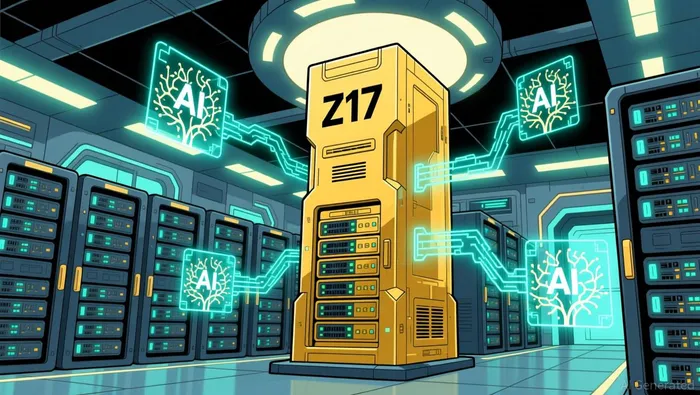
Simultaneously, the z17 mainframe sales cycle has played a pivotal role in stabilizing and accelerating hardware revenue. Contrary to fears that AI would render mainframes obsolete, IBM has found that generative AI is acting as an accelerator for mainframe consumption. Clients are using AI coding tools to modernize legacy COBOL systems, which in turn drives higher usage and demand for the secure, high-performance z17 architecture. This trend has pulled forward hardware revenue from the second half of the year into the first quarter, mitigating the impact of rising component costs. The z17 selling cycle is currently supporting transaction processing business growth of approximately 1.4% year-over-year, with 14% of mainframe users having already upgraded to the new platform .
This dual dynamic of software expansion via Confluent and hardware resilience via z17 creates a unique competitive moat. While competitors in the SaaS sector face headwinds from AI-driven efficiency gains that reduce the need for human labor, IBM's consumption-based pricing model and infrastructure-heavy offerings provide a structural advantage. The company is effectively selling the shovels and the gold mines simultaneously, offering the data plumbing required for AI while maintaining the secure backbone where that data lives. This strategy has allowed IBM to navigate the transition to an AI-centric economy without sacrificing the cash flow stability that defines its legacy business .
What Should Investors Expect From IBM's Full Year 2026 Guidance And Dividend?
Looking ahead, IBM has maintained its full-year 2026 guidance, projecting constant currency revenue growth of more than 5% and an increase in free cash flow of approximately $1 billion compared to the prior year. This guidance assumes a favorable currency environment, with fluctuations expected to provide a tailwind of 0.5% to 1.0% for the year. The company's confidence in these numbers is bolstered by the early integration of Confluent and the sustained demand for its AI and hybrid cloud solutions. Management has indicated that the acquisition, while impacting the cash balance in the short term, will contribute significantly to long-term revenue growth and margin expansion .
Shareholder returns remain a priority, with IBM's board declaring a quarterly dividend increase to $1.69 per share. This marks the 31st consecutive year of dividend growth, reinforcing IBM's status as a reliable income-generating stock. The dividend yield, currently around 2.6%, combined with the company's strong free cash flow generation, provides a solid floor for the stock price even if market sentiment fluctuates. However, investors should remain attentive to the pace of organic growth versus acquisition-driven revenue. While the Confluent deal is a major tailwind, the broader market environment continues to present challenges, particularly in the consulting segment where growth is expected to normalize .
The stock has faced headwinds recently, down approximately 14% year-to-date as of late April 2026. This decline has been driven by broader sector multiple compression and lingering fears about AI automation, rather than a fundamental deterioration in IBM's business. Analysts remain largely bullish, with a consensus of 16 Buy ratings against 4 Holds and 1 Sell. The average price target sits around $315.80, implying significant upside from current levels. The key catalyst for the stock to recover will be IBM's ability to demonstrate that the Confluent integration and z17 momentum can sustain double-digit growth rates in the software and infrastructure segments throughout the rest of the year .
As the market digests the Q1 results, the narrative is shifting from AI as a threat to AI as a driver of infrastructure demand. IBM's ability to leverage its legacy strengths while integrating modern data platforms positions it uniquely for the next phase of enterprise technology adoption. Investors watching the stock will likely focus on whether the company can exceed its 5% revenue growth target and maintain its impressive margin expansion in an increasingly competitive landscape .