

It is not as good as it looks.
On February 17, InterContinental Hotels Group announced a $950 million share buyback program. Within days, financial media outlets ran the number. Kavout called it an "aggressive buyback program". FinTwit nodded along. The narrative was set: IHG is committed to returning capital, the stock is a buy.
The reality is something else entirely.
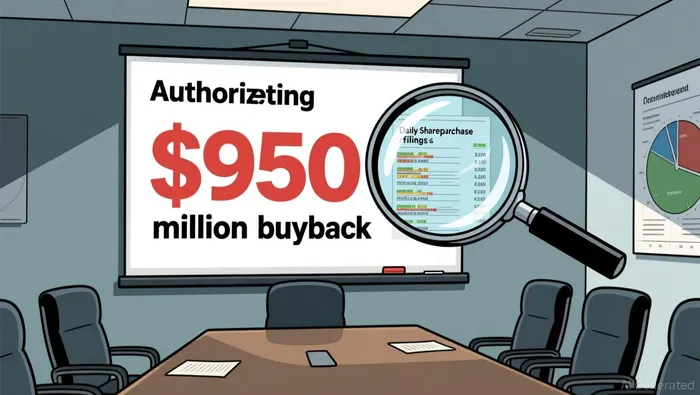
The math does not match the marketing
Here is what has actually happened since the announcement. IHG has been repurchasing shares in micro-lots: 9,109 shares on June 4, 15,000 on June 8, 25,000 on June 9. These are the daily Regulatory News Service filings - the mandatory disclosures that companies file when they buy back their own stock. They're routine paperwork that gets automated, syndicated, and then misread as "continued execution" by anyone who hasn't done the arithmetic.
At an average price of roughly $162 per share, those three transactions total approximately $8 million. Over the full period since February - combining all the disclosed batch purchases - the company has likely spent somewhere in the $50 to $80 million range. That is less than 10% of the $950 million authorization, after nearly four months.
The shares are also being bought at a premium. IHG's stock is up 15% year-to-date. The February 17 announcement came when shares were trading closer to $140. By timing the bulk of these micro-purchases into the second quarter, IHG is buying back shares at prices roughly 15% higher than when the program was announced. A program designed to create value is executing at the wrong price.
This is not an aggressive buyback. It is an announced one.
Why the gap matters
The authorization - $950 million - is a marketing asset. The actual execution is the reality. Anyone who has done even basic deal work knows the difference between what a company says it will spend and what it actually spends, and over what timeline.
The math is simple enough to check without institutional tools. IHG has approximately 149.4 million shares outstanding, giving a market capitalization around $24.2 billion. The full $950 million buyback, if completed, would retire roughly 5% to 6% of the outstanding share count. That would be meaningful - a real per-share earnings boost.
But at the current pace, it would take IHG roughly four to five years to complete the program. That is not what "commence immediately" means in any honest reading of the words.
The cross-currents are clear. IHG is a light-asset hotel franchiser with $5.19 billion in revenue, a 23% operating margin, and $893 million in adjusted free cash flow for fiscal year 2025. Those are solid numbers. The company also returned over $1.1 billion to shareholders in 2025 through a combination of dividends and repurchases. Q1 2026 RevPAR grew 4.4%, which is better than expected.
None of that requires you to accept $950 million as a number that's already happened.
The pattern
This is the same playbook you see across FTSE 100 companies: announce a large headline number, execute in barely-visible daily batches, and let the authorization sit as a permanent tailwind on analyst models. The $950 million gets folded into "capital return" assumptions. It doesn't matter that 90% of it hasn't been spent, because the model assumes it will be.
Any astute investor would check two things: the rate of execution and the price. Both work against the bullish reading here. The execution is glacial. The price is elevated.
What to do with it
The thesis adjustment is straightforward. IHG is a well-run franchiser with decent cash generation and a growing pipeline. That is worth acknowledging. But the buyback program is not evidence of exceptional capital allocation - it's evidence of a press release. The real capital return story is the $1.1 billion actually returned in 2025, not the $950 million promised for 2026.
For an investor evaluating IHG, the buyback authorization should not be part of your model until execution accelerates. Until then, treat it as what it is: a number on a page that management can pause, slow, or redirect whenever conditions change - and they always do.
You decide which was marketing fluff and which one was analysis.