

The headline says InterContinental Hotels Group bought back and cancelled 25,000 shares. If you stop there, you'll file it under "minor corporate housekeeping" and move on. But the number is also a signal that most investors are reading this company wrong - not because of the buyback, but because of what they think IHG actually does.
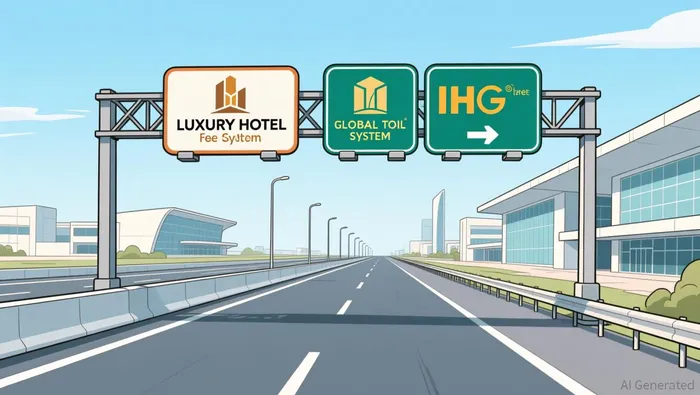
IHG is not a hotel company. It is a fee collector on hotel rooms. The distinction matters when you are looking for pricing power.
The numbers behind the headline
The 25,000-share figure is a single transaction batch. A recent filing shows one tranche of approximately 40,000 shares repurchased at an average of $153.47, with all shares cancelled to reduce outstanding capital. Over the full program - which began in February 2025 - IHG has repurchased roughly 7.6 million shares out of a ~150 million share float. That is a 5% reduction in shares outstanding, not a rounding error.
But the buyback is the tip of a larger capital return structure. In February 2026, the board announced a fourth consecutive year of 10% dividend growth alongside a new $950 million share repurchase program. That is the thesis: cash flow is growing fast enough to expand the dividend and shrink the share count simultaneously.
The toll road you don't see
Here is what IHG's business actually looks like: 73% of the rooms in its global system are franchised. Less than 1% are owned or leased by IHG itself. Nearly 100% of the company's earnings come from fees - royalty fees of roughly 5–6% of room revenue for franchised locations, plus management fees for the remainder.
This is the definition of pricing power. When room rates rise - whether from business travel demand, pent-up leisure demand, or inflation pushing average daily rates higher - IHG's fees rise automatically. The company does not own the buildings, employ the front desk staff, or absorb the cost of renovation. It collects a percentage of revenue flowing through a network it controls and competitors cannot easily replicate.
The average daily rate for a U.S. hotel room was approximately $160 in mid-2025 and has held steady above $162 through early 2026. Room supply growth has been constrained by construction cost inflation and financing pressures. When the two largest chains of rooms in a building are owned by IHG and Marriott, pricing discipline follows.
This matters because if your thesis is that inflation will be more persistent than the market wants to admit, you want businesses that pass inflation through without friction. IHG's royalty model does exactly that. It is an inflation link disguised as a consumer cyclical.
The cash machine that funds it
The asset-light model is not just a structural advantage - it prints cash. Adjusted free cash flow rose from $655 million in 2024 to $893 million in 2025, a 36% increase, on total revenue of $5.2 billion that grew 5%. Operating margin sits at approximately 23%.
The reason the cash flow grew faster than revenue is the exact mechanism I care about: minimal incremental capital expenditure. As IHG opens new hotels under franchise agreements, its own operating cost base grows slowly while fee revenue scales. That operating leverage is why the company can grow its dividend by 10% per year while also writing $950 million checks for buybacks.
Compare that to hotel operators that own their properties. They are exposed to real estate depreciation, maintenance cycles, interest rate risk on property debt, and commodity cost pressures on food, energy, and labor. IHG avoids all of that. The dividend is underwritten by fee cash flows, not room-night economics.
The equity yield curve argument
Now here is where most income investors walk away: the dividend yield is approximately 1.14%. That is not a yield. It looks like growth stock pricing, and in many ways it is.
But yield alone is the wrong metric when you are evaluating a company growing its dividend by 10% per year. The equity yield curve is about the combination of current yield and dividend growth rate. A 1.14% yield growing 10% annually becomes approximately 3% on cost after seven years, and approximately 4.5% after twelve years - without a single additional share purchased. The compounding math does the work.
Then add the buyback effect. With 7.6 million shares cancelled and another $950 million authorized, per-share metrics are being mechanically concentrated. The dividend per share grows not just from total dividend expansion but from a shrinking denominator. That is a dual compounding engine.
I don't think IHG is a retirement income anchor for someone who needs 5% yield today. But it belongs in the income-growth sleeve - the part of the portfolio where you accept a lower starting yield because the business quality, pricing power, and payout durability support compounding through a full cycle.
The risk that matters
The argument weakens if hotel demand falls sharply. IHG is still a cyclical business. A deep recession that crushes business travel and leisure spending would compress RevPAR (revenue per available room) and, by extension, IHG's fee revenue. The low payout ratio provides cushion, but no dividend is safe if the top line collapses.
There is also a valuation risk. The market is paying a premium for this model. If growth decelerates - if room rate gains slow or supply growth accelerates - the stock could re-rate downward even if the dividend remains safe. Buying a dividend grower at a stretched multiple is still buying risk.
I believe the asset-light franchise model is one of the most durable business models in the real economy, but that does not make every entry price attractive. The dividend growth streak gives confidence in the payout. The buyback program signals management's view on share value. But the investor still needs to decide whether the compounding payoff justifies what the stock costs today.
The title of this article is deliberate. The buyback number is small enough to ignore - and important enough to reveal what most investors miss about the company behind it. IHG is a toll road on hospitality, a pricing-power compounder earning nearly all its revenue from fees, funded by an asset-light balance sheet that converts room demand into cash flow with minimal capital. From a dividend growth perspective, the question is not whether the yield is high enough today. The question is whether you are willing to start the compounding clock early on a business that can keep it running for decades.