

Venezuela hasn't had a proper economic assessment from the International Monetary Fund since 2004. That was before the iPhone existed, before Facebook launched, before the financial crisis. The IMF is now resuming formal engagement with Venezuela after a six-year pause, but the country's economic data is basically prehistoric by the standards of modern finance.
The weird thing here isn't that the IMF is talking to Venezuela again. The weird thing is what "formal engagement" actually means when you haven't looked at a country's books in 20 years. Venezuela lost access to about $5 billion in Special Drawing Rights reserves in 2019 after the IMF issued a declaration of censure. That money is just sitting there, frozen. To get it back, Venezuela needs the IMF to say the economic situation is stable enough. To say that, the IMF needs data. Venezuela hasn't been providing much.
This isn't mainly a story about economics. It's a story about political recognition. The US military captured former President Nicolás Maduro in a raid on Caracas on January 3, and his vice president, Delcy Rodríguez, became acting president. The US then removed Rodríguez from the Treasury's sanctions list on April 1. The IMF announced it was dealing with the government of Venezuela under the administration of acting President Delcy Rodríguez on April 16. That's not a coincidence; it's coordination.
The financial plumbing here is familiar. Venezuela has about $60 billion of defaulted bonds outstanding, with total external debt estimated at $150 billion to $170 billion. Sovereign debt restructurings typically need an IMF program to provide a framework and credibility. An IMF program needs an economic assessment. An assessment needs data. Venezuela's last IMF Article IV consultation was in 2004. So you have this chain: political recognition → data collection → economic assessment → IMF program → debt restructuring → maybe access to the $5 billion in frozen SDRs.
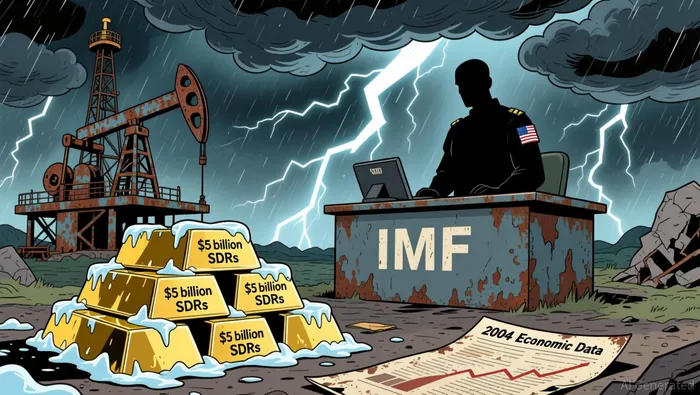
The IMF statement says this paves the way for a full assessment of Venezuela's economy. That's true, but it's putting the recognition cart before the data horse. The real question is what happens when the IMF actually looks at the numbers. Venezuela has been through hyperinflation, an oil industry collapse, mass emigration, and years of economic crisis. The baseline for "normal" disappeared a long time ago.
From the US perspective, this makes sense. The Trump administration wants to expand US presence in Venezuela's oil and mining sectors. Having the IMF recognize the government provides political cover and makes investment seem less risky. From the IMF's perspective, it gets to be relevant in a major oil-producing country again. From Venezuela's perspective, it needs the money and the legitimacy.
But the money part is still theoretical. The $5 billion in SDRs is real money that exists, but it's locked up. The debt restructuring would be one of the largest in history, but it needs that IMF program first. And everyone is acting like the hard part was the political recognition, when actually the hard part might be figuring out what Venezuela's economy even looks like after two decades without proper oversight.
So yes, the IMF is engaging with Venezuela again. But "formal engagement" right now means mostly that the IMF is willing to call Delcy Rodríguez the president. The actual financial machinery-the $5 billion in frozen reserves, the $60 billion in defaulted bonds, the potential IMF program-all that still depends on answering a question nobody has seriously asked since 2004: What is Venezuela's economy, actually?