

Planned maintenance fits Imperial's 2026 downstream approach
Sarnia matters here mainly because it ties into cash flow protection, not growth. Imperial's 2026 plan calls for 395,000 to 405,000 barrels per day of refining throughput at 91% to 93% utilization, while management has said the priority is operating facilities as efficiently as possible rather than maximizing production. For investors who care about steady cash generation, that is the more important signal than a headline about barrels.
What the shutdown is actually testing
The case for planned maintenance is straightforward: doing work on schedule can reduce the risk of a later unplanned outage and help the asset stay productive for longer. Imperial has also framed the 2026 turnarounds as a way to support reliability and flexibility over time.
The risk is simpler still. A planned shutdown is still a temporary hit to throughput and a near-term cost. If margins are soft when units come back online, investors may question whether the short-term sacrifice will really pay off.
Why Sarnia's role is reliability and product mix, not expansion
That maintenance hit only makes sense if you look at what is being protected.
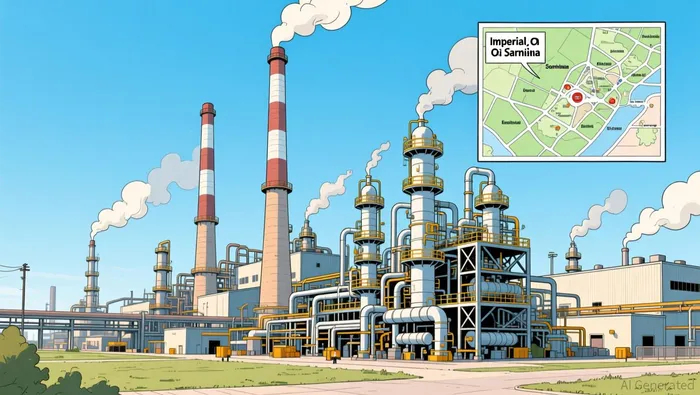
Sarnia is a smaller but more integrated asset
Sarnia is not positioned to be the volume leader in Imperial's Canadian refining system. The site processed about 113,000 barrels per day in 2025, but it combines a refinery, a chemical plant, and a research centre. That integration matters because it supports a range of fuels and chemical products rather than simply chasing higher crude throughput.
Complexity matters more than raw volume
Investors should pay attention to the quality of output, not just the quantity. Sarnia's distillation column uses a 48-stage design that is intended to improve separation, sharpen product specifications, and improve energy efficiency. In practical terms, that means the site is built to get more value from the crude it processes.
Turnaround discipline, in that context, is about preserving that capability. Skipping maintenance to squeeze out a few extra barrels for a quarter can raise the risk of poorer separation performance or an unplanned stop later, which is usually the costlier outcome.
Imperial's spending points to control over expansion
The clearest test is where management is directing capital. Imperial's 2026 strategy is focused on improving cash flow and maximizing shareholder returns. Within downstream, the emphasis appears to be on keeping existing assets reliable and efficient rather than expanding refining capacity. That fits the company's broader message that cash generation matters more than growth for growth's sake.
What would show the turnaround is working
The scorecard is simple: did the shutdown make the plant easier to run, or just more expensive for a quarter? Imperial has said the 2026 plan is about operating its facilities as efficiently as possible, not chasing maximum production. Investors should therefore look for signs that the maintenance improves day-to-day operations, not just quarterly compliance.
Green flags
- Smoother operations after the restart.
- Commentary that keeps the focus on efficiency and reliability rather than higher throughput.
- Spending and performance that stay consistent with the company's capital and exploration expenditures plan.
Red flags
- Cost overruns or a messy restart.
- A weak ramp-up that leaves the site less dependable than before.
- Another early outage, which would suggest the turnaround delivered only temporary relief.
Positioning takeaway
Stay constructive only if Sarnia starts to look like a better cash collector, not a bigger production story. Imperial's 2026 pitch is to keep improving cash flow and maximizing shareholder returns at the centre. If the turnaround helps the asset run cleaner and more predictably, that logic holds. If not, investors are left with a maintenance bill and few obvious upside rewards.