

If you're trying to fund retirement from the energy transition, you're looking for cash flow that arrives in your account month after month. So when Tesla investor Ross Gerber says gas prices "don't matter" to millions of EV owners, the question isn't whether he's right about consumer psychology. The question is what happens to the income streams that were supposed to come from all those people switching from gasoline to electrons.
Yes, the headline says "go get one." But the income investor needs to ask: "Go get what, exactly? And what pays me while I wait?"
The traditional EV investment thesis was built on energy economics: high gas prices would push drivers to cheaper electricity, creating predictable demand for charging infrastructure, battery materials, and utility upgrades. If that foundation cracks-if adoption shifts from economic calculation to environmental conviction or tech lifestyle-the cash-flow math changes. Some parts of the ecosystem get stronger; others get riskier.
Start with what actually pays you now. Look at the EV charging network companies. EV charging stations can generate 10-30% net margins once they're up and running, but only with high utilization. That's a classic cash-flow business model: you build the stall, maintain it, and collect fees per kilowatt-hour. The problem is, ChargePoint, one of the largest networks, still loses money despite $417 million in annual revenue. The stock pays no dividend because the cash flow isn't there yet.
If the income stream isn't sound, the lower price doesn't help you buy more future income-it just means you're buying a promise. And ChargePoint trades at a market cap of $154.6 million with negative earnings, which tells you the market is pricing hope, not cash flow.
Now look at what's actually happening with EV buyers. The data shows EV drivers saved 7.4 cents per mile compared to gas vehicles in Q3 2024, though those savings dipped when summer gas prices dropped. That's real money. But the trend underneath is more interesting: younger generations are prioritizing environmental impact over pure cost calculations. When sustainability becomes a "non-negotiable aspect" of the purchase decision, you get adoption that's less sensitive to energy price swings.
Don't look at the gas price chart first. Look at what's producing the cash flow. If adoption is driven by environmental conviction rather than monthly fuel savings, the demand becomes stickier but also more concentrated. The EV owner who buys for the planet isn't going back to gas when oil drops $20-they're committed. That means the infrastructure serving them has more predictable utilization, which is exactly what charging networks need for profitability.
The portfolio is the yield machine, not any single stock. So where does that leave the income investor?
First, utilities. They're the pipes through which all those electrons flow, and they have regulated returns. The more EVs on the grid, the more electricity they sell, and the more infrastructure they can justify building-with customers paying for it through rates. That's a cash-flow system you can explain in plain English: kilowatt-hours sold times approved margin equals dividend coverage.
Second, materials companies. Lithium, cobalt, nickel-the stuff inside the batteries. These are commodity businesses with boom-bust cycles, but some pay dividends from cash flow generated during the good times. The question is whether environmental adoption creates steadier demand than purely economic adoption would. If EV buyers are committed for the long haul, battery replacement cycles become more predictable.
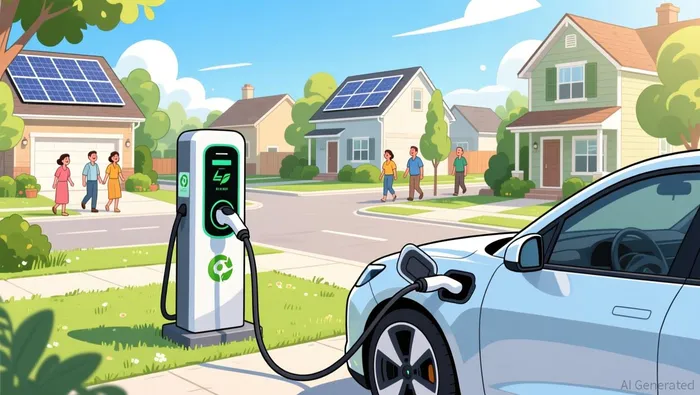
Third, the charging networks themselves-but only when they reach cash-flow positive. DC fast chargers can earn $20,000 to $50,000 per station annually in the right locations. That's real income potential. But you need to see the cash hitting the bottom line before you trust the dividend.
The risk here is that environmental conviction turns out to be cyclical too. In a recession, when budgets tighten, "saving the planet" might take a back seat to "paying the mortgage." We don't have good data yet on how much EV adoption has actually decoupled from gas prices regionally-that's a missing piece that limits confidence.
What matters is whether this can help fund a comfortable retirement without forcing you to sell pieces of your portfolio at the wrong time. If you're building an income machine, you want assets that pay meaningful cash flow now and still have growth or recovery upside when the structure supports it.
The EV transition will create winners and losers. The income investor's job is to find the parts that generate reliable cash flow through the volatility. If gas prices really don't matter anymore, then look for the businesses that get paid regardless-the utilities, the high-utilization charging locations, the materials suppliers with cost advantages.
Ignore the noise about whether this quarter's adoption numbers beat expectations. Collect the income from assets that have durable cash flows. The rest is just price action.