

The market is waiting for a number. The June eurozone inflation print is being treated as the binary catalyst that will decide whether European stocks keep their summer rally or snap back. Headlines talk about stocks "poised to rebound" as if the inflation figure itself is the variable.
It isn't. The variable is the regime.
Inflation in the euro area hit 3.0% in April, well above the ECB's 2% target. That's a jump from 2.6% in March, and the driver is unambiguous: energy prices surged 10.9%, following a geopolitical shock that sent European natural gas from €32 per megawatt-hour in February to €50 by early March, a 56% spike in a single metric that powers half the continent.
The market wants to treat this as noise. I don't think it is.
The ECB's stagflation trap
Here's the trap the ECB is now sitting in. On April 30, it held its key rate at 2%, but the message was unmistakable: a hike is coming. Economist Franziska Rüth and ECB executive board member Min Reining Nagel both signaled that June could see a 25-basis-point increase, pushing the deposit rate to 2.25%. A Bloomberg survey of economists expects the ECB to hike twice in 2026.
The problem? Eurozone growth is projected at 1.1% this year. The EU has downgraded its growth forecast because of the energy shock. Raising rates to fight inflation when growth is already anemic is the textbook stagflation dilemma - and the ECB is walking straight into it.
This matters for one reason: the old playbook assumed the ECB would eventually cut rates as inflation returned to target. That playbook is broken. If inflation won't come home, rate cuts are off the table for much longer than most European equity valuations reflect.
Why energy shocks are no longer temporary
Every time an energy shock hits Europe, the same narrative plays out. This time is different. The Iran conflict that began in February disrupted oil trade and sent prices soaring - but the underlying conditions that make every shock land harder are structural, not cyclical.
Deglobalization has stretched supply chains and removed the competitive pressure that kept prices down. The energy transition requires building entirely new infrastructure while winding down the old system - a process that is inherently inflationary. Demographics are squeezing labor supply and pushing wages. And fiscal dominance - governments running structural deficits that can't be sustained without some degree of monetary accommodation - means the inflation target may implicitly shift higher.
I believe policymakers will increasingly tolerate an average inflation rate closer to 3-4% rather than fight it at all costs. Not because they want to, but because growth, employment, debt service, and geopolitical reality make the old regime unsustainable. The April 3.0% print isn't a deviation. It's a preview.
Core inflation - the measure that strips out energy and food - eased to 2.5% recently, and services inflation has moderated. That's what the market is latching onto. It's real, and it's genuine short-term relief. But core inflation still sits above the 2% target. When energy reprices, headline inflation jumps back - as it already has. The underlying trend matters more than any single month.
What you own when inflation won't come home
This is where the investment work begins. If inflation runs above traditional targets for an extended period, the asset allocation implications are specific and directional:
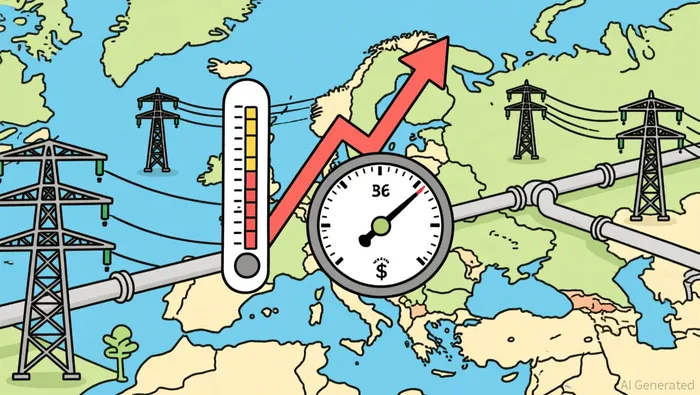
European utilities are already telling the story. They've outperformed the broader market in 2026, and UBS analysts see further room to run. That's not a technical call. Utilities are companies with pricing power embedded in regulated returns and essential services. They can pass through energy cost increases without losing customers - because customers have no alternative. They're the definition of the real economy.
Energy companies are the primary beneficiary. Not the speculators who bet on commodity direction, but the companies that own infrastructure - pipelines, terminals, distribution networks - where revenue is volume-based rather than price-dependent. When gas prices swing, the toll road doesn't blink. That's the structural advantage: you own the bottleneck, not the commodity.
The equity yield curve sweet spot. The formula isn't about chasing the highest current yield. It's about finding companies in the 2-4% yield range with dividend growth in the 8-15% range, then buying them when cyclical stress inflates those yields. The STOXX 600 is up 7.77% over six months - which means the rally has already started, and some of these names may look less like bargains than they did in February. That doesn't mean you stand aside. It means you're more selective.
The pricing power filter. This is the single most important screen. If a company can't raise prices without losing customers, it cannot grow its dividend through inflation. Period. That eliminates a surprising number of European dividend names - particularly in retail, consumer discretionary, and some industrials where competition or weak balance sheets prevent pass-through. The survivors are the ones with oligopolistic positioning, mission-critical products, or regulated monopolies.
The mistake the market is making
The mistake is treating this as a trade around a data print. The inflation number on a given Wednesday doesn't change the structural forces. What matters is whether your portfolio is built for a world where inflation averages 3% rather than 2%, where rate cuts are further out than consensus expects, and where pricing power is the single most valuable corporate attribute.
The STOXX 600 at 621 is reflecting some of this already. European dividend stocks have outperformed their US peers in 2026, partly because valuations were lower to begin with and partly because the real-economy tilt is more pronounced. But outperformance on a relative basis doesn't mean every European dividend name deserves conviction.
The positioning is specific:
Energy midstream and infrastructure - volume-based revenue models that survive commodity cycles.
Utilities with regulated returns and pricing power - the ultimate inflation protection.
Industrials with oligopolistic positioning - defense, aerospace, logistics, where barriers to entry are high and demand is structurally supported.
Dividend growers in the equity yield curve sweet spot - moderate yields with strong growth, bought when cyclical fear has inflated those yields beyond their long-term average.
What to avoid: Static high-yield names without growth. Companies that rely on cheap financing and long-duration bonds. Sectors where pricing power is weak and competition is intense. These are the names that look attractive until inflation actually hits them - then the payout collapses.
The June inflation print will come and go. The market will react, bounce, or stall depending on whether the number is slightly better or worse than the consensus model says. That's the trading game.
The investment game is different. The question isn't what the CPI print says about next week. It's whether your portfolio can generate growing income that protects purchasing power when inflation won't return to 2%, rates stay higher than the old playbook assumed, and the economy that depends on energy, logistics, and defense keeps running regardless of whether sentiment is bullish or bearish.
I believe the structural inflation thesis is playing out in real time. The energy shock confirmed what the data has been saying for months. The job now isn't to time a rebound. It's to own the right businesses in the right regime - and to hold them long enough for compounding to do the work.