

The core announcement from Instructure's New & Next Showcase is a direct, high-impact play: a simplified, tiered Canvas structure tied to the new Canvas Collaborative Roadmap. This isn't just a UI refresh. It's a strategic thesis to capture more market share and accelerate revenue growth by lowering the barrier to entry. The financial engine here is a deliberate shift toward a freemium model, specifically a Free-for-Teacher approach, aimed at converting individual users into paid institutional customers.
The roadmap itself is built on customer feedback, focusing on reducing friction in core workflows like course setup and grading. But the tiered structure is the vehicle to monetize that simplicity. By offering a streamlined, free version, Instructure can rapidly expand its user base and embed itself deeper into the educator's daily routine. The goal is clear: make the free tier so valuable and intuitive that the path to upgrading to a paid institutional plan becomes the natural next step for schools and organizations.
This move is paired with a more intentional communication cadence. The company is now hosting executive-led webinars, like the one scheduled for April 21-22, to directly showcase these updates. This isn't just product news; it's a top-down signal that Instructure is doubling down on its growth narrative. The message is that simplicity and a clear, tiered path to value are now the central pillars of its strategy.
The Ecosystem Alpha: AI & Product Updates
The real alpha isn't just in the new tiered pricing. It's in the AI features, advanced analytics, and interactive video tools being woven into a more modern, connected workflow. This is the lock-in play. Instructure is building a platform so embedded in the educator's daily grind that leaving becomes a massive operational headache.
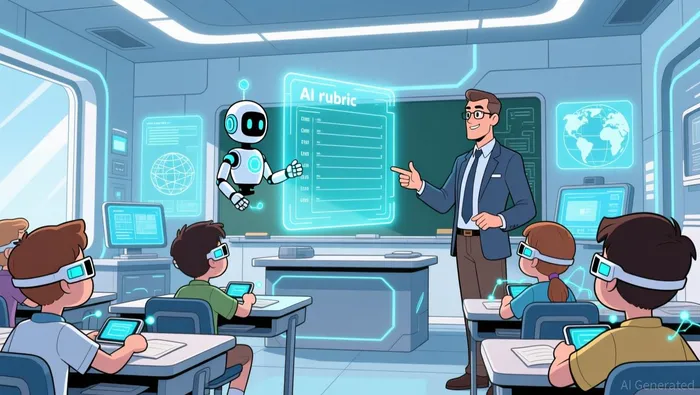
Take the IgniteAI Agent-a prime example. It's not a gimmick. It's a tool designed to reduce friction in core tasks like grading and content creation. When a teacher can generate a rubric or draft feedback in seconds, that time saved compounds into deep habit formation. The platform becomes the default, the easy path. This directly boosts engagement and perceived value, justifying a premium price tag for the convenience and efficiency it delivers.
This focus on reducing friction extends beyond AI. The roadmap is laser-focused on streamlining workflows, which is the bedrock of customer success and retention. A smoother experience means fewer support tickets, faster onboarding, and higher user satisfaction. In a competitive landscape, that sticky experience is a moat.
The ecosystem push is also clear with Canvas Career, which released to General Availability in January 2026. This move into skills-based learning for adult learners signals a strategic expansion into the workforce-aligned education market. It's not just another module; it's a new revenue stream built on the existing platform's trust and integration depth.
Meanwhile, updates to the Impact product and standards alignment tools show a commitment to outcomes. By making it easier to track skills and align curriculum, Instructure is helping institutions prove their value. This shifts the conversation from "software" to "results," further cementing the platform's role as a strategic partner.
The bottom line? Instructure is using AI and platform enhancements not just to add features, but to create a connected experience that is increasingly difficult and costly to replace. This is the ecosystem alpha: building a product so central to the educator's workflow that switching costs outweigh any potential savings.
The Financial Mechanics: From Free Tier to Paid Conversion
The magic of the tiered model is in the conversion funnel. It's a classic growth play: give away a powerful, limited product to build a massive user base, then monetize the stickiness that forms. Instructure's Free-for-Teacher tier is the ultimate low-cost acquisition channel, designed to hook individual educators.
Here's how it works. A teacher can sign up for a free Canvas account with unlimited courses and core features like assignments, quizzes, and a gradebook. The catch? It's stripped of the institutional-grade tools that schools need. As the feature comparison shows, the free tier lacks SIS integration, account-level admin, custom branding, and advanced analytics. It's a sandbox, not a campus system.
But that's the point. By offering a free, functional platform, Instructure gets educators to use Canvas for their own work. They experience the intuitive interface, the time-saving tools like SpeedGrader, and the collaborative features. This builds habit and trust. When a teacher's class grows, or their school needs to scale, the friction of switching platforms becomes a real cost. The natural next step is to upgrade to an institutional plan.
That institutional plan is where the revenue scales. For schools, districts, and universities, Canvas is licensed on a per-student, per-year basis, with pricing tiers based on size. The institutional version unlocks the full ecosystem: SIS integration, Canvas Studio, advanced analytics, and dedicated support. This isn't just a feature upgrade; it's a necessity for operational efficiency.
The strategy directly addresses the need for greater flexibility and long-term partnership. The free tier lowers the barrier to entry, letting schools pilot the platform risk-free. Once embedded, the deep integration and workflow efficiency create a powerful switching cost. This funnel-free educator adoption → institutional conversion-translates user activity into predictable, scalable revenue. It's the financial engine behind the tiered play.
Catalysts & Risks: What to Watch for the Thesis
The growth thesis is now live. The tiered play and AI alpha are announced. The next phase is execution, and the signals are clear. Watch for three key catalysts in the coming quarters.
First, the conversion funnel. The entire model hinges on turning free teachers into paid institutions. The first major data point is the Q1 2026 earnings report. Listen for any mention of Free-for-Teacher user growth or early conversion rates to paid plans. Strong numbers here would validate the acquisition engine. Weakness would be a red flag, suggesting the free tier isn't driving the intended institutional pipeline.
Second, monitor the impact of key feature rollouts. The April New & Next Showcase will detail the next wave of enhancements. Pay close attention to Enhanced Rubrics and the SpeedGrader upgrades coming at the end of Q1. These are not just new buttons; they are friction-reduction tools designed to boost daily engagement and satisfaction. If these features are adopted widely and cited in customer feedback, they signal a sticky, high-value platform. If they gather dust, it questions the product-market fit of the new roadmap.
The primary risk is execution. Instructure must successfully convert the free user base into sustainable institutional revenue without diluting the brand. The strategy is clear, but the path is narrow. The company needs to balance aggressive growth with maintaining the premium, reliable image that institutions pay for. Any misstep in the rollout, pricing, or support for the free tier could backfire, creating a perception of a "cheap" product that undermines the paid offerings.
The bottom line: The thesis is now a product. The catalysts are in the data and the adoption. Watch the funnel, the features, and the brand. The next few quarters will separate signal from noise.