

Jensen Huang was awarded an Honorary Doctorate in Science and Technology from Carnegie Mellon University in recognition of his outstanding contributions to accelerated computing and Artificial Intelligence.
The ceremonial doctoral hood was placed on Huang by Lip-Bu Tan himself.
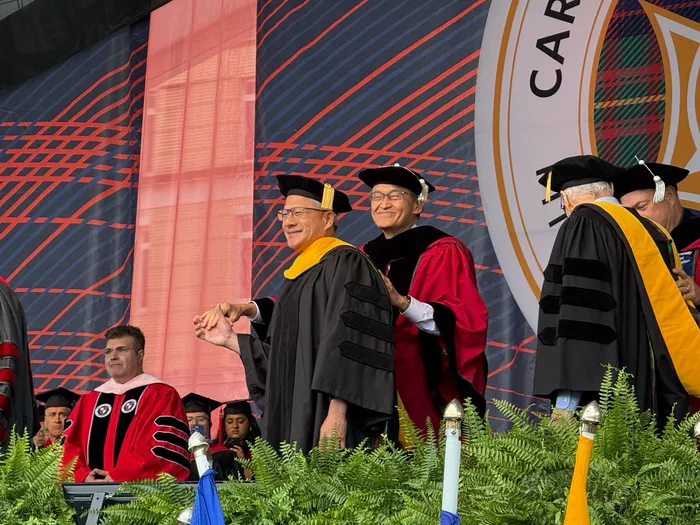
Lip-Bu Tan later posted on X: “Intel and Nvidia are collaborating to develop exciting new products!”

Following the news, Intel shares surged 6% in pre-market trading.
Intel and Nvidia’s Collaboration Roadmap Is Becoming Clearer: The product-level cooperation between Intel and NVIDIA is now taking shape across multiple fronts.
1. Data Center Partnership
Nvidia is reportedly investing $5 billion into Intel, with both companies planning to achieve seamless architectural connectivity through Nvidia’s NVLink technology. The goal is to combine Nvidia’s AI and accelerated computing capabilities with Intel’s leading CPU technology and vast x86 ecosystem to deliver top-tier enterprise solutions.
Intel is currently working with Nvidia on a deeply integrated Xeon processor designed for enterprise and data center applications that incorporates NVLink technology. The vision is to make an entire server rack operate like one giant computer, with CPUs and GPUs tightly coupled together.
2. Consumer PC Strategy
On the consumer side, Intel is expected to develop an x86 SoC integrating Nvidia RTX GPU chiplets. Rumors suggest the platform could carry the codename “Serpent Lake,” potentially launching after 2028.
If realized, future PCs could feature Intel CPUs and Nvidia GPUs packaged together into a single chip, representing a major architectural shift for the PC industry.
3. Intel Foundry Could Hold the Biggest Strategic Value
Intel’s foundry business may ultimately prove even more strategically important.
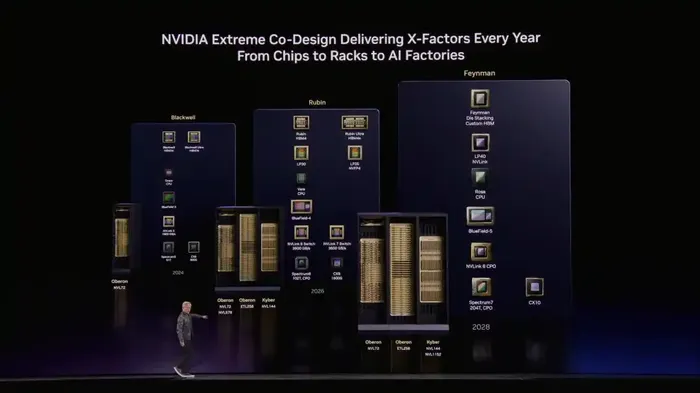
For years, Nvidia has relied heavily on TSMC to manufacture its core data center chips. However, TSMC continues to face intense pressure on advanced CoWoS packaging capacity, making it increasingly difficult to fully satisfy Nvidia’s rapidly growing wafer demand.
Against this backdrop, Intel Foundry is emerging as a key diversification option for Nvidia’s manufacturing pipeline.
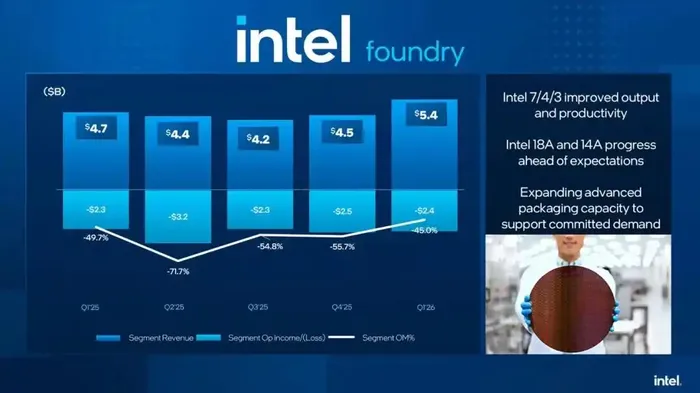
Intel recently secured foundry orders from TeraFab and Apple, developments widely viewed by the market as critical milestones in rebuilding external customer confidence in Intel’s manufacturing business. Those wins may also help Intel attract major clients such as Nvidia.
Intel’s stock has already rallied more than sevenfold from its lows, reinforcing the market’s renewed confidence in the company’s turnaround story.
Current market speculation suggests Nvidia’s next-generation GPU platform, codenamed “Feynman,” may adopt Intel’s EMIB advanced packaging solution. Reports also indicate Intel’s 18A-P or 14A process nodes could potentially be used to manufacture certain Nvidia GPUs, possibly including entry-level to mid-range gaming products.
The hands that placed the doctoral hood on Jensen Huang may also have delivered the strongest possible endorsement for Intel’s foundry ambitions.
Carnegie Mellon: An AI Powerhouse
While Carnegie Mellon University may not carry the same mainstream prestige as Ivy League institutions, it is unquestionably one of the hidden giants of the AI world.
Back in the 1950s, researchers at Carnegie Mellon developed the “Logic Theorist,” widely regarded as the world’s first artificial intelligence computer program.
The university later established the Robotics Institute in 1979, becoming the world’s first academic institution fully dedicated to robotics research. It also created the world’s first Machine Learning Department, cementing its status as one of the foundational institutions behind modern AI.