

The market's first reaction to the Terafab announcement was a clear signal. When Intel Corp. revealed its partnership last week, shares climbed more than 4%. That move wasn't just a cheer for Musk's vision; it was a classic institutional accumulation play. Smart money saw a potential new revenue stream and a strategic alliance with the most powerful figure in tech, and it moved to buy.
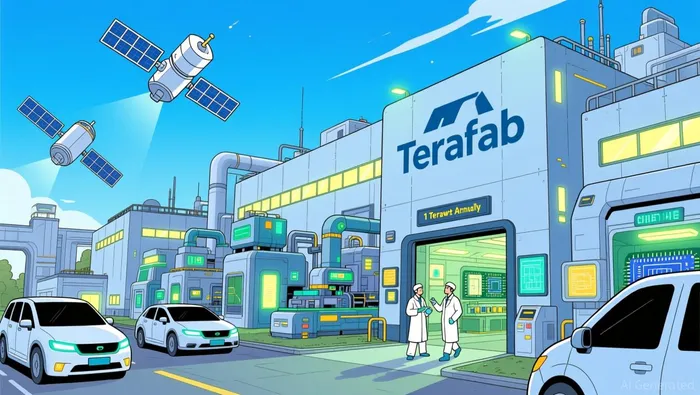
The project itself is staggering in scale. Terafab is a $25 billion joint venture between Tesla, SpaceX, and xAI, formally launched on March 21. Its goal is nothing less than vertical integration on a historic level: to build a semiconductor manufacturing hub capable of producing chips for satellites, robots, and autonomous vehicles. The ambition is to create about 1 terawatt of capacity annually-a figure that rivals the entire industry's current output. As Musk framed it, the venture is a response to a supply constraint he says is imminent, with chipmakers like TSMC not expanding fast enough for his companies' needs.
Yet, for all the superlatives and the institutional buying, the real test of conviction is elsewhere. The market's positive reaction is a signal, but it's a signal from outside investors. The true alignment of interest-the skin in the game-lies with the insiders who are actually building this. Their actions with their own capital will reveal whether they see a viable path or a costly distraction. For now, the setup is clear: a massive, unprecedented bet on vertical integration, with the smart money already placing a preliminary wager. The next move will be whether the real money follows.
The Smart Money Signal: Intel's Skin in the Game
Intel's move is a critical signal for Terafab's credibility. This isn't just a supplier deal; it's a "refactor" partnership where Intel is lending its core chipmaking expertise to help build the fab. That distinction lowers execution risk significantly. For a project with trillion-dollar cost estimates and a goal to produce about 1 terawatt of capacity annually, having a proven chipmaker as a technical partner is a major win for Musk. It brings a layer of operational credibility to a venture that, on paper, aims to rival the entire industry's output.
More importantly, Intel's own recent actions show its skin is in the game. Last week, the company agreed to pay $14.2 billion to buy back half of a plant in Ireland from Apollo Global Management. That move was widely interpreted as a vote of confidence in its chipmaking business. By committing that kind of capital to secure its own manufacturing footprint, Intel is demonstrating a parallel bet on the future of semiconductor fabrication. Its partnership with Terafab aligns with that internal strategy, suggesting the company sees value in deepening its involvement in the physical production of chips.
The bottom line is that Intel's involvement shifts the narrative. It transforms Terafab from a speculative dream into a project with a tangible technical anchor. For smart money, this partnership reduces the "build it yourself" risk. It means the venture has access to the very expertise it needs to navigate the complex, capital-intensive path from concept to production. Intel's skin in the game is a powerful signal that the execution risk, while still immense, is now shared with a company that has the proven capability to deliver.
The Insider Test: What Tesla and SpaceX Execs Are Doing
The smart money is watching for skin in the game, and the insiders at Tesla and SpaceX are sending a mixed signal. Elon Musk has publicly committed to the project, calling it "the most epic chip-building exercise in history by far". He framed it as an existential necessity, saying his companies either build the fab or they don't have the chips they need. That kind of rhetoric is classic hype, designed to rally internal support and external interest. But for a project with initial costs in the $20 billion to $25 billion range, the real test is whether Musk and his top lieutenants are putting their own capital on the line.
The first red flag is the financial setup. Crucially, Tesla's capital expenditures for 2026 do not include Terafab costs. That means the massive future cash drain from this venture is not being budgeted for in the near term. For insiders, that creates a long runway of execution risk. The project's timeline is extremely aggressive, with first chips not expected until mid-2028. That's over two years of planning, construction, and technical hurdles before any revenue. In that window, the company's financial health and Musk's personal commitment could be tested.
More telling is the lack of visible insider buying. Despite Musk's grand announcements and the institutional accumulation seen in Intel shares, there is no evidence that Tesla or SpaceX executives are purchasing company stock to align their fortunes with this new venture. In a typical high-stakes corporate bet, you'd see executives buying shares or exercising options to show they believe in the upside. The absence of that signal suggests the alignment of interest is questionable. The project's staggering scale-potentially requiring $5 trillion to $13 trillion in capital spending-makes it a moonshot that even Musk may not be fully funding with his own wealth.
Viewed another way, the lack of disclosed personal purchases could be a strategic move. It allows Musk to maintain maximum flexibility and avoid locking in a personal financial stake that could be exposed to the venture's immense risks. For smart money, that's a classic sign of a top-down, vision-driven project rather than one where the builders have skin in the game. The thesis here is that without visible insider buying, the true alignment of interest remains with the boardroom and the market, not the engineers and executives who must deliver.
Catalysts and Risks: What to Watch for the Thesis
The smart money's initial bet is on a partnership and a vision. The thesis now hinges on concrete execution. The primary risk is execution failure. The project's staggering scale-potentially requiring $5 trillion to $13 trillion in capital spending-makes it a classic "pump and dump" target if milestones slip. For the bet to hold, insiders and institutions need to see proof that the vision is becoming a physical reality.
The first major catalyst is the announcement of a construction start date. The launch event last week provided no timeline, leaving the project in a planning limbo. Smart money will be watching for the first official signal that the bulldozers are rolling. This isn't just about a date; it's about the commitment of capital. The next key signal will be a formal capital expenditure announcement from Tesla or SpaceX, explicitly budgeting for Terafab. Right now, the venture's initial costs are not included in Tesla's 2026 capex, creating a long runway of uncertainty. Any move to formalize that spending will be a critical test of alignment.
Intel's continued involvement is the second major watchpoint. The company's "refactor" partnership is a strategic anchor, but the smart money will look for deeper commitments. Will Intel provide more than just technical expertise? Watch for announcements of joint R&D, expanded equipment supply deals, or even a financial stake. Intel's own comeback strategy depends on proving its manufacturing prowess, and a deeper tie to Terafab would be a powerful validation. Any retreat from the partnership would be a major red flag.
The bottom line is that the thesis is forward-looking. The initial institutional accumulation in Intel shares was a vote for the partnership. The next vote will be for the shovel. For smart money, the real signal isn't the hype or the scale; it's the first spade of dirt and the first dollar of capex. Until those come, the bet remains on paper.