

The immediate catalyst for Intertek's stock surge was a clear, high-stakes signal from management. On April 14, CEO André Lacroix announced a strategic review to potentially split the company into two specialist businesses. The market's reaction was decisive, with shares jumping as much as 14% in London. This marked the largest intraday gain in over six years and sent a powerful message that investors see structural change as a potential value unlock.
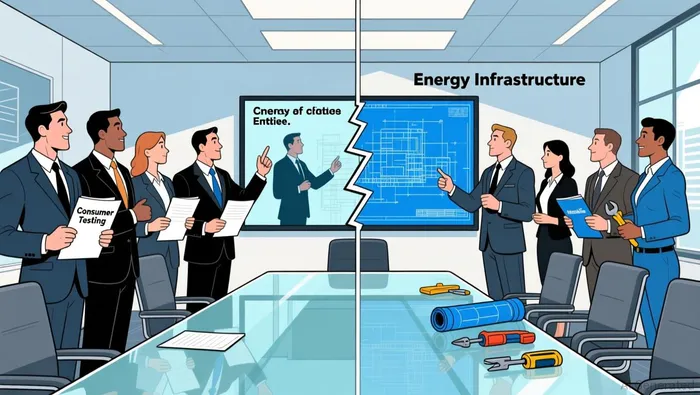
Management framed the review as a proactive move to unleash their full potential and accelerate growth. The proposed separation would create two focused global ATIC (assurance, testing, inspection, and certification) businesses, with the Energy & Infrastructure division potentially sold or demerged. CEO Lacroix stated the goal is to position both entities for sharper capital allocation, faster in-market execution, and greater value for shareholders. The Energy & Infrastructure unit, with £1.6 billion in revenue last year, is seen as positioned for growth in infrastructure and energy transitions, while the Testing & Assurance arm, a market leader, would house higher-margin consumer and corporate assurance operations.
Crucially, the company's reaffirmation of its full-year guidance suggests this review is a parallel initiative, not a sign of operational failure. Despite the strategic pivot, Intertek reiterated full-year guidance for mid-single-digit revenue growth, supported by a 5.4% like-for-like revenue growth in the first quarter. This dual-track approach-executing the current strategy while exploring a potential breakup-creates a classic high-risk, high-reward setup. The event introduces near-term execution and financial uncertainty, but it also opens the door to a potential re-rating if the market values the standalone businesses more highly than the current conglomerate.
Financial Mechanics: Growth Drivers and the Valuation Gap
The strategic review is a response to a clear disconnect. On one hand, the underlying business is executing. Intertek reported a 6.7% year-over-year revenue increase in Q1 2026, with 5.4% like-for-like growth driven by volume and pricing across divisions. This performance, which includes notable growth in the Consumer Products division, demonstrates operational strength. The company is also actively targeting high-growth, regulated markets, as seen in its recent acquisition of a solar PV lab in India to bolster its position in the fast-expanding renewable energy sector.
Yet this solid operational momentum has not translated into shareholder returns. The stock is down 4% over the past 12 months, a stark contrast to the nearly one-third gain for the FTSE 100 Index. This persistent valuation gap-where the company trades at a discount to both its peers and its historical average-likely prompted management to explore a structural solution. The review is an attempt to bridge this gap by potentially unlocking value that the current conglomerate structure may be obscuring.
The mechanics of the proposed split aim to sharpen this focus. By separating the higher-margin, growth-oriented Consumer Products and Corporate Assurance units from the Energy & Infrastructure segment, the strategy targets sharper capital allocation and faster in-market execution. The underlying Q1 growth, particularly in the Consumer Products division, provides a tangible foundation for one of these new entities. The review, therefore, is not a retreat from growth but a tactical repositioning. It seeks to monetize the company's own operational success by creating two more focused, and potentially more valuable, standalone businesses.
Risk/Reward Setup: Scenarios and Execution Hurdles
The strategic review creates a clear but complex risk/reward profile. The potential upside is a re-rating if the market values the two standalone businesses more highly than the current conglomerate. The downside is a costly, distracting process that may not deliver the promised value, or worse, a failed demerger that leaves the company weaker.
Analyst concerns highlight the execution hurdles. RBC analysts noted that any demerger could lead to higher costs and reduced investments. The separation would require duplicating functions like IT, HR, and finance, eating into margins. More critically, they point to sector consolidation, suggesting that neither of the two businesses would remain independent for long. This implies the strategic review might be a prelude to another sale, not a final answer, adding another layer of uncertainty for investors.
The process itself introduces a multi-year period of distraction. Management expects the review to conclude, with any implementation, by mid-2027. That timeline means the company will operate under a cloud of speculation for over a year. During this period, capital allocation decisions may be delayed, and management's focus could be split between running the business and preparing for a potential breakup. This uncertainty is a tangible risk that could weigh on the stock even if the final outcome is positive.
Yet the company's recent actions provide a counterpoint, demonstrating its commitment to growth in key areas. The recent acquisition of a solar PV lab in India is a prime example. This move directly targets the fast-growing, regulated renewable energy market, a major driver for the Testing & Assurance segment. It shows Intertek is not standing still but actively building its position in high-growth verticals. This operational momentum is the foundation that makes the strategic review plausible; it provides a clear anchor for one of the proposed standalone businesses.
The bottom line is a high-stakes gamble. The review offers a path to unlock value, but it comes with significant near-term costs and a prolonged period of uncertainty. The success of the plan hinges on management's ability to navigate the separation smoothly while maintaining the growth trajectory shown by the solar PV acquisition and Q1 results. For now, the event-driven setup favors the stock, but the risks are very much on the table.
Catalysts and What to Watch
The strategic review is a catalyst, but its payoff depends on a series of near-term events. The primary catalyst is the conclusion of the review itself, with any implementation plan to be announced by mid-2027. Until then, the stock will trade on speculation. The critical test for the thesis, however, is operational execution during this period. Investors must watch for the continuation of the strong start to the year, specifically the 5.4% like-for-like revenue growth trend seen in Q1. A repeat in Q2 and H1 2026 would signal that the underlying business is robust and not distracted by the review, providing a solid foundation for either standalone entity.
Beyond top-line growth, watch for strategic moves that could provide early clues about management's direction. The recent acquisition of a solar PV lab in India is a prime example. It demonstrates a clear commitment to building in high-growth, regulated markets-a key growth vector for the Testing & Assurance segment. Any new acquisition or divestiture announcements in the coming quarters will be a direct signal of where management is allocating capital and which businesses they view as core. Given the review's focus on creating two specialist businesses, these moves will help validate whether the company is actively shaping the future entities.
The bottom line is that the stock's near-term path is bifurcated. It will be driven by two forces: the market's reaction to any progress updates on the review timeline, and the company's ability to deliver consistent, above-guidance trading performance. The solar PV lab acquisition shows management is not standing still; the next few earnings reports will show if the entire business can keep its momentum while under the strategic microscope.