

U.S. stocks rallied in the first hour of trading Wednesday as investors sold crude oil and bought risk assets after a report that the Trump administration and Iran were moving closer to a diplomatic framework to end the war. Shortly after 10 a.m. in New York, the Dow Jones Industrial Average was up 493 points, or 1.00%, to 49,791; the S&P 500 gained 66 points, or 0.91%, to 7,325; and the Nasdaq Composite rose 299 points, or 1.18%, to 25,625.
The sharpest move was in oil. June crude fell $6.26, or 6.12%, to $96.01, signaling that traders were rapidly marking down the war premium embedded in energy markets. Axios reported that the White House believes it is close to a one-page memorandum of understanding with Iran that would end the war and begin a 30-day period of negotiations over the Strait of Hormuz, Iran’s nuclear program and U.S. sanctions relief. The report said no agreement had been reached and that Iranian responses were expected within 48 hours.
The early action had the shape of a risk-on rotation: equity indexes climbed, oil sank and the VIX slipped 0.22 point, or 1.27%, to 17.16. Investors appeared to be betting that even a fragile diplomatic opening could reduce energy-supply risk, ease inflation pressure and support corporate earnings.
Technology shares added another layer of support. AMD rose after the chip maker beat expectations, posted 57% year-over-year data-center revenue growth and guided second-quarter revenue above consensus, reinforcing demand for AI infrastructure.
Corning also became a focus after news that an Nvidia partnership would expand U.S. optical-connectivity manufacturing capacity tenfold and helped send Corning shares roughly 20% higher.
Disney contributed to the more constructive tone in consumer shares reporting it beat fiscal second-quarter earnings expectations, raised full-year guidance and pointed to resilient parks demand, with domestic per-capita spending rising despite fuel-cost and concern over the Iran war.
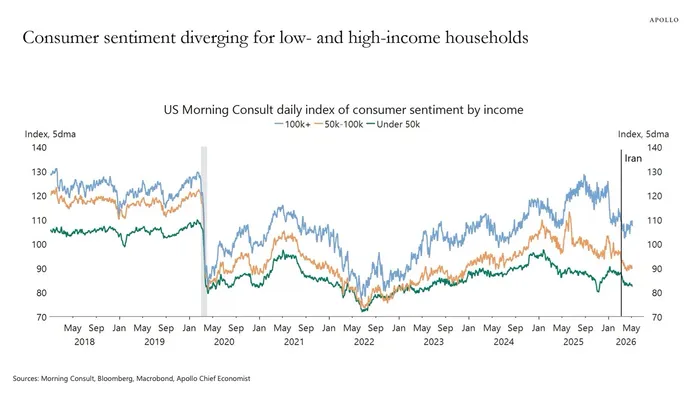
Still, the rally underscored a split economy. Apollo Global Management Chief Economist Torsten Slok said daily consumer-confidence data show sentiment falling among households making less than $50,000 a year, while confidence is rising among households making more than $100,000, a divergence he tied to gas-price worries for lower-income consumers and stock-market gains for higher-income households.
The next test is whether diplomacy can move faster than risk pricing. Axios said some U.S. officials remain skeptical that even an initial deal will be reached, leaving investors watching the next two days for Iran’s response and any sign that the morning rally in stocks and collapse in oil were more than a headline-driven repricing.