

Oil priced up before the military debate was settled
The market moved quickly after Iran fired missiles toward Kuwait and Bahrain, with Brent rising to $97.05 a barrel. As concern shifted toward shipping risk in the Gulf, Brent later traded as high as $106.32 a barrel. For now, price is reflecting choke-point anxiety as much as, if not more than, the direct damage to bases.
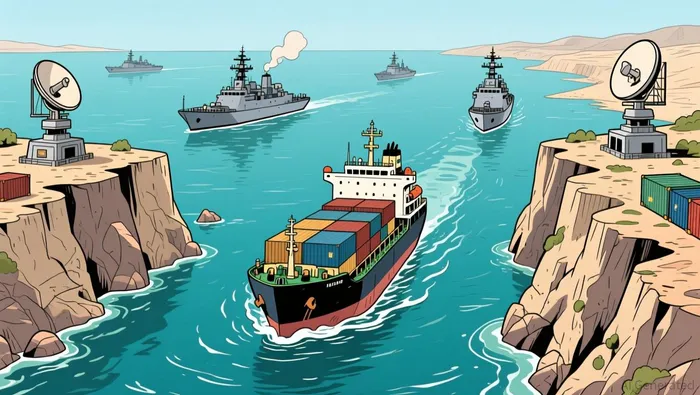
The escalation path matters because it shows how the conflict could still disrupt supply. The U.S. said it intercepted missiles and drones aimed at the Strait of Hormuz and the Gulf, while U.S. officials assessed that drones were targeting regional maritime traffic. Washington then struck coastal surveillance radar sites in Goruk and on Qeshm Island. That combination-attacks near the strait and strikes on coastal surveillance positions-keeps the supply-risk premium in play.
The market is no longer asking only whether Iran can win a war. It is asking whether Tehran still has enough leverage to disrupt flow through the Gulf.
Why base attacks can still translate into Hormuz risk
Base damage does not have to be total to matter
Iran does not need to destroy every U.S. facility to keep supply vulnerable. BBC Verify found Iran had damaged 20 US military sites since the war began, with attacks across the region hitting air defence systems, radar, and refuelling assets. That does not prove a major disruption would succeed, but it does suggest forward military infrastructure has taken hits that could complicate response and deterrence.
The main transmission channel is maritime control
The direct oil-risk channel here is not just base damage; it is pressure on shipping. The U.S. military said Iranian drones were targeting regional maritime traffic, and Washington subsequently struck Iranian coastal surveillance sites at Hormuz. In practical terms, this is a contest over observation and access in a narrow waterway. Geographically, Hormuz fits the classic choke-point idea of narrow stretches of water between two land masses connecting broader marine areas and carrying significant international traffic.
Diplomacy has not yet turned into normal throughput
The key debate is whether diplomacy can outrun military pressure. So far, it has not.
Earlier this month, Iran said roughly 30 vessels had passed through the strait. Reuters also reported that only about 30 vessels had crossed since Wednesday evening, still far below the roughly 140 transits typical each day before the war. That gap is the market's real supply signal: throughput is still being rationed by risk rather than returning to normal commerce.
Price action has responded accordingly. When reports emerged that the U.S. and Iran were discussing a plan to reopen the Strait of Hormuz, WTI fell 6.1% to $90.73 a barrel. That move shows the premium can unwind quickly if talks produce a credible reopening. Until flow actually improves, however, the market still has reason to price in Hormuz risk.
What would change the read
The next signal investors need is not just another strike headline. It is evidence that traffic through the strait is becoming more normal, or that diplomacy is producing a concrete reopening process. If that happens, the oil premium can fall fast. If it does not, global crude remains exposed to another shock from a waterway that is still effectively contested.