

The immediate trigger was a blunt rejection. On May 11, President Trump dismissed Iran's response to a U.S. peace proposal as "stupid" and "garbage," declaring the ceasefire "on life support." This swift dismissal erased the fragile hope that had been building, sending geopolitical risk premiums soaring.
The market's reaction was immediate and violent. Brent crude surged over 3% to trade above $104, briefly spiking past $105 a barrel. This move reversed a dramatic drop just days earlier. When the initial ceasefire was announced, oil prices had plunged roughly 15% on the news, with Brent falling to around $95.50. The collapse of the deal has now erased that relief, returning the benchmark to levels not seen since the conflict's early, most volatile weeks.
The flow is clear: optimism was priced in during the ceasefire's brief window, only to be violently unwound. The sharp 15% drop in oil prices on the ceasefire announcement stands in stark contrast to the 3%+ pop now, highlighting how quickly liquidity and positioning can shift on a single geopolitical signal.
The Flow of Disruption: Quantifying the Supply Shock
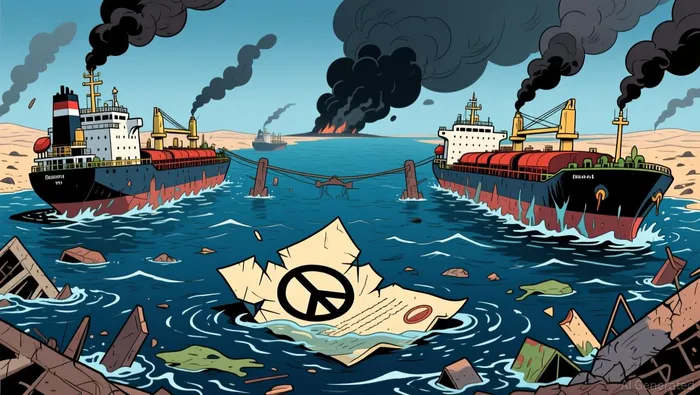
The physical disruption is severe and quantifiable. The Strait of Hormuz, a critical chokepoint for roughly 20% of global oil trade, has been effectively closed. Vessel traffic has collapsed from a normal rate of about 70 ships per day to just 2-5, creating a massive supply chokepoint.
This is the largest disruption in energy market history. The market is losing an estimated 100 million barrels of oil a week due to the blockade. This scale of weekly loss represents a shock to the global oil balance that has no recent precedent.
The market's long-term outlook is one of prolonged instability. Even if the strait reopens immediately, Saudi Aramco's CEO warns it could take until 2027 for the oil market to fully rebalance. The CEO attributes this extended period to the sheer magnitude of the disruption and the time needed to rebuild inventories and shipping flows.
Catalysts and Risks: What's Next for Oil Flows
The primary catalyst for the market's next move is clear. Iran has already declared the ceasefire framework dead, citing U.S. violations. Iranian leaders claim the U.S. has openly violated its side of the truce, making further negotiations "unreasonable." This unilateral rejection removes the last formal path to de-escalation, leaving military action and supply disruption as the dominant forces.
The key risk is a broader regional conflict. While the ceasefire is dead, the underlying tensions remain. Israel's Prime Minister Netanyahu stated there is still "work to be done" on the US-Israeli offensive, indicating the campaign against Hezbollah in Lebanon could escalate. This directly challenges the U.S. position that Lebanon is outside the ceasefire deal, creating a new flashpoint that could draw in more actors.
The market's next major test is a scheduled negotiation meeting in Islamabad, Pakistan. This gathering will serve as a critical litmus test. If talks proceed, they may offer a fragile opening for de-escalation. But given Iran's stated position, a meeting is more likely to confirm the ceasefire's death, potentially leading to a new round of military posturing and further oil price volatility.