

The competitor headlines say Asian equities were "mixed." They weren't. On June 10, MSCI's broad Asia-Pacific index excluding Japan fell 2.6%. Japan's Nikkei dropped 2.3%. South Korea's KOSPI - loaded with chipmakers that sit at the center of every AI supply chain - tumbled over 6%. The S&P 500 lost 0.75% that same day, with the Dow shedding roughly 900 points. Brent crude settled at $93.10, up $1.65 on the session, and was hovering around $94 by early Asian trading on June 11. The VIX - the CBOE's gauge of expected 30-day S&P 500 volatility - jumped 11.8% to close at 22.22.
None of those numbers are "mixed." They're a divergence dressed up as confusion.
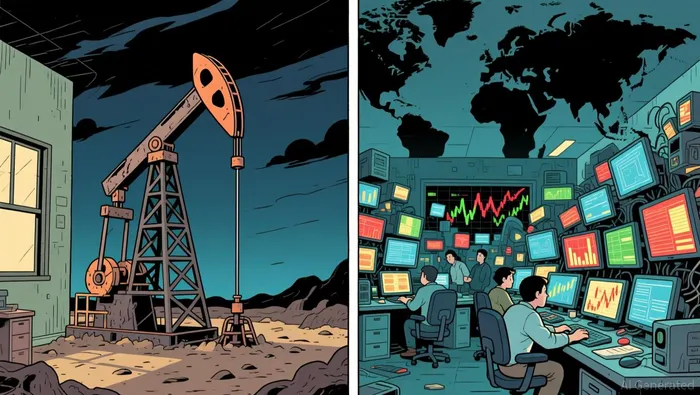
The question isn't whether the Iran ceasefire is holding. It's whether the market has actually priced the risk or is just whipsawing between headlines while the real structural trade plays out underneath. The answer, if you look at the factor splits instead of the index headline, is clearer than the front pages suggest.
The ceasefire is a "lesser-fire," and oil knows it
The U.S. and Iran agreed to a two-week ceasefire on April 8, mediated by Pakistan. It held, loosely, for about two months. Then on June 7, Israel and Iran exchanged direct strikes - the first since the ceasefire was announced. By June 9 and 10, CENTCOM confirmed the U.S. had launched "additional self-defence strikes" against "multiple targets in Iran". The UN's António Guterres called the arrangement "more like a lesser-fire".
Brent crude surged to $97.15 per barrel on June 8, then pulled back to $91.14 on June 9 before recovering. On June 10, it settled at $93.10. WTI opened July futures around $92.25 on June 11. The intraday swing from $91 to $97 in a single week is not noise - it's the market pricing a geopolitical option that hasn't been this alive since the initial February 28 attacks that started the conflict.
What matters for positioning: Brent is still roughly 12% below its peak near the ceasefire breakout, which means the upside path to $100-plus is open if supply disruption worsens. But it's also 36% above the levels from early 2026 before the war. The range is wide. The trade is not a one-direction bet - it's volatility with a skew to the upside.
Energy is the only sector that has been unambiguous
Year-to-date in 2026, Oil & Gas Integrated stocks are up roughly 41%. Midstream is up 24%. Exploration and production is up 18%. Equipment and services - the pick-and-shovel play - is up 7.4%.
Compare that to the tech whipsaw. The S&P 500 hit all-time highs above 7,200 in mid-June, then lost ground as the ceasefire cracked. Chipmakers staged a comeback on June 7, only to sell off again on June 10. Quant hedge funds have posted double-digit gains in 2026 by riding the commodity-trend swings, not by catching the equity bounce. That tells you who has the process edge right now: trend-followers in energy, not momentum chasers in AI.
The factor split is the point. When a ceasefire that was supposed to stabilize oil supply is trading down to something weaker, the sector that benefits structurally from supply risk is energy - not the names that rode AI optimism to record closes last week.
What the VIX at 22 actually means
The VIX closed at 22.22 on June 10, up 11.8% on the day. That's above the long-run average of roughly 19-20, but nowhere near the panic levels. During the initial Iran escalation in late February and March, the VIX spiked toward 35. A reading in the low 20s means the market has registered the risk without breaking. Options investors are paying a premium for downside protection, but they haven't priced a collapse.
That's the gap between narrative and data. Headlines say "fear of war." The volatility gauge says "elevated uncertainty with guardrails." The portfolio implication is not to flee equities - it's to restructure within them.
The barbell answer
When geopolitical uncertainty rises and a ceasefire is more "lesser-fire" than resolution, the response isn't more conviction in a single direction. It's more structure. That means a barbell: energy exposure on the growth side, where the factor advantage is structural (YTD gains of 40%+ for integrated oil names are not a flash trade - they're driven by a real supply constraint that persists as long as the ceasefire degrades), and quality defensives on the income side, where utilities and healthcare provide ballast when KOSPI can drop 6% on a single headline.
Energy names earn their sleeve placement because the economic mechanism is transparent: less certainty around Persian Gulf supply means Brent stays elevated, and integrated producers with low breakevens convert that into cash flow. The trigger that changes this is a genuine, verifiable ceasefire extension - not a press conference.
Defensive names earn theirs because when Asian chip supply chains get punished by headline risk, you need the part of the portfolio that doesn't move with the oil curve. Utilities up 20% YTD (based on the XLU sector benchmark) and healthcare providing steady earnings - that's the hedge against days like June 10.
What would change the thesis
The barbell holds as long as the ceasefire stays degraded and Brent holds above $90. If a verifiable diplomatic breakthrough resets oil below $85, energy's structural advantage narrows and the tech rebound thesis regains traction. If the conflict escalates further - Strait of Hormuz disruption, wider regional involvement - energy moves from "good sleeve" to "conviction position" and defensives become the only ballast that matters.
The market isn't confused today. It's split. The job is to decide which side of the split you want to live on, and make sure the other side of your portfolio can handle what happens when the next headline arrives.