

The S&P 500 just did something it hasn't done in over 200 sessions-it closed below its 200-day moving average. That's not a headline. That's a technical breakdown. The index settled at 6,589, breaching a key support level that had held through months of testing. For traders who live by price action, this is the market telling you the "Goldilocks" era is dead. The low-volatility, steady-upward drift of 2024–2025 has been replaced by a new regime. The question isn't whether risk is priced in-it's whether you're positioned for the volatility that's already here.
The VIX doesn't lie. At 27.29, it's at its highest level since the geopolitical shocks of 2022. That reading implies the market is pricing in nearly 1.7% daily swings for the S&P 500 in the weeks ahead. That's not a warning-that's a description of the current environment. When the fear gauge spikes this high, it's not because of one piece of news. It's because institutional hedging activity has shifted structurally. The "buy the dip" mentality that defined the previous regime is gone. Defensive positioning is now the dominant flow.
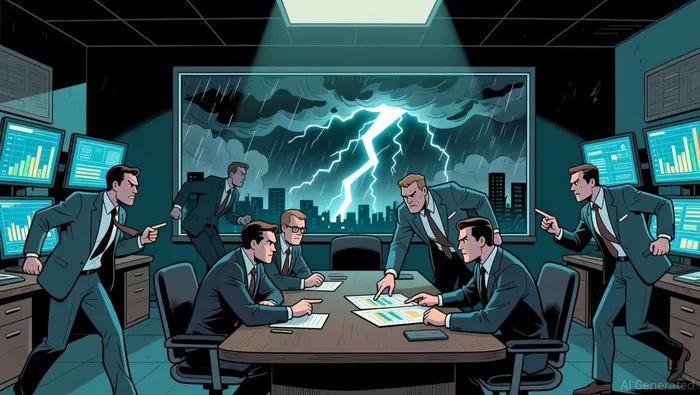
Oil is the clearest example of price action ignoring headlines. Brent crude sat at $108.25, essentially flat, despite President Trump announcing "Project Freedom" to guide stranded vessels out of the Strait of Hormuz. The market saw right through it. As one analyst noted, normalizing flow through the strait will take far more than political statements-the supply gap alone will take months to resolve. When price refuses to move on major news, it's telling you something important: the underlying supply/demand imbalance hasn't changed, and neither has the risk premium.
Here's the technical trader's read: the breakdown below the 200-day MA, the VIX spike above 25, the oil price holding steady despite diplomatic theater-these are all confirming the same thing. The market has entered a high-volatility regime. Ceasefire headlines will flicker. Some will even hold for a day or two. But until the S&P 500 reclaims 6,618 with volume, until the VIX compresses back below 20, until oil breaks decisively above $115 or collapses below $100-until then, the path of least resistance remains elevated volatility. Price action discounts everything. The question for traders isn't what the news says. It's whether your positioning respects the new reality.
Ceasefire Mechanics and Market Reaction
The ceasefire isn't a foundation-it's a flashing neon sign above a supply/demand standoff. Each news cycle produces binary swings that favor sellers when details emerge. The market's reaction to ceasefire headlines has been brutally clear: upside moves on speculation, sharper downside on confirmation-or denial.
The $3 trillion swing in a single session is the clearest evidence of this dynamic. When Trump suggested progress, the S&P 500 surged nearly 240 points, adding roughly $2 trillion. Iran's denial reversed course, wiping out close to $1 trillion. The net result? A net loss with a massive volatility premium baked in. That's the signature of a market priced for conflict, not peace.
The April 8 ceasefire was always structurally weak. It was extended April 21 to allow time for an Iranian proposal, but violations continued on both sides. The underlying supply/demand hasn't changed-oil flow through the Strait remains constrained, and the risk premium stays elevated. When price refuses to sustain gains on positive headlines, it's telling you the sellers are stronger.
The naval standoff in the Strait of Hormuz is the physical manifestation of this technical setup. The US imposed a blockade April 13; Iran responded by attacking US Navy ships targeting Iranian tankers. This isn't background noise-it's direct supply chain interference. The 14-point US proposal requires Iran to halt enrichment for 12 years and hand over 440kg of 60%-enriched uranium. Iran's reviewing-but the market has seen this movie. The naval clash in the Strait happened even as both sides claimed interest in a deal.
Here's the technical read: the ceasefire framework provides cover for sellers, not buyers. Every headline that hints at progress gets sold. Every denial or escalation gets amplified. The VIX has surged 26.74% over the past month-this isn't hedging against a single event, it's positioning for a regime. Until the S&P 500 reclaims 6,618 with volume, until the VIX compresses back below 20, the path of least resistance remains elevated volatility. Ceasefire headlines will flicker. Some will even hold for a day or two. But the market's reaction to each one will be the same: test the upside, sell the confirmation.
Technical Levels and Trade Setup
The market has laid out the battlefield. Your job is to read the levels and position accordingly.
Support and Resistance Framework
The March 20 low at 6,589 is the line in the sand. Another failure here opens the 6,400s-there's no meaningful support until you get into the 6,350-6,400 zone. The 200-day moving average, once a floor, now acts as overhead supply. Every rally toward it meets sellers. That's the new regime.
VIX Positioning
The VIX closed at 27.29-its highest reading since the 2022 geopolitical shocks. At this level, the market is pricing in nearly 1.7% daily swings for the S&P 500. This isn't a warning. It's a description of the environment. The VIX has surged 26.74% over the past month. When the fear gauge moves this fast, it's telling you the regime has shifted.
Trade Setup
Sell rallies. That's the core directive. Every bounce toward the 200-day MA or the 6,618 breakdown retest is a shorting opportunity. The market has shown it cannot sustain upside moves on ceasefire speculation-every advance gets sold. The $3 trillion swing in a single session proves the sellers control the narrative.
For volatility exposure, consider VIX calls or selling SPY calls to collect premium. The elevated VIX means option premiums are rich, and the directional bias favors downside.
Oil and Energy
Brent crude sits at $108.25, essentially flat despite Trump's "Project Freedom" announcement. The market sees through the theater-until the Strait of Hormuz opens, oil stays elevated. $110+ is the next target if the blockade holds. Treat high oil as a regressive tax on equities-it compresses margins and fuels inflation fears.
The Bottom Line
The technical setup is clear: support at 6,589, resistance at the 200-day MA, VIX above 25, oil above $108. Favor selling rallies, watch for breakdown confirmation below 6,589, and keep hedges in place. The path of least resistance remains down until the market proves otherwise with a sustained reclaim of key levels.