

Oil's 19% cooldown has eased fear, but not removed the risk
A almost 19% drop in Brent during May looks more like a relief move than a full de-escalation. Markets are responding to reports that the U.S. and Iran have "mostly agreed" to a 60-day pause in hostilities, but a pause is not the same as a durable settlement. The situation is still uneven: ongoing missile strikes in the Gulf mean the region remains unstable.
For crypto, that matters. Lower fear can keep fueling short squeezes and fast momentum rallies, especially when traders react to the first green candle after a geopolitical scare. But a relief rally is not the same as confirmed risk removal.
The catch is still shipping
The key watchpoint is the Strait of Hormuz. Even with softer headlines, markets remain cautious over lingering security concerns around shipping in the Strait of Hormuz. As long as tanker movement and energy flows are still uncertain, the region's risk premium is compressed rather than cleared.
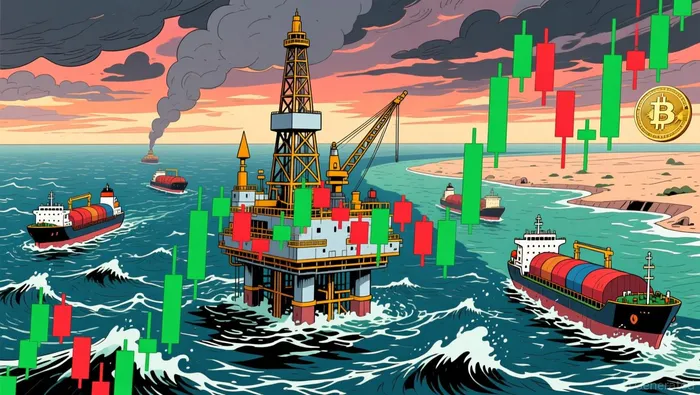
That is why this setup can still trap late buyers. A 60-day pause may be enough to improve sentiment, but until shipping actually normalizes, crypto is more likely to trade bounce cycles than a clean all-clear.
Hormuz, not the headline, is still the real trigger
Why Hormuz still drives the tape
Even after the latest pause, the market is still reacting to the last major supply shock. When the conflict escalated earlier this year, Iran moved to close the Strait of Hormuz, effectively paralyzing about 20 million barrels per day of normal throughput and affecting nearly a quarter of global seaborne oil trade.
That helps explain why geopolitical tension can hit crypto so sharply. Traders are not only pricing equity and crypto risk; they are also pricing the fear of another oil spike, shipping disruption, and inflation pressure. If Hormuz stays unstable, diplomatic headlines can still turn quickly into long squeezes.
The April pause showed how fragile the relief trade can be
The market already saw a version of this sequence. During the temporary two-week ceasefire announced on April 7, 2026, oil prices fell sharply and Wall Street recorded its biggest single-day rally in a year. But the relief trade was fragile. When reports emerged that Iran had halted the passage of oil tankers, prices bounced back quickly.
That is why the current setup should be treated cautiously. A ceasefire headline can reset sentiment fast, but it does not guarantee that shipping or regional risk is truly normalized.
Violence at sea keeps the scare alive
The recorded damage in the wider theater is still significant. The conflict record shows at least 17 merchant ships damaged, along with abandoned and captured vessels in the Strait of Hormuz, Persian Gulf, and Gulf of Oman area.
That is the core risk for traders: a ceasefire can reduce headline intensity, but if the Strait remains functionally contested, the risk premium can re-expand quickly.
What crypto traders should watch now
- Actual recovery in shipping through the Strait, not just verbal commitments.
- No fresh attacks on tankers or commercial vessels.
- Oil prices that stay cooled off instead of rushing back toward prior scare highs.
If those conditions break, today's relief run could give way to another sharp panic move.
Crypto is still trading a relief bounce, not a confirmed all-clear
What current market data suggests
Right now, the tape still looks more like a relief pump than a full de-escalation confirmation. S&P 500 futures are up 0.7%, China's CSI 300 is up 5.3%, and Bitcoin is at $77,089. That points to a market leaning toward risk-on sentiment for the moment, but not one that has fully priced peace.
Bull case: relief can become a squeeze
If sentiment holds, this can turn into a self-reinforcing rally. Markets are already reacting to optimism on prospects for a long-lasting ceasefire deal, and Bitcoin can amplify that move as short-covering and retail FOMO add pressure.
Bear case: fragile optimism can reverse quickly
The opposite risk is that this remains a liquidity-driven bounce rather than a conviction-driven rerating. Markets are still cautious over Hormuz shipping, and Iran's rhetoric remains hard-nosed, with officials saying there is no point to talks about anything but defense while attacks continue.
What would change the read
- Bullish: equities keep rallying, oil stays subdued, and shipping conditions improve.
- Bearish: the market starts pricing Hormuz risk and maritime threats more aggressively again.
- Invalidation: diplomatic language turns more hostile or ceasefire optimism fades as talks remain conditional and security concerns persist.