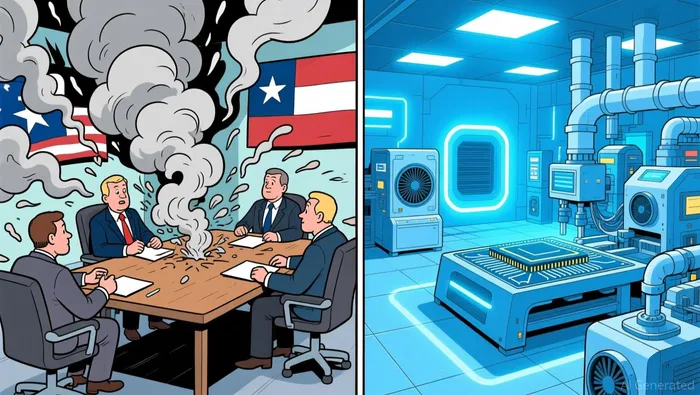
CNBC's "Daily Open" leads with the familiar beat: Trump's Iran deal is "days away" - yet again. The headline carries the qualifier because it should. This is not news. This is political theater the energy market keeps front-running, and every time, it gets punished.
The mechanics are textbook PR-to-pricing feedback loops. On May 29, U.S. and Iranian negotiators reached a tentative agreement to extend the ceasefire by 60 days and begin nuclear talks. The next day, Trump requested amendments, sending the framework back to a negotiating table that never actually signed anything. Iran went silent. By early June, the ceasefire had begun to falter as Israel and Iran resumed trading strikes. On Polymarket - a $276 million volume signal - the odds of a permanent U.S.-Iran deal by June 30 have cratered to roughly 19.5%.
The market is buying a press release and calling it a trade.
Yet Brent crude has already fallen roughly 38% from its wartime peak of over $110, now trading near $92 - because EIA data confirms prices declined in May on rumors of a deal that doesn't exist. XLE mirrored the pattern, rallying on deal headlines and then selling off when the reality caught up. This is not a new playbook. It is how the energy complex prices geopolitical noise until it inevitably corrects.
But here is the part CNBC's headline misses entirely, and what investors with a technology portfolio should care about far more than another round of ceasefire theater:
The helium crisis won't end when the deal does
Qatar sits on the opposite side of the Persian Gulf from Iran and supplies approximately 35% of the world's helium. When the Strait of Hormuz effectively closed following the February 28 outbreak of hostilities, an estimated 27-30% of global helium supply vanished. Qatar's LNG production - helium is a byproduct of natural gas processing - became impossible to ship.
Helium is not an optional commodity. It is used in semiconductor manufacturing for cooling, atmospheric control during etching and deposition, and in the crystal growth of silicon wafers. You cannot run a high-end fab without it.
The Hormuz has been closed for over 80 days. Even with a ceasefire, the supply damage is structural, not mechanical. WestAir Gases, a U.S. distributor, reported in May that even when Hormuz fully resolves, helium supply recovery will take years, not weeks. U.S. distributors are already rationing. Fitch Ratings flagged the "helium tail risk for semiconductors" in March, warning that 3-5 years of recovery is the realistic timeline.
This is the asymmetric supply-side hit that won't reverse when the headlines move on.
Who feels it first
The companies already exposed are the ones that matter to any AI infrastructure thesis: Samsung, SK Hynix, and NVIDIA. All three have acknowledged supply pressure from the helium shortage. These are not marginal disruptions - they are input constraints on the most capital-intensive semiconductor operations in the world, at a moment when AI chip demand is already straining every available wafer.
The cross-currents are clear:
- Oil prices will swing on ceasefire headlines. They already have. That is a mean-reverting game with no edge.
- Helium constraints are structural. They will tighten before they ease, regardless of whether a June deal materializes.
- Semiconductor supply costs - the hidden TCO driver nobody is pricing - are already rising. The helium shortage is one input among several that the Iran conflict introduced, and it is the one with the longest lag to recovery.
The investor-grade implication
If you are positioning on "Iran deal resolution" as an energy trade, you are playing the same tape that has already been replayed three times this year. Brent is down 38% from peak and still 38% above pre-war levels. The deal odds on Polymarket are sub-20%. That is not a setup. That is a headline trap.
The real structural play is on the semiconductor side. The helium shortage creates a supply bottleneck that will persist through 2027 at minimum. Companies with helium inventory, captive supply arrangements, or geographic diversification away from Gulf-dependent inputs gain a durable cost advantage. Companies exposed to helium rationing - and that includes every major AI chip manufacturer - face margin compression that the market has not priced in because nobody is tracking helium as a semiconductor input.
The deal is propaganda. The helium crisis is engineering. Price accordingly.
You decide which was marketing fluff and which one was analysis.