

One of the most dramatic overreactions I've seen in energy markets this year unfolded over the last 72 hours. The Trump administration announced a US-Iran ceasefire deal on June 14th, with the Strait of Hormuz set to reopen. Brent crude fell 4.5% in a single day to roughly $81 a barrel, and has been down nearly 22% over the past month. Goldman Sachs lowered its 2027 Brent forecast to $80, which sent disciplined E&P stocks and midstream names selling off alongside the commodity. The United States Oil Fund (USO) and United States crude oil funds (UCO) tracked the move lower. The headline narrative was clear: the war premium is gone, Iran's oil floods back, the market drowns in supply, and energy equities that were bid up on geopolitical tension are now headed for the basement.
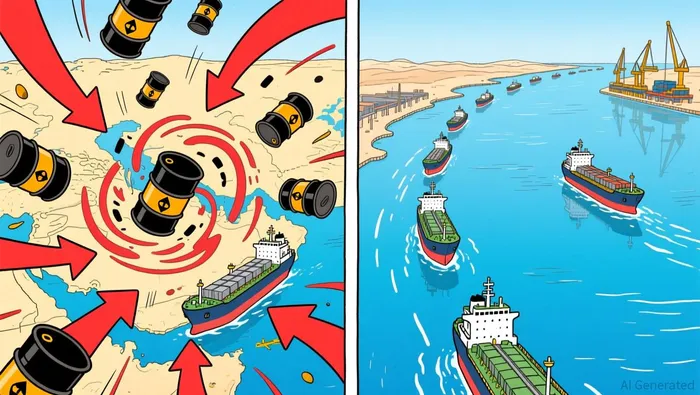
Let me start with the supply side, because this is where the market got it wrong. Iran's crude production isn't sitting at pre-war levels waiting to pour back into the market. Iranian oil output dropped to approximately 2.85 million barrels per day in April 2026, down from roughly 3.3 million barrels per day before the conflict intensified. That's a loss of roughly 350,000 barrels per day - and that's from infrastructure damage, not voluntary restraint. Even if the Strait of Hormuz opens tomorrow, Iran can't simply flip a switch and replace what was lost. Production recovery takes time, investment, and functioning export terminals. The market appears to be pricing an immediate flood of Iranian barrels that simply isn't there.
More importantly, the Strait of Hormuz disruption itself was never the only thing propping up prices. About 20 million barrels per day normally transit the strait. During the conflict, disruptions removed roughly 13 to 14 million barrels per day from the available supply picture. But here's what the data shows: only 3.5 to 5.5 million barrels per day could be rerouted through Saudi and Emirati pipelines outside Hormuz, according to IEA estimates. That means the market absorbed a massive structural gap and found other ways to function. Reopening the strait removes a tightness constraint, yes - but it doesn't instantly create the surplus that would crash prices.
Now let's talk about the supposed oil glut. The IEA forecast a massive 2026 surplus, with OPEC+ adding 1.2 million barrels per day of production alongside similar gains from non-OPEC+ producers. On paper, that's the setup for a $70 market. In reality, the widely predicted 2026 oil glut never showed up in the physical market. Geopolitical friction, supply disruptions, and lower-than-expected output growth kept the market in balance. The reopening of the Strait of Hormuz doesn't automatically resurrect a glut that never materialized.
From a valuation perspective, here's where the overreaction creates opportunity. Goldman's $80 Brent call for 2027 triggered a knee-jerk sell-off in energy equities, but $80 is not a death sentence for the sector. Disciplined E&P operators still generate positive free cash flow at $80 Brent. In the Permian Basin, where breakeven costs for top operators run in the mid-$40s to low-$50s, $80 crude still leaves a comfortable spread. Midstream companies with fee-based revenue models (>85% fee-based contract share for many) are even more insulated - their cash flows don't track the commodity price line by line.
While it's true that the geopolitical risk premium has been stripped from crude prices, the market is making a second error by treating that as the whole story. The risk premium was real during the conflict, and its removal is real. But energy equities that were already priced for a $75 to $80 Brent environment are now trading as if $65 or $70 is coming. There's a crack between what the data supports and what the market is bidding into.
Even if Brent does settle in the low-$80s for the remainder of the year, that doesn't mean energy equities are headed lower. It means that names which were already generating free cash flow at those levels are now selling off for reasons their balance sheets don't support. The contrarian signal is clear: consensus is bearish on the sector because of a geopolitical headline, but the underlying cash-flow math of disciplined operators hasn't changed.
There is a risk worth stating plainly. If Iran's production recovers faster than expected - say, if Chinese buyers rush to rebuild flows and Iran accelerates output by 500,000 barrels per day or more - that adds real supply pressure in the second half of 2026. The Strait of Hormuz reopening does remove a structural tightness constraint that was supporting prices. I'm not arguing that Brent stays at $100. I'm arguing that the move from $105 to $81 was driven by panic, not by a recalibration of what $80 actually means for energy company cash flows.
All things considered, the market's reaction to the Iran ceasefire deal overstates both the near-term supply impact and the earnings impact on disciplined operators. Iran's production is damaged, the predicted glut never materialized, and $80 Brent is still a profitable environment for the best-managed companies. Energy equities with fee-based cash flow models and proven capital discipline are being sold alongside speculative names, and the indiscriminate nature of the sell-off is creating mispricing. For investors looking at quality E&Ps and midstream operators with balanced balance sheets, the panic-driven discount looks like an entry, not an exit. I would rate this a Buy setup for the sector's highest-quality names - the ones whose cash flows survive at $80 Brent and whose multiples are now trading as if they don't.