

Markets priced relief faster than proof
Iran's claim that the Strait of Hormuz was "completely open" triggered an immediate relief trade, but the market may have priced in de-escalation too quickly. Brent fell to $88 from above $98 earlier on Friday, then quickly rebounded toward $92. That wobble matters. Hormuz is not a niche chokepoint; it typically carries a fifth of the world's oil and liquified natural gas. When a corridor that important moves this violently, the first thing you are seeing is sentiment resetting, not proof that physical flows have been restored.
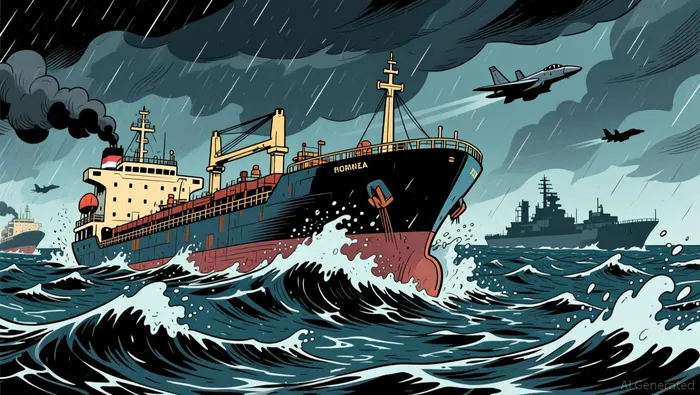
The key mismatch is simple: Iran made the declaration, but maritime groups are still verifying it. And the broader coercion setup did not disappear. Even after Iran's statement, the U.S. naval blockade of Iranian ports remained in force. That argues for caution. One unverified statement does not by itself unwind a blockade, reverse months of disrupted transit, or guarantee safe passage. Treat this as a tactical opening, not a final settlement.
Why the relief rally was so fast
Hormuz was the market's main macro risk
The bull case was straightforward: this headline hit the one variable dominating the tape. Hormuz matters because it is a real supply constraint, not a theoretical one. Traffic had already been squeezed into a trickle, helping push Brent from under $70 per barrel before the conflict to more than $119 per barrel at its peak. So when Iran said transit would be open for the remaining period of the ceasefire, traders did not need full operating certainty to react. They needed relief from the worst-case scenario: a prolonged oil shock.
That also explains why the move spread beyond commodities. The S&P 500 closed up 1.2%, while the CAC and DAX both ended the day around 2% higher. This was not just an energy trade; it was a broad risk-on reset.
Diplomacy made the statement feel credible
The announcement also did not come out of nowhere. Oman's foreign minister had been engaged in intensive diplomatic contacts focused on restoring stability and ensuring the flow of maritime navigation and supply chains. That diplomatic activity did not prove safe passage, but it helped traders treat Iran's words as more than pure posture.
The crucial detail was the linkage to the truce. Iran tied openness to the remaining period of the ceasefire, which meant the market could frame the risk as time-bound and politically conditional rather than open-ended. That is why traders jumped first and verified later.
Why the declaration still falls short of reopening
"Open" has not been operationally confirmed
The important question is not whether Tehran used the word "open." It is whether the underlying risk environment actually changed. It likely has not, not yet. This crisis has already seen at least 17 merchant ships damaged, plus captures and seafarer casualties. In that context, a headline can produce a sharp relief move without meaning the threat environment has been removed.
Even after the announcement, maritime groups are still verifying it, and oil bounced back from $88 toward $92 the same day. That is a useful clue: pricing is moving faster than operating certainty.
Iran still has reasons to preserve leverage
Iran's recent bargaining posture also suggests this is not a durable reset. ISW and CTP said its April 26 proposal offered no concessions and was aimed at ending the war on Tehran's terms, including language that would have let Iran assert control over the Strait of Hormuz. That points to a strategy of extracting relief while keeping leverage intact.
The rhetorical record tells a similar story. Iran's foreign ministry has issued statements strongly condemning recent regional actions and U.S. moves. That is not the tone of an actor signaling a new security framework. It is more consistent with an actor trying to preserve deterrence and domestic credibility while testing how much economic relief it can win without looking weak.
So the real watchpoint is simple: if transit remains tied to the remaining period of the ceasefire, the opening is conditional and therefore reversible.
What would confirm or invalidate the relief trade
Signals that support the rally
- Actual transit. The clearest confirmation is whether maritime groups are still verifying it leads to visible commercial shipping through Hormuz, rather than another short-lived headline move.
- Clearer safety conditions. Improved shipping guidance would matter more than another declaration from Tehran.
- Continued diplomacy. Oman's foreign minister has been in intensive diplomatic contacts aimed at restoring stability and keeping maritime flows moving. Process matters here as much as proclamation.
Signals that weaken the thesis
- A fragile ceasefire link. Iran tied passage to the remaining period of the ceasefire. If that political wrapper weakens, the opening can reverse quickly.
- Ongoing coercion tools. The U.S. naval blockade remained in place, and the U.S. was still pushing an international coalition to open the Strait of Hormuz. That is not a clean reset.
- Stalled verification. If maritime groups are still verifying the claim without clearer transit or safety conditions, the relief trade was likely too aggressive.
The practical stance is to trade the relief, not trust it. The announcement was real enough to move markets, but not yet strong enough to prove that Hormuz is functionally reopened.