

Oil still has a $10 headline risk until next week proves the deal
The core call is simple: oil still has room to move about roughly $10 Brent risk from this setup, and the market should not fully trust a relief rally until next week brings proof, not just press releases. Brent had already rose $2.30 after the latest escalation, which shows how quickly crude can react before the facts settle.
Headline whiplash has already shaped the week
This week gave investors the full loop. Iran said the Strait of Hormuz was closed and that vessels attempting passage would be shot at. The U.S. military quickly said commercial ships were still transiting. That kind of contradiction is exactly what can punish investors who react too fast.
Then the hope trade took over. Trump said a deal could be signed as soon as this weekend. Tehran replied it had not made a final decision, and Tasnim said the text had not yet been finalized or confirmed. Bulls heard "deal." Bears heard "still negotiating." The cleaner read is to wait for action.
Why next week matters
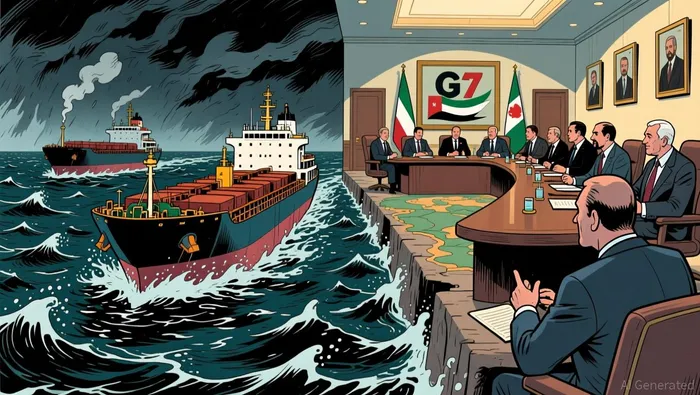
The draft terms being discussed are large enough to matter: a 60-day ceasefire and negotiation period, Iran to reopen the Strait of Hormuz - to restore Pre-War shipping within 30 days, and US to release $24 Billion worth of Iran's frozen funds. The Final deal likely to be signed during the G7 meeting next week.
If next week brings real implementation, oil can unwind quickly. If the talks fizzle, the current headline-driven move can reverse just as fast.
Strait of Hormuz makes oil the cleaner trade
The key difference here is physical. Oil has to deal with a real chokepoint, while stocks are reacting mainly to the story about that chokepoint.
The draft terms matter because Hormuz is a working bottleneck
Reports say the Hormuz would open and the U.S. would lift its blockade on Iranian ports as part of the draft. That matters because the strait normally carries a fifth of the global oil and gas shipments. If transit actually improves, the market does not need a grand narrative to rerate supply risk.
That is why crude can move more cleanly than the broader equity complex. A stock market can dismiss a deal as a change in risk sentiment. Oil has to answer a simpler question: are tankers actually using the lane again?
Why relief has leaned bullish so far
The draft gives the market something concrete to evaluate. The reported terms include a first stage that deals with an "end to the war" on all fronts, a resumption of traffic in the Strait of Hormuz, and economic benefits for Iran. In plain English, that points to less friction on shipping, better confidence in supply routes, and some economic relief that could lower the odds of another shock.
That is why relief has leaned bullish rather than neutral. The market is not betting on a perfect peace treaty; it is betting that fewer obstacles along the energy route could reduce the chance of another supply disruption.
Execution matters more than the headline
This still has to pass the smell test. The draft says Iran would reopen the Strait of Hormuz within 30 days, not that it has already done so. And the latest field reports are not clean. A U.S. official said it appears Iran has attempted to strike commercial ships transiting the Strait of Hormuz early Friday morning local time. Even if some traffic continues, that is the kind of detail that can turn a relief rally into a trap.
There is also a backdrop that keeps oil sensitive: U.S. crude inventories fell for eighth week, raising supply concerns, including a 7.2 million barrel crude draw. So the tank is not full. If the deal delivers real access and real transit, that tightness can support a smoother move lower. If the deal is mostly words, the market can just as quickly remember that the supply concern is still there.
The bull case and bear case are really about implementation
The setup around Hormuz is already clear. The real fight now is whether this is a genuine breakthrough or just another scare trade with better packaging.
Bull case: a two-stage deal gives the market a first checkpoint
Bulls have a real point here. The MoU reportedly has a first stage covering an end to the war, resumption of traffic in the Strait of Hormuz, and economic benefits for Iran, with the second stage reserved for nuclear talks. That sequence matters because it gives the market an early, tangible checkpoint: ships move, funds ease, ports open, and the harder security issues come later.
If that is how it plays out in real time, the first stage alone could calm the near-term energy picture without waiting for a final comprehensive treaty. That is why the bull case feels credible: it does not require perfect trust, only proof that phase one works fast enough to change market behavior.
Bear case: credibility and spoilers are still the weak links
The fragility is obvious. Trump's deal whiplash hurts Trump's credibility in a major way, and Iran has still not locked it up: the foreign ministry said there has been no final decision, while Tasnim said conflict over one or two clauses still persists.
There is also a sequencing problem. Iranian statements suggest Tehran wants some economic relief early, including release of frozen funds, before nuclear talks begin. That may make sense from Tehran's point of view, but it raises the odds of friction later. Outside interference is another fault line. Israel is not a party to the memorandum of understanding, yet Netanyahu has already weighed in after speaking with Trump.
What would prove the deal is real next week?
Next week should settle this quickly. If the deal is real, the proof should show up in three simple areas.
Three proof boxes
- Paper: A deal is actually signed, not just discussed. The key marker is whether it lands during the final deal likely to be signed during the G7 meeting, or at least after Trump said a deal could be signed as soon as this weekend.
- Traffic: Tankers get back to work in Hormuz. Watch for the reported Strait of Hormuz would open to turn into real shipping behavior, not another round of headlines.
- Behavior: No repeat of the claim that Iran appears to have attempted to strike commercial ships transiting the Strait of Hormuz early Friday morning local time.
What would invalidate the relief rally
If Tehran says it has not made a final decision, if talks are reported as suspended, or if Hormuz still does not look open in practice, then the rally is not proven. In that case, it is safer to treat it as a headline bounce than a finished deal.