

Ceasefire alone has not normalized transit through Hormuz
Iran's latest warning matters because Hormuz still carries 20% of the world's daily oil supply and 20% of global LNG, and the ceasefire has not restored normal transit. What investors saw was not a return to business as usual, but a reminder that access through the chokepoint remains at Tehran's discretion.
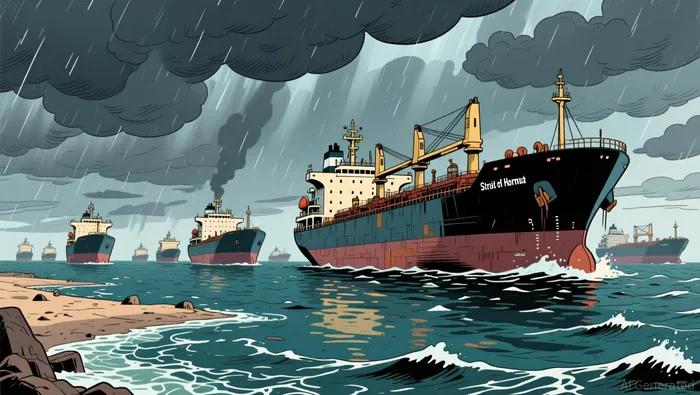
Coercive signaling is still driving prices
The market's reaction showed how fragile that distinction is. After Iran said the strait would be "completely open" for the rest of the ceasefire, Brent fell to $88 from above $98 earlier in the session. Then Iran reversed course and reasserted control of the Strait of Hormuz, warning that approaching vessels could be targeted. That is not normal peacetime transit. It is coercive signaling: enough openness to calm markets temporarily, and enough threat to keep leverage intact.
The bull case is that the ceasefire has at least removed the worst immediate escalation risk, leaving room for further de-escalation. The bear case matters more for pricing: three days after the ceasefire, the reopening of the Strait is not happening, and traffic remains largely closed and controlled at Iran's discretion.
If the market starts treating Hormuz as a recurring shock option rather than a resolved risk, oil can quickly move back toward the $100-a-barrel zone.
Iran's leverage comes from discretionary control, not a permanent blockade
The pricing risk is not a permanent blockade. It is Iran's ability to apply pressure selectively, so markets cannot fully remove the Hormuz premium. Tehran has warned that "enemy" military cargo and US-linked operators may be barred, while allowing commercial traffic only under a new maritime control mechanism. That is not an all-or-nothing scenario. It is a setup better suited to coercion.
Why selective control keeps volatility high
A full blockade is easier to model. Selective enforcement is not. When transit depends on Tehran's judgment, traders cannot assume that a verbal reopening means normal flow. They have to price the chance that the next statement, seizure, or safety ruling changes access again.
The recent sequence shows how that works. Iran first said the strait would be "completely open", and Brent fell to $88 from above $98 earlier on Friday. Less than 24 hours later, the IRGC said the strait will be closed and that any ship attempting to pass would be targeted. Reports then said shipping was at a standstill as Iran reasserted control. That on-off pattern is where volatility compounds.
Operator behavior matters more than political declarations
A statement can declare passage open, but operators still need to believe transit is safe. Commercial behavior matters more than political rhetoric. We saw that during the peak shock, when Maersk, MSC, CMA CGM, and Hapag-Lloyd all suspended transits and more than 150 tankers anchored outside the strait. Even now, insurers and shipowners do not have to move just because officials say the waterway is open.
Iran has made that calculus harder by showing it can enforce rules case by case. The IRGC seized a tanker in the strait over alleged smuggling, and 16 crew members were detained. That is the real playbook: not total closure, but enough intervention to keep vessels wondering whether the next ship could be delayed, diverted, or inspected.
For portfolios, the risk is a persistent control premium
For portfolios, the issue is not only crude direction. It is whether a controlled chokepoint lifts volatility and correlation across assets that do not usually move together:
- Crude stays vulnerable because traders keep paying a premium for possible disruption, not just confirmed disruption.
- Airlines, refiners, and freight-linked names can suffer from sustained fuel and transport cost pressure even without a headline blockade.
- FX and rates become more relevant if energy stays high enough to pressure trade balances or inflation expectations.
The historical boundary condition matters. At the peak Hormuz shock, Brent increased by about 65 percent amid pronounced volatility. Investors do not need to repeat that extreme to face real losses. Repeated episodes of traffic controlled at Iran's discretion can do similar damage to positioning because they keep the risk premium alive.