

Iran's first major post-ceasefire escalation hit crypto leverage first
This looked more like a leverage flush than a crypto-specific break. Liquidations exceeded $1 billion within hours, Bitcoin fell more than 2%, Ethereum dropped roughly 7%, and the broader crypto market slipped over 3%. Those numbers point to a fast squeeze of crowded positioning rather than a failure inside the crypto ecosystem itself.
The move was amplified because it came after a period of relative calm. When traders are positioned for stability and leverage is already in the system, geopolitical shocks can hit sentiment and risk appetite immediately.
Nothing in the reports suggests a direct hit to crypto protocols, stablecoins, or on-chain fundamentals. The transmission channel appears to be sentiment, risk-off positioning, and forced liquidations rather than a crypto-specific breakdown.
Bitcoin is again trading like a liquid risk asset
The immediate wash-out is one thing; the bigger question is whether Bitcoin now re-prices lower as a risk asset as traditional markets digest the escalation.
The market has already shown the transmission path
Bitcoin has already behaved like a liquid risk sleeve, first slipping below $64,000 on the initial strikes and then holding above $63,000 as retaliation unfolded. Analysts warn that a broader selloff when traditional markets reopen could push it toward or below $60,000 if that risk-off behavior intensifies.
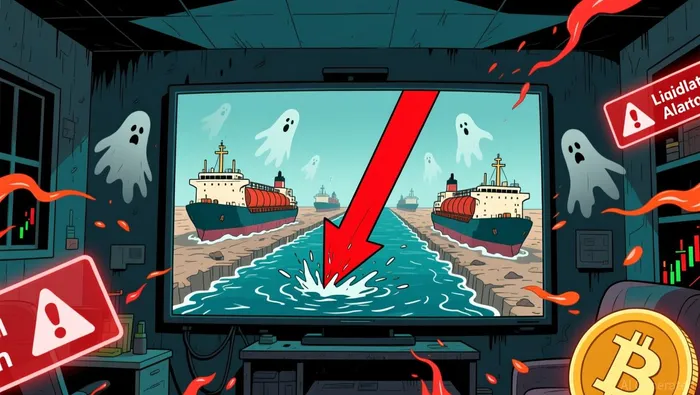
The mechanism is not crypto-specific. It runs through risk appetite and oil. The escalation has revived fears that Iran could disrupt the Strait of Hormuz, a chokepoint handling 20% of global oil shipments. If that happens, oil prices could spike, inflation concerns could rise, and portfolio managers could cut risk across asset classes at once. In that setup, Bitcoin gets sold not because something broke on-chain, but because it remains an easy-to-sell liquid asset in a broad de-risking trade.
Bulls still have a defense
Bulls are not starting from nothing. Bitcoin briefly pushed to $64,128 before fading back below $63,000, showing that the market is still fighting over direction rather than drifting cleanly lower.
That support case gets harder if the oil channel stays open and traditional equities weaken. In that kind of setup, crypto usually comes under pressure again as correlations revert toward more typical crisis behavior.
What decides the next move
The bullish trigger is straightforward: traditional markets hold up, oil stabilizes, and Bitcoin absorbs pressure without a deeper equity-linked flush. The bearish trigger is also clear: if equities gap down and crude keeps rising, Bitcoin likely faces another round of risk-off selling.
A fast de-escalation in the region, without a meaningful move in oil, would be the clearest invalidation of the worse-case path.
The $60,000 line is the next real decision point
The key question over the next few sessions is simple: what does Bitcoin trade as once the first wave of liquidations is out of the system?
Why $60,000 matters
The real line in the sand is the $60,000 level. Analysts warn that a broader risk-off flush when traditional markets reopen could push Bitcoin toward or below that zone if it keeps trading as a liquid risk sleeve rather than a safe haven. If that level holds, the market is absorbing shock. If it breaks cleanly, the war premium is likely being repriced lower.
What would confirm the bearish path
- A break below $60,000 while traditional risk assets stay under pressure.
- Higher oil prices driven by fresh fears around the Strait of Hormuz, which would extend the same portfolio-cutting mechanism that triggered the first selloff.
- Another failure after Bitcoin retraced under $63,000, suggesting buyers are reacting rather than fully absorbing supply.
What would reduce the downside
- A firm hold above $60,000 through the first few sessions.
- Meaningful de-escalation rhetoric around diplomacy with Iran.
- A stronger case for Bitcoin acting more like a global liquidity rail than just a speculative asset, which could help flows stabilize faster than sentiment currently expects.
For now, the setup still looks cautious rather than panicked. The main support case improves if escalation stalls and $60,000 holds.