

After 21 hours of intensive diplomatic negotiations in Islamabad, the high-stakes talks between the United States and Iran have officially collapsed without a deal. Vice President JD Vance departed empty-handed, failing to secure guarantees limiting Iran’s nuclear program or reopening the crucial Strait of Hormuz. Consequently, my stance on the geopolitical and macroeconomic outlook is definitive: while we may witness a short-term resumption of targeted bombings, a full-scale ground war remains highly unlikely. Instead, the region is entering a protracted period of high-tension deadlock. Markets will remain highly volatile, forced to rapidly reprice the persistent geopolitical risk premium that was prematurely discounted just days ago.
The 21-Hour Deadlock in Islamabad
Over the weekend of April 11 to April 12, 2026, global financial focus shifted to Islamabad, where US Vice President JD Vance engaged in the highest-level direct confrontation with Iranian officials in nearly half a century. Hosted by Pakistani Prime Minister Shehbaz Sharif, the urgent negotiations aimed to halt a brutal six-week conflict and reopen the Strait of Hormuz. The US delegation arrived with a rigid mandate: secure a definitive halt to Iran’s nuclear ambitions and guarantee unfettered maritime transit. However, the Iranian delegation, led by Parliament Speaker Mohammad-Bagher Ghalibaf, arrived at an entirely different negotiating table. Tehran demanded a comprehensive post-war package, emphasizing immediate sanctions relief, total sovereignty over the waterway, and a broader withdrawal of US military forces from the Middle East.
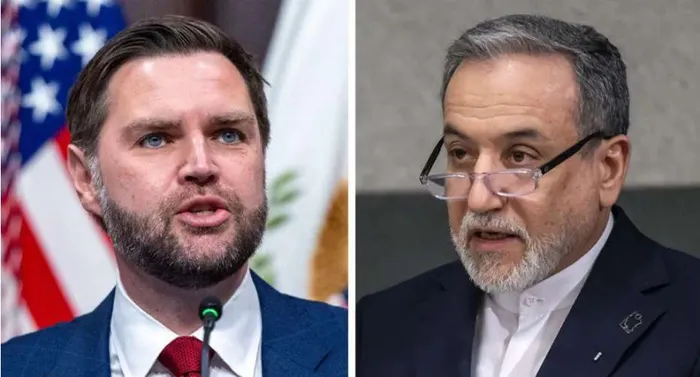
This fundamental misalignment in core objectives resulted in a swift collapse. While Vance explicitly stated that the US presented a "final and best offer" which Tehran outright rejected, Iranian officials maintained that issues like the unfreezing of approximately $27 billion in revenue remained completely unaddressed. The immediate impact was starkly visible on the water. Although a brief window of optimism saw two Chinese supertankers and a Greek vessel traverse the Strait late Saturday, signaling the largest oil movement since hostilities commenced, the failure of the talks abruptly shut this window. By Sunday morning, tracking data confirmed that empty supertankers approaching the Persian Gulf had executed rapid U-turns. The logistics chain remains deeply fractured, firmly embedding geopolitical risks back into the global macroeconomic equation.
What Are the Possible Future Developments of the US-Iran War?
The collapse of the Islamabad summit does not necessarily dictate an immediate return to catastrophic, all-out warfare. Geopolitical analysts observe several distinct scenarios that could dictate the medium-term trajectory of the region. Firstly, a fragile window for baseline negotiations technically remains open. Although no formal pact materialized, diplomatic channels through third-party intermediaries like Pakistan continue to function, providing a crucial safety net against accidental over-escalation.
Secondly, and most likely, the United States and Iran will enter a protracted phase of "fight and talk." In this high-tension deadlock, the conflict will not fundamentally de-escalate, but core issues will be temporarily shelved to manage respective domestic pressures. A recent analysis from The Wall Street Journal highlighted that the impending US midterm elections represent a critical vulnerability for the Trump administration, severely limiting the political capital available for massive, unpopular overseas deployments. Consequently, both adversaries may engage in limited tactical strikes to establish leverage, while avoiding a systemic rupture.
The risk of a massive military escalation, while less probable, cannot be completely dismissed. Some factions advocate for severe infrastructure bombings targeting Iran's energy grid. However, standard military assessments warn that aerial campaigns rarely dismantle entrenched regimes and would undoubtedly provoke asymmetrical retaliation. Furthermore, a full-scale ground invasion aimed at seizing coastal assets is widely considered unfeasible; such an operation would trap US forces in a devastating quagmire. Ultimately, the dilemma surrounding the Strait of Hormuz will persist. Iran will likely retain tactical control over the chokepoint, utilizing maritime disruptions as its primary economic weapon to pressure Western inflation metrics.
US-Iran Negotiations Collapse: What Are the Possible Future Market Trends?
The market response to Sunday's collapse was immediate and unambiguous. WTI crude surged approximately 8–9%, climbing from near $96 to above $104 per barrel; Brent rose 7–8% to roughly $102. For context, Brent had peaked at $126 per barrel earlier in the conflict before pulling back on ceasefire optimism — a round trip that now appears to be reversing. U.S. equity futures fell around 1% for the S&P 500 and approximately 1.2% for the Dow — equivalent to roughly 580 index points — while European natural gas futures surged as much as 17%. The dollar advanced broadly against risk-sensitive currencies as capital sought traditional safe-haven assets.
Goldman Sachs had already mapped this territory explicitly. In a note dated April 8–9, the bank's commodity analysts including Daan Struyven stated that "we continue to see the risks to our price forecast as skewed to the upside," flagging a scenario in which Brent averages $120 per barrel in Q3 2026 and $115 in Q4 if the Strait of Hormuz remains largely closed for another month. In a more severe scenario involving persistent regional production losses of around 2 million barrels per day, Q4 Brent could still average $115 even with partial Hormuz reopening.
Charles Schwab's market research team, writing just before the talks collapsed, assessed that "market volatility is apt to remain elevated with potential for short, but sharp swings driven by headline risk" and explicitly advised against aggressively adding risk. That view now carries significantly more weight. City Index senior market analyst Fiona Cincotta described Monday's moves as "an absolute unwinding of any optimism heading into the peace talks." MST Marquee analyst Saul Kavonic added that "the market is now largely back to conditions before the ceasefire, except now the U.S. will block the remaining up to 2 million barrels of Iranian-linked flows through the Strait of Hormuz as well."
The critical analytical question for the coming week is not whether oil moves higher in the immediate term — that direction appears clear — but whether markets begin repricing a "Hormuz stays shut for months" baseline rather than treating Sunday's failure as a one-off shock. If that repricing takes hold, the transmission from energy prices to inflation expectations — and from there to long-duration fixed income and rate-sensitive equities — becomes the second-order risk that cannot be dismissed. Oil costs are already up over 30% since the conflict began in late February. Persistent supply restriction extending into Q3 would meaningfully complicate the Federal Reserve's already delicate policy calculus.
Conclusion
The 21-hour stalemate in Islamabad confirms the US-Iran conflict is far from a durable resolution. While an immediate ground invasion is highly improbable, the ongoing maritime blockade guarantees persistent supply chain disruptions and elevated energy costs. Investors must brace for structurally higher market volatility, heavily defensive capital positioning, and stubbornly resilient inflation metrics as both nations settle into a dangerous "fight and talk" paradigm. Trading in this geopolitical environment carries substantial risk; portfolios should be tightly managed against sudden macroeconomic shocks.