

Brent near $96 reflects peace hopes that the battlefield has not earned
Oil is still trading as if diplomacy is about to do the heavy lifting that the battlefield has not. Brent at $96.29 remains elevated, and analysts say a swift return to pre-war levels is unlikely. That leaves markets pricing a calmer Middle East before the fighting, the rhetoric, and the chokepoint risk have really cleared.
Hope is moving faster than proof
This week's exchanges of retaliatory strikes came even as prices had already been leaning on the possibility of easing hostilities. Diplomatic signals also flipped quickly: reports of progress were later dismissed by the White House after initially fueling relief. That is not confirmation of peace. It is a market still reacting to conflicting headlines.
The conflict has also broadened rather than narrowed. Iran's large-scale exchanges with Israel and the Houthis in Yemen back into the conflict keep regional shipping routes more vulnerable. Even with some vessel movement through the Strait of Hormuz, conditions still fall far short of normal. At this level, Brent is not just pricing supply risk; it is pricing the expectation that Washington and Tehran can turn unstable messaging into a durable pause.
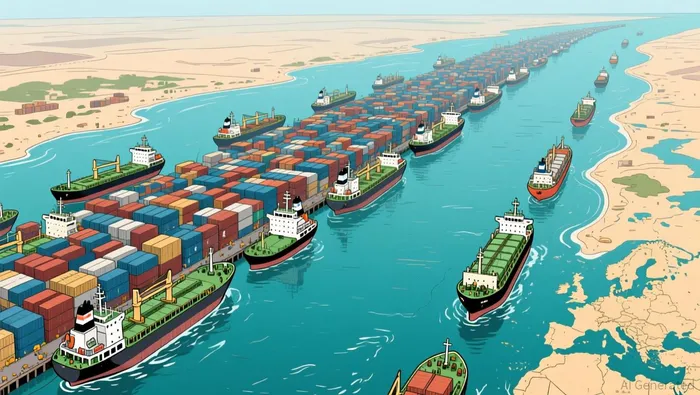
Hormuz traffic, not ceasefire headlines, is the real test
The mistake now is not fearing de-escalation. It is assuming that headlines have already repaired the physical market.
The strait is still a bottleneck
After the April ceasefire, the Strait of Hormuz did not reset. Only five vessels crossed on Wednesday and seven transited on Thursday. The waterway typically handled about 120-140 transits before the war, and more than 600 vessels remained waiting in the Gulf, including 325 tankers. That is not what a fading-risk market looks like.
Investors may be anchoring to the word "ceasefire" while the operating system underneath has not normalized. Analysts said safe transit capacity could remain limited to about 10-15 passages a day even if the ceasefire holds. That gap between headline relief and actual flow normalization is where another round of repricing can still emerge.
Diplomacy still needs physical proof
The White House pushed back on claims that the strait was fully closed, but still stressed the expectation and demand that the Strait of Hormuz is reopened immediately, quickly and safety. At the same time, Iran has continued calibrated force near the Strait of Hormuz, including an attack that downed a U.S. Army AH-64 Apache gunship. The issue is no longer only whether missiles are falling. It is whether the chokepoint can be used with enough confidence for global oil flows to stabilize.
So the real test is straightforward: sustained, safe transit, not press conferences. Even if a longer-term deal were signed tomorrow, supply chains would still take time to normalize. Until that happens, the war premium can persist longer than headline-driven optimism suggests.
What investors should watch if the $96 premium is going to fade
With Brent still near $96.29 and Hormuz still clearing only in fits and starts despite the ceasefire, the more useful exercise is not to predict the next headline. It is to watch whether the war premium is spreading into the broader economy or fading through real flow normalization.
The signals that matter most
The market may be moving too quickly from "ceasefire" to "relief." Bulls do have a case because the temporary ceasefire could still create room for broader de-escalation. But the evidence so far still points to a wider fight, with Iran resuming large-scale military exchanges with Israel and the Houthis drawn back into the conflict.
What could change the setup
The bigger risk is underestimating the inflation channel. Energy prices remain the main way this war is reaching financial markets, and an oil shock has replaced tariffs as the leading inflation risk to the U.S. economy. Russell Investments also says the primary transmission mechanism ... is from energy prices. That keeps pressure on transport, chemicals, airlines, and rate-sensitive assets.
The thesis weakens if there is a durable ceasefire-plus-normalization package that meaningfully opens the strait and limits proxy spillover, including in a context where the ceasefire does not apply to Israel's ongoing war with Hezbollah. Until flows and safety in the strait improve in a lasting way, the $96 grind still looks easier to respect than early peace hopes.