

UK bills are set to rise again, and October may be just as hard
UK bills are on track to rise by £209 this year, with the typical dual-fuel household moving from £1,641 in April to about £1,850 from July. For most households, that is not an abstract market move. It hits the cost of heating, cooking, and keeping the lights on.
July may be a spike, but autumn already looks higher
The more optimistic case is that this remains a sharp three-month shock rather than a lasting reset. Ofgem's July cap is still based on average wholesale prices over a three-month period, so the next update should clarify whether the war-driven surge is easing.
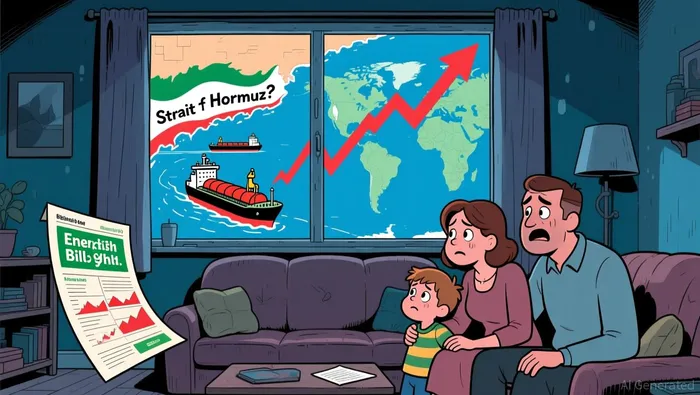
The tougher case is harder to dismiss. Even after some calm in trading, wholesale prices have stayed elevated, and Cornwall Insight's October forecast is already near £1,899.44. If that forecast holds, autumn does not look like a return to April.
There is also a cross-Atlantic warning. In the U.S., the same shock is already showing up in fuel, electricity, food, and heating costs. That suggests the pressure is not unique to the UK and may be feeding through more broadly.
Why the Persian Gulf disruption hits both gas and electricity
The choke point is the Strait of Hormuz
The core mechanism is straightforward. When attacks damage Gulf energy infrastructure and the Strait of Hormuz is disrupted, the market loses more than a local supply route. About 20% of the world's oil and liquefied natural gas normally passes through that choke point. That helps explain why even a temporary shock can keep wholesale prices elevated for longer than many households expect.
Gas price shocks still feed through to electricity
Many people treat gas and electricity as separate bills, but in the UK market they are linked at the margin. Even though roughly one-third of our gas comes from the North Sea, households still pay the international market price for it.
That pricing logic also spills into power. Because gas-fired generation often sets the wholesale clearing price, gas sets the price of electricity about 98% of the time. So a tightening global gas market does not just hit the boiler; it can also push up the electricity tariff. That helps explain why the July cap forecast moved to £1,801 per year, a projected £160 or 10% rise.
The wider cost-of-living test
This is not only a UK pricing issue. The World Bank expects energy prices to surge by 24% this year and overall commodity prices to rise 16% in 2026. That matters because higher fuel, freight, and food costs all press on the same household budget.
The key watchpoint is duration. If Hormuz stays disrupted long enough for the three-month averaging window to work, July may not be the peak. If conditions ease faster, the market may still prove more temporary than the headline suggests.
Investors and markets have a broader story to watch
The bill hike is the most visible hit, but the market implications are wider.
Where the pressure may help
If wholesale gas stays high into autumn, UK suppliers and generators will be operating from a much steeper revenue base than before the shock. Cornwall Insight's concern is that October forecasts point to a similar cap level as July, and July–September cap forecasts have surged to £1,801.
Shipping and tanker names could also benefit if the Hormuz disruption lasts long enough to reroute traffic and tighten available tonnage. The conflict has already created the largest supply disruption in the history of the global oil market, so delays to normal shipping flows could keep freight premiums elevated.
UK renewables may also get a fresher policy and investment look. A sharper cost-of-living hit can strengthen the case for expanding domestic renewable generation to reduce exposure to imported gas.
Where the pressure may hurt
Motorists and transport-heavy businesses are among the easier losers to spot. Analysts estimate roughly 7p a litre of pump-price sensitivity for every $10 increase in oil. Average petrol had already risen to 137.78p a litre, and 150p per litre is not out of the question if crude stays high.
The broader macro watchpoint is borrowing costs. If energy keeps inflation sticky, lenders may keep that caution embedded in shorter fixed mortgage products. That would matter less for one bill cycle and more for the wider economy.
What would change the story
The main thing to watch is whether the shock fades quickly or starts to look structural. If the conflict eases and shipping normalizes, the next cap updates may prove reassuring. If not, the rise from April to July may look less like a one-off spike and more like the start of a harder autumn.