

Major U.S. airlines spent just over $5 billion on jet fuel in March-a 56% jump from February that added $1.8 billion to their costs in a single month. The cost per gallon surged to $3.13, up 74 cents and 31% month-over-month, according to the U.S. Transportation Department. Fuel consumption also rose 20% in March, compounding the expense.
The trigger was clear: U.S.-Israeli strikes on Iran disrupted traffic through the Strait of Hormuz, sending jet fuel prices soaring and creating the air travel industry's worst crisis since the COVID-19 pandemic. For airlines already operating on thin margins, that $5 billion bill represents an immediate and severe financial blow.
Commodity Balance Under Stress: Inventories, Refining, and Grade Mismatch
The supply picture is where the real pain is building. Europe's jet fuel stocks have been draining for weeks, and the International Energy Agency warned four weeks ago that the region had about six weeks of jet fuel left. That's a razor's edge. When inventories sit that low, any further disruption doesn't just nudge prices-it forces immediate operational cuts. Airlines from Lufthansa to United have already begun slashing flights, not because demand has collapsed, but because physical supply is tightening beyond what reserves can absorb.
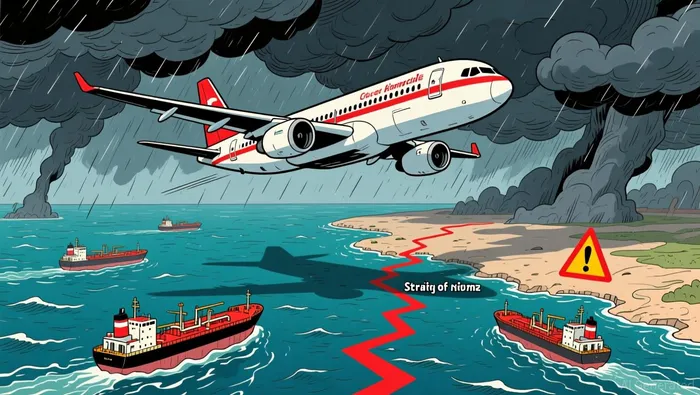
The United States is trying to fill the gap, but the math is unforgiving. American refineries ramped up jet fuel production by 26,000 more barrels per day in the last week of April, yet this came at a direct cost to other products. To make more jet fuel, refineries cut gasoline output by about 53,000 barrels per day and drew down gasoline inventories by 6.1 million barrels. The result: U.S. gasoline stocks now sit about 2% below their five-year average, while diesel is far worse off at 11% below normal. These aren't marginal dips-they're meaningful deficits in a market that runs on just-in-time delivery.
Here's the structural problem: U.S. refineries are already running at multi-decade output highs. There is no spare capacity to tap. When you push more of one product through a constrained system, something else gives. That's exactly what's happening-gasoline and diesel are being sacrificed to feed jet fuel demand.
The issue is compounded by crude grade mismatch. The Middle East and Venezuela produce heavy, sour crude-thick and sludgy, ideal for making diesel and jet fuel. The United States, by contrast, produces mostly light, sweet crude, which refineries are optimized to process into gasoline. America's last major refinery was built in 1977, when the country still imported most of its crude from the Middle East and Latin America. Since the fracking revolution, the U.S. has become a net oil exporter, but it still imports about a third of its crude. With heavy, sour crude now stuck in the Middle East due to the war, U.S. refineries are processing more domestic light crude than they're designed for-reducing efficiency and raising costs for every barrel of jet fuel and diesel they produce.
Demand remains robust across aviation, heating, and transportation. With inventories depleted and refining efficiency compromised, the market has no buffer left. Every additional barrel of jet fuel demanded is a barrel taken from an already-thin reserve. That's why wholesale gasoline prices have climbed 74 cents since the IEA warned about the jet fuel shortage-and why diesel is now just under 16 cents away from hitting an all-time high. The supply balance isn't just tight; it's structurally compromised.
Near-Term Outlook: Elevated Prices Through Summer and Fall
The supply picture remains structurally compromised, and that means relief is measured in months, not weeks. Former New Hampshire Governor Chris Sununu, who represents the major airlines as head of Airlines for America, has delivered a stark message to the Trump administration: even if the war ends tomorrow, ticket prices won't drop immediately. The reason is simple inventory physics-rebuilding the stocks that Europe and the U.S. have drawn down to razor's edge takes time. Sununu's warning to Treasury Secretary Scott Bessent was clear: expect elevated prices through the summer travel season and into the fall.
That timeline creates a political problem for the administration. Sixty-three percent of Americans already blame Trump for the surge in gas prices, and more than 8 in 10 say the cost at the pump is straining their household budgets. With the summer vacation season-the industry's biggest revenue window-arriving while prices remain elevated, the political fallout could be significant. Administration officials are acutely aware that Republicans may pay a price at the polls if fuel costs stay high through November's midterm elections. This is why advisers are pushing for a swift end to the conflict, not just for strategic reasons but for economic and political survival.
The path to relief is now in motion. Reports earlier this week indicated that Iran and the U.S. are working with mediators on a framework to restart negotiations and reopen the Strait of Hormuz. Crude oil prices responded by falling below $100 a barrel. But even if a deal materializes quickly, the market mechanics are unforgiving. Refineries need time to rebalance output, ships need to resume normal transit through the strait, and inventories-particularly in Europe-need to be replenished. Sununu's assessment stands: the market will see elevated prices through summer and fall regardless.
For airlines, this means the $5 billion fuel bill from March is not a one-time shock but a sustained cost pressure. Carriers have already raised fares-domestic ticket prices climbed 21% year-over-year to $570-and are cutting unprofitable flights. The hope is that demand remains resilient enough to absorb the higher fares without collapsing bookings. But with supply still tight and inventories depleted, there's no buffer for additional disruptions. The best-case scenario is a gradual moderation starting in late summer; the worst case is another shock if the strait remains blocked or if refining constraints worsen. For now, the outlook is clear: high prices are the baseline, and the political system is racing against the calendar to change that.
Airline Responses and Consumer Impact
Airlines are responding to the fuel cost shock with a mix of service cuts, fee increases, and schedule reductions-and travelers are already changing how they book. Delta became the latest carrier to trim in-flight offerings, announcing it will eliminate free snacks and drinks on short-haul flights under 350 miles starting May 19. The move affects economy passengers on flights shorter than an hour; only Delta First customers will continue receiving service. The airline frames this as creating consistency across its network, but the timing is telling: it follows Spirit Airlines' collapse over the weekend, which the budget carrier partially blamed on jet fuel costs that have roughly doubled since the start of the year.
Beyond food, carriers are hitting travelers where it hurts most: checked baggage. All major U.S. airlines-American, Alaska, Delta, Southwest, and United-raised fees by about $10 per bag in April, bringing the starting price for a first checked bag to $45 on domestic flights. These aren't one-time surcharges; industry analyst Nick Ewen notes that historically, checked bag fees rarely decrease once increased.
The operational cuts are substantial. Airlines have removed 9.3 million seats from the schedule between June and September, with the Middle East bearing the brunt-Qatar Airways alone cut two million seats for those months. For travelers, this means fewer options and higher prices: U.S. domestic fares jumped 24% year-over-year in late April, while international fares rose 16%.
That price pressure is reshaping behavior. Some passengers are already shifting away from budget carriers toward full-service airlines, opting to pay more for reliability rather than risk last-minute cancellations. Others are booking far in advance to lock in availability, abandoning the strategy of waiting for last-minute deals. The underlying dynamic is straightforward: when fuel costs stay elevated, airlines pass the pressure forward through fees and reduced capacity, and travelers absorb it through higher prices and fewer choices.