

I don't normally write about private real estate developments - my home turf is oil and gas, where cash flow and balance sheets are transparent enough to grade. But when a developer announces a Phase II expansion in a submarket where the vacancy rate is already above its decade average, the same question applies: are the underlying cash flows actually there to support the thesis, or is supply chasing a story that the numbers haven't confirmed yet?
MHR Capital Group, a Bellevue-based private investment firm, has announced plans for Phase II of its mixed-use residential development in Kennewick, Washington. MHR's first project in the market - a 105-unit, 133,000-square-foot development called The Falls on 24th in the Southridge area - opened in May 2025. The company also broke ground earlier this year on an AC Hotels by Marriott in Kennewick, targeting a 2027 opening. That's a lot of capital commitment to a market of roughly 323,000 people.
Now let's talk about the numbers.
The bull case is easy to state. The Tri-Cities region added approximately 2,725 residents in 2025. The region's workforce has grown by 3,000 since 2019. Washington State as a whole has been absorbing domestic migration, and the Hanford Site - a decommissioned nuclear production complex operated by the federal government - provides a multi-decade employment anchor for the area. The Trump administration's FY2026 budget proposal called for increased Hanford cleanup spending, which means sustained contractor demand. This is the foundation of the development thesis: people arriving, jobs growing, rental demand following.
While it's true that population growth is real, the vacancy rate tells a different story. As of the fourth quarter of 2025, the Kennewick-Richland multifamily vacancy rate stood at 8.1%. That compares to a 10-year average of 6.9%. In apartment investing, vacancy above the long-term mean means there are more units than tenants to fill them - which puts downward pressure on rents and leaves developers absorbing empty square footage.
From a cash-flow perspective, this is the data point that matters most. New development only prints money once it's leased. At 8.1% vacancy, the market hasn't absorbed the last wave of supply yet. Adding Phase II units into that environment is a bet that absorption will accelerate faster than construction. That's not impossible, but it's a bet - and the developer, not the market, carries the risk.
National context doesn't help the bull case either. National multifamily cap rates - the yield investors demand on apartment properties, which works out to net operating income divided by property value - held around 5.6% to 5.7% through 2025, unchanged from the prior year. Some analysts expect gradual declines beginning in 2026, which would compress valuations and squeeze the spreads private operators need to make their financing work. Other analysts see stabilization. Either way, the capital environment is tight. Construction financing in a small-market sublet like Kennewick carries a higher risk premium than in a primary metro, and there's no liquidity shortcut if the absorption thesis stalls.
Even if population growth holds at its current pace, the math of absorption is unforgiving. Adding 2,700 people a year doesn't translate directly into 2,700 new rental units demanded annually. Many new residents buy homes, and existing residents don't all move into purpose-built multifamily. The vacancy rate is the lagging indicator that captures the gap between what developers build and what renters actually take. It's at 8.1% - and it hasn't come down yet.
This isn't a Sell on MHR Capital because you can't short a private company. It is, however, a warning for anyone on the capital allocation side of the equation - private equity partners, mezzanine lenders, and co-investors who are betting their money on the Kennewick story without checking the vacancy rate first. Cheap growth narratives look like value until the numbers prove they're speculation.
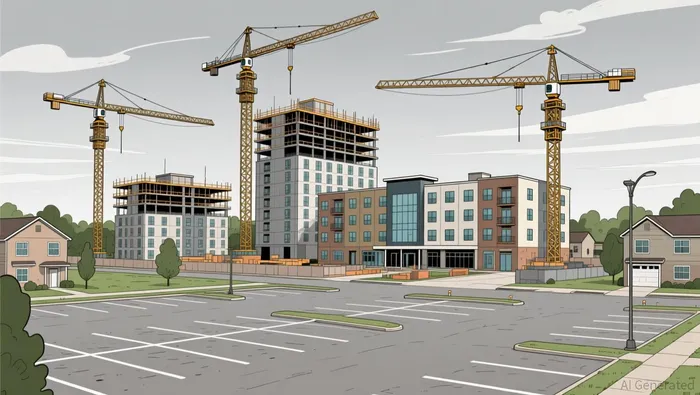
For public market investors watching the multifamily REIT space, the lesson is directional. Markets with elevated vacancy above their historical mean are where rent growth dies first. As the new construction pipeline keeps flowing - Yardi Matrix projected nearly 441,000 new units for 2026 - the operators who will survive are the ones in markets where the vacancy rate is below the long-term average, where absorption is already clearing new supply, and where the cash flow doesn't depend on a population growth thesis that the data hasn't confirmed.
All things considered, the Kennewick story has the right tailwinds and the wrong vacancy rate. Growth doesn't matter if the units are empty. I'd be cautious on any capital committed to new multifamily supply in submarkets where the vacancy rate is still above its decade average - regardless of how fast the population is growing.