

The Senate Banking Committee has cleared the first major hurdle, advancing Kevin Warsh's nomination along strict party lines. The 13-11 vote, the first fully partisan committee decision in Fed chair history, sets the stage for a final floor vote expected the week of May 11. Republicans hold a simple majority in the full Senate, meaning Warsh needs only 51 votes to confirm.
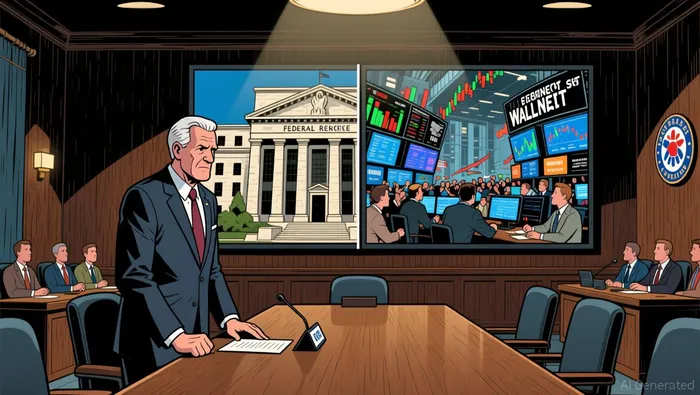
The path was not straightforward. A major political hurdle was the Justice Department's criminal probe into former Chair Jerome Powell, which threatened to derail the nomination. That probe, led by U.S. Attorney Jeanine Pirro, had been a key sticking point for Republican Senator Thom Tillis, who vowed to block Warsh until it ended. The critical signal came when the DOJ abruptly dropped the investigation just days before the committee vote. With that threat removed, Tillis reversed course and supported Warsh, all but guaranteeing his advancement.
This sequence reveals the real political signal: the nomination's fate was tied to the resolution of a politically charged investigation into the previous Fed chair. The Justice Department's sudden retreat, shifting oversight to the Fed's Inspector General, removed the leverage that could have blocked Warsh. As Senator Elizabeth Warren warned, the probe's end may have been a tactical move to clear the way for Trump's pick, leaving the door open for future political pressure.
The final vote is now a formality. With a Republican majority and the potential swing vote from Senator John Fetterman, Warsh is poised to become the 17th Fed chair. The clean committee vote underscores how deeply politicized the role has become, but the immediate mechanics are now in motion. The smart money in Washington is watching the floor vote not for policy debate, but for the final confirmation of a leadership change that aligns with the administration's will.
The Insider's View: What's in the Nominee's Skin in the Game?
The smart money in Washington isn't just watching the vote tally; it's scrutinizing the nominee's actual skin in the game. Kevin Warsh's background is a classic Wall Street-to-Washington résumé, but it raises questions about his regulatory philosophy and potential conflicts. He is a former Fed Governor (2006-2011) and a veteran of the mergers and acquisitions division at Morgan Stanley, where he advised major corporations. This dual identity is the core of the signal.
His prior tenure included involvement in the aftermath of major accounting scandals, a detail that speaks volumes. As a special assistant to President George W. Bush, Warsh helped shape the administration's response to the Sarbanes-Oxley Act, legislation born from the Enron and WorldCom collapses. That experience suggests a deep familiarity with the financial industry's inner workings, but it also invites scrutiny: does a regulator who once represented corporate clients have the instinct to police them aggressively?
The key signal during his hearing was a pledge to resist political pressure. Warsh vowed to remain "strictly independent" in setting monetary policy, a direct response to President Trump's repeated calls for rate cuts. This is the kind of public commitment that matters, but the smart money will watch for consistency between his words and his actions once confirmed. His history of opposing the Fed's massive asset purchases during the 2008 crisis shows he's not a political yes-man, but his Wall Street roots remain a point of potential tension.
In short, Warsh's skin in the game is substantial, but it's in the form of deep industry connections and a prior Fed role that was itself controversial. The smart money is betting that his stated independence will hold, but they are watching for any cracks in that facade.
The Market Catalyst: What to Watch Next
The smart money isn't waiting for the final vote. It's already positioning for the immediate catalysts that will test the new Fed chair's authority and the market's patience. Three events in the coming weeks will be the real signal.
First is the Senate floor vote, expected the week of May 11. This is a simple majority vote, a formality after the committee's partisan decision. The market's reaction will be minimal, but the vote's smooth passage confirms the administration's control over the Fed's top job. The real test begins immediately after.
Second, and more consequential, is Jerome Powell's unprecedented decision to remain on the Fed board past his chair term ends on May 15. This breaks a 75-year precedent and signals a power struggle. Powell has stated he will not leave until the investigation into the Fed's headquarters renovation is resolved, a move that frustrates President Trump and likely influences the FOMC's internal dynamics. The smart money is watching to see if Powell's lingering presence creates a shadow of division or a unified front. His stated focus on ending "legal attacks" on the Fed suggests he's not stepping down quietly, which could embolden the committee's more hawkish members.
The third and most critical catalyst is the next FOMC meeting. This will be the first real test of Kevin Warsh's policy stance. The market will scrutinize every word for clues on whether he will be a political yes-man for Trump's rate-cut demands or a strict independent, as he pledged. The committee is already deeply divided, with a 8-4 split on the last vote. Powell's continued presence as a voting member adds another layer of complexity. The smart money will watch for any shift in the committee's tone or the inclusion of an easing bias in the statement. Given the latest inflation data showing prices up 3.5% year-over-year, the odds of a 2026 cut have fallen sharply. The market is betting that Warsh, with Powell's potential influence, will keep policy tight. Any deviation from that path will be the next major move.