

The immediate driver of Kinder Morgan's strong first-quarter results was a physical event of historic scale. From January 23 to 27, 2026, Winter Storm Fern swept across the eastern half of North America, creating extraordinary grid stress as extreme cold and heavy snow drove demand to record levels. This surge in power demand, particularly in key regions like PJM and the Southwest Power Pool, placed immense pressure on the natural gas supply chain. Grid operators in these areas proactively sought and received emergency approvals to run generators at maximum output, a move that underscored the critical need for reliable fuel delivery.
This grid stress directly translated into unprecedented flow volumes through Kinder Morgan's pipeline network. The company's Natural Gas Pipelines segment, which benefits from long-term, fee-based contracts, saw the bulk of its outperformance driven by this event. The physical surge in gas and CO2 flows-necessary to fuel power plants during the cold snap-was the catalyst for the financial results. Adjusted EBITDA for the quarter climbed 18% year-over-year to $2.54 billion, while adjusted EPS jumped 41% to $0.48. The storm created a perfect storm for the midstream operator: a sudden, massive increase in throughput on its fixed-asset network, with little to no incremental cost to meet the demand spike.
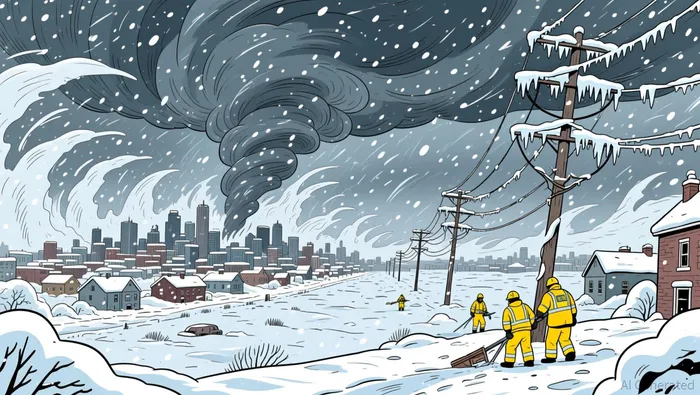
The situation also highlighted underlying supply constraints. Reports noted that gas-fired power plants in some regions performed significantly below expectations, with plants in the Plains region producing less than half of their expected output. This gap between demand and generation capacity likely amplified the pressure on pipelines like Kinder Morgan's, as operators scrambled to move available fuel. In essence, the storm exposed the system's reliance on flexible, high-capacity transport, a role Kinder Morgan's assets are designed to fill. The financial outperformance was a direct function of that role being in high demand.
Analyzing the Commodity Balance: Gas and CO2 Under Pressure
The Q1 surge was not just a weather event; it was a stress test that exposed a tightening commodity balance for both natural gas and CO2. The extreme cold drove immediate power demand, but the aftermath created a secondary, sustained pressure point. As plants fired up to meet the crisis, the need for CO2 to enhance oil recovery in the Permian Basin spiked. This is a key driver for Kinder Morgan's CO2 pipeline business, where demand is tied to the economics of oil production. The storm's physical impact on the grid thus had a direct, lagging effect on the utilization of its specialized transport assets.
That utilization is now at a structural high. Kinder Morgan's CEO noted that the annual average utilization of its five major natural gas pipeline systems reached 90% in 2025, a significant jump from 74% in 2016. This 16-percentage-point increase over a decade signals a fundamental shift. It means the network is operating much closer to its physical limits, leaving little room for error or unexpected demand spikes. When a storm like Fern hits, the system is already stretched, making the throughput surge and the resulting financial outperformance more pronounced. This high utilization is a clear indicator of a supply-demand balance that is tightening, not easing.
The pressure is not expected to abate. Grid operators like the New York Independent System Operator (NYISO) are raising alarms about an aging generation fleet, extreme weather, and growing demand. These are not isolated concerns; they are systemic challenges that will continue to strain the fuel supply chain. As the power sector's demand for natural gas grows, as Executive Chairman Richard Kinder noted, the need for reliable, high-capacity transport will only intensify. Kinder Morgan's assets are positioned to benefit from this trend, but the high utilization rates also mean the company's own capacity is a critical bottleneck. The Q1 results, therefore, may be a preview of a new normal where physical constraints are a more frequent driver of financial performance.
Financial Impact and the Sustainability Question
The physical flow pressures of Q1 2026 translated directly into a powerful financial performance, but they also spotlight the sustainability of that outperformance and the company's ability to fund its commitments. Kinder Morgan's results were robust, with adjusted EPS jumping 41% and adjusted EBITDA climbing 18%. The company's ability to generate substantial cash flow-$1.5 billion from operations and $0.7 billion in free cash flow after capital expenditures-provided the fuel for this growth. Yet, a high payout ratio means this cash is not left on the balance sheet for long.
The company's dividend policy is a key indicator of its financial discipline and the pressure it faces. Kinder Morgan pays out 95.90% of its earnings and 50.95% of its cash flow as dividends. This is a high, but not unprecedented, payout for a dividend aristocrat. The sustainability of this commitment hinges entirely on the consistent cash generation from its fee-based contracts. The Q1 results, driven by extreme weather, show the model can absorb such shocks and deliver a windfall. However, the long-term dividend is supported by the underlying trend of rising utilization, not just one-off events.
The company's investment plan underscores this forward-looking focus. Kinder Morgan has $8.9 billion remaining in its investment plan, which includes significant projects in CO2 and gathering. These expansions are expected to deliver favorable returns, but their earnings impact is likely to be more uneven than the steady cash flows from its core, high-utilization pipeline network. This mix means future growth will come from a blend of predictable base business and more variable project completions.
The bottom line is one of resilience and reliance. The fee-based model proved its strength during the storm, converting a physical crisis into a financial opportunity. But the high dividend payout ratio means the company must maintain that level of consistent cash generation to meet its obligations. The path forward depends on the commodity balance remaining tight, ensuring that the utilization rates stay elevated and the base business continues to flow. For now, the results show the system works, but the high payout leaves little margin for error.
Catalysts and Risks: Weather, Capacity, and Execution
The strong Q1 results were a product of a specific, extreme event. The forward view hinges on whether that event becomes a recurring pattern or a one-time anomaly. The primary risk is a return to milder weather, which would normalize power demand and compress the premium gas and CO2 flows that drove the financial outperformance. The system's high utilization rates mean it is already operating near its limit; a typical winter would likely see flows revert to the long-term average, not the historic surge witnessed during Storm Fern. This creates a natural volatility in the fee-based model, where results are heavily influenced by weather cycles rather than steady contract volumes.
Beyond the immediate weather cycle, the long-term economics of gas and CO2 delivery are tied to the development of interregional transmission capacity. Reports from the storm's aftermath highlight how transmission constraints increased costs to consumers and limited the ability to move power where it was needed. For Kinder Morgan, whose CO2 pipeline is a critical link in the Permian's production chain, the expansion of a robust, flexible grid is essential. Regulatory and market developments that facilitate this expansion would support the underlying demand for its services. Conversely, a lack of progress could leave bottlenecks that cap the growth potential of the entire energy system it serves.
The company's own execution will be critical for earnings stability beyond these volatile cycles. Kinder Morgan has a remaining investment plan of $8.9 billion, which includes key projects in CO2 and gathering. Successfully completing these expansions is necessary to secure future returns and offset any potential normalization of weather-driven flows. The company's ability to manage this capital program efficiently will determine whether it can build a more predictable earnings stream from new assets, complementing the steady cash flows from its already-high-utilization core network. In the end, sustaining the Q1 momentum requires navigating a dual challenge: weather volatility and the successful rollout of its own growth projects.