

The KOSPI didn't just touch 7,000-it smashed through it. On May 6, the index surged 5.4% in early trade to hit a record 7,311.54, with Samsung Electronics and SK Hynix both jumping over 10% on the strength of chip demand. That wasn't a fluke. Five trading days later, the index closed at 7,822.24, up 4.32%-a fifth consecutive record-high session that has the market barreling toward 8,000.
The engine is unmistakable: semiconductors. Not speculative tech plays, not small-caps riding momentum-large-cap chipmakers carrying the index on pure fundamentals. Samsung soared 6.33% to 285,500 won, SK Hynix rocketed 11.51% to 1.88 million won, both hitting all-time highs. The combined market capitalization of KOSPI and Kosdaq crossed 7 quadrillion won for the first time ever, up from 4 quadrillion in January and 6 quadrillion just two weeks ago.
What's driving this? The AI infrastructure cycle is real, and Korea is positioned at the center of it. Monthly chip exports are forecast to hit an all-time high in May, with the first 10 days already showing a 150% year-over-year surge to $8.54 billion. That's not speculation-that's actual shipment data. The rally is being funded by real money: retail investors poured 2.9 trillion won into local shares on May 11, institutions added 630 billion won, and despite a 3.5 trillion won foreign sell-off, the index still closed at a fresh high.
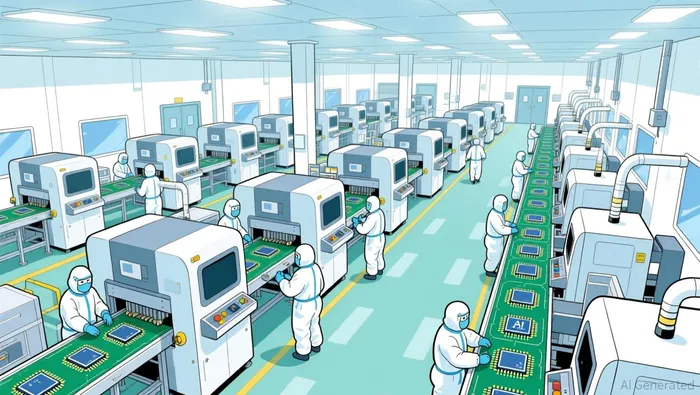
From a technical standpoint, this is a textbook breakout. The 7,000-level was the major psychological barrier. Once the index cleared it with volume and conviction, the path of least resistance shifted firmly upward. The fact that the rally is concentrated in a handful of high-quality names-Samsung, SK Hynix, Hyundai Motor, shipbuilders-rather than scattered across hundreds of speculative plays, tells you this is structural, not synthetic.
The thesis holds: semiconductor strength is the driver, not froth. That means any pullback is a reset, not a reversal. The trend remains intact as long as the chip leaders hold their ground.
The May 8 Pullback: Profit-Taking or Trend Break?
The May 8 intraday drop to 7,354.56, down 1.81 percent, was exactly what a healthy breakout looks like-it tested support and found buyers. The market didn't collapse. It didn't even close lower. The index recovered that same session and has accelerated ever since, hitting a fresh record of 7,822.24 just three trading days later. That's not a structural break. That's profit-hunting getting swallowed by stronger demand.
Look at the mechanics. The drop came after a multi-day rally-natural for traders to lock in gains, especially with Middle East tensions flaring. But the real story is what happened next. Volume on May 11 hit 723.4 million shares worth 50.2 trillion won. That's aggressive buying, not hesitation. Retail investors poured in 2.9 trillion won. Institutions added 630 billion won. Yes, foreigners sold 3.5 trillion won-but the index still closed at a fresh high. The buyers were simply too strong.
From a technical standpoint, the 7,000-level breakout established a new support zone. The May 8 dip tested the upper boundary of that zone and bounced. The trend remains intact because the chip leaders-Samsung, SK Hynix-kept climbing to new highs on the recovery. When the index makes higher highs and higher lows while the leaders hold, that's a trend, not a reversal.
The thesis doesn't change: this is a semiconductor-driven rally with real fundamentals behind it. The May 8 wobble was noise. The market's reaction-quick recovery, then acceleration-tells you the demand curve is still steep.
Semiconductor Leadership: The Core Engine
The numbers don't lie: this rally lives and dies with two names. Samsung Electronics and SK Hynix didn't just participate in the May 6 breakout-they led it, each rising more than 10% to all-time highs on the day the index topped 7,000. Three days later, on May 11, Samsung added another 6.33% and SK Hynix surged 11.51%, both hitting fresh peaks as the index closed at 7,822.24. These two names alone are carrying the index.
That concentration is the thesis and the risk. On May 11, 735 companies lost ground while only 147 gained. The rally isn't broad-it's narrow, focused almost entirely on a handful of large-cap chipmakers. Samsung and SK Hynix rose while battery maker LG Energy Solution dipped 1.78% and power plant manufacturer Doosan Enerbility fell 1.23%. The market is making a clear choice: AI-driven chip demand is the only story that matters right now.
The fundamentals support this focus. Korea's chip exports are on track for an all-time high in May, with the first 10 days showing a 150% year-over-year surge to $8.54 billion. That's actual shipment data, not speculation. The combined market capitalization of KOSPI and Kosdaq crossed 7 quadrillion won for the first time ever, driven by the same chip strength.
From a technical standpoint, the question is simple: can Samsung and SK Hynix hold their ground? The 7,000-level breakout established a new support zone. As long as the chip leaders maintain their advance-and they've shown they can absorb selling pressure and keep climbing-the index has a clear path higher. If they falter, the narrow breadth of this rally becomes a liability.
The sustainability thesis hinges on these two names. The AI infrastructure cycle is real, Korea is positioned at its center, and the export data confirms the demand is actual, not imagined. That makes the chip leaders not just the engine of this rally-but the only thing investors need to watch.
Catalysts and Risks: What Could Derail the Run
The technical setup remains bullish, but the market is now testing a new resistance zone-and the stakes have changed. The index just cleared 7,800 on May 11, closing at 7,822.24. That level now becomes the critical support floor. Break below it, and the rally's momentum shifts. Drop under 7,300, and you're looking at a deeper pullback-possibly testing the 7,000 breakout level that started this whole move. The May 8 intraday low of 7,354.56 is the immediate reference point for that support test.
The real threat isn't domestic-it's external. The Iran peace deal is unraveling, with Trump calling their offer "unacceptable," and that Middle East instability is creating real volatility. At the same time, the won is weakening at 1472.4 per dollar, which pressures import-dependent sectors and could trigger capital outflows. These are the two variables that could break the trend: geopolitical shock plus currency weakness. If both hit at once, the semiconductor rally could stall.
But the fundamentals still favor the bulls. Chip exports are on track for an all-time high in May, with the first 10 days showing a 150% year-over-year surge to $8.54 billion. That's actual shipment data, not speculation. The AI infrastructure cycle is real, and Korea is positioned at the center of it. Samsung and SK Hynix have shown they can absorb selling pressure and keep climbing to new highs.
The thesis holds: this is a semiconductor-driven rally with real fundamentals. The technical levels to watch are 7,800 as new support and 7,300 as the break-level that signals a deeper correction. External shocks around Iran or currency weakness pose the primary risks-but so far, the demand curve remains steep enough to handle the noise.