

Kuwait's attack claim shifts the market from diplomacy to supply risk
Kuwait's statement that Iran fired missiles and drones at its territory changes the market read on this conflict. Rather than a diplomatic headline alone, it now looks more like an active supply-risk event centered on the Gulf. Reuters reported Brent settled above $100 earlier this month, which is the clearest scoreboard. At that price level, investors are no longer asking whether tensions are bad; they are asking which physical assets and routes are exposed.
Why Kuwait matters to oil markets
Kuwait said the attacks threatened civilians and vital facilities, and its army said air-defence systems were intercepting hostile missile and drone threats. That matters because successful interceptions limit damage in the moment but do not eliminate future disruption risk. If attacks can reach Kuwait, nearby hubs remain exposed to operational friction, insurance repricing, or export delays.
The bear case is that the incident was contained. The bull case is that the market is already focused on physical flow, not rhetoric. With Hormuz restrictions still affecting shipping, Kuwait becoming a direct target makes logistics risk harder to ignore.
The main transmission channel is Gulf export logistics, not sentiment
Previous damage shows how quickly a strike affects supply
A hit on Kuwait matters because it targets an export node, not just the headline. In April, Kuwait Petroleum said an Iranian drone caused severe material damage at operating units and started fires that teams had to contain. That is the key transmission channel: once facilities are damaged, the question shifts from whether something was hit to whether cargo can still move on schedule.
Shipping is where that answer gets tighter. Kuwait declared force majeure on shipments of crude oil and refined products after restrictions on the Strait of Hormuz hindered vessels from entering the Gulf. Reuters also noted the move was not expected to cause a complete halt in supply. That nuance matters. Markets do not need a full shutdown to rerate energy; they need evidence that scheduled barrels are becoming harder to lift.
Hormuz keeps the pressure on
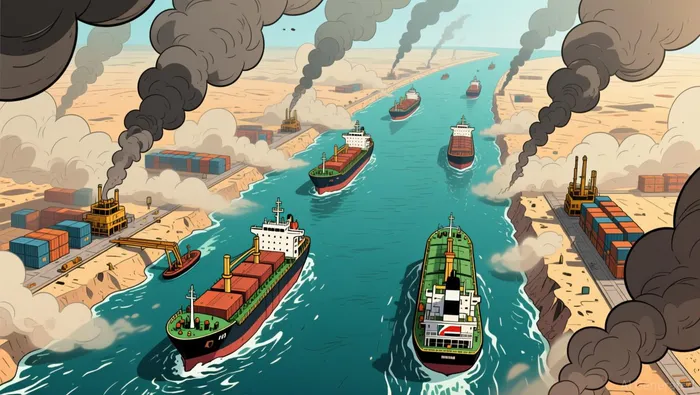
This is not only a Kuwait problem. The Strait of Hormuz was still choking off 20% of the world's supplies of oil and gas. So when Kuwait's territory is hit while that chokepoint remains constrained, investors have reason to price a compound effect:
- facility friction from damage and fire risk
- charter and routing delays around a constrained strait
- higher insurance and waiting times at the margin
- tighter lifted grades even if global supply does not fully break
That is why logistics risk can persist longer than a one-off headline.
The bear case is still credible if access improves
Bears have a real argument. Kuwait said defenses were intercepting hostile missile and drone threats, and later reporting on the Hormuz effort said progress was only patchy, with no immediate fix from the coalition push to free up ships stranded in the Strait of Hormuz. If attacks remain mostly intercepted and force majeure stays partial, the market may have over-discounted immediate supply loss.
What would unwind the premium?
If diplomacy moves, the premium can compress quickly. In early May, Trump said the U.S. would begin an effort to free up ships stranded in the Strait of Hormuz, and by late May the U.S. struck an Iranian ground control station in Bandar Abbas after denying a strait deal. Those are the two main switches to watch: de-escalation headlines and tangible improvement in strait access.
Until then, the watchlist is simple:
- whether Kuwait's export operations remain stable after the latest attacks
- whether force majeure stays limited or spreads
- whether Hormuz access improves enough to reduce shipping delays
If those signals do not improve, energy has reason to stay expensive at the margin.
Positioning: near-month oil and logistics-sensitive exposure remain the focus
The easy premium is already in the front month after Brent settled above $100. The next question is where the market may still be underestimating risk: near-month oil, shipping and insurance sensitivity, and Gulf export assets tied to ports, terminals, and refined-product shipments.
What makes the setup stronger
- Repeated attack alerts or any sign of actual facility damage
- Continued Hormuz constraints that delay vessels or lift capacity
- Any expansion beyond the current force-majeure scope
What would invalidate it
- Clear progress in freeing ships through Hormuz
- A durable de-escalation in attacks on Gulf infrastructure
- Evidence that Kuwait's export flows are returning to normal
For now, the setup still looks more tactical than structural: supportive for near-month oil and logistics-sensitive names if access stays tight, but vulnerable to a fast unwind if the strait opens and terminal flows prove resilient.