

The IMF chief's warning about the world being unprepared for shocks is not abstract caution. It is a structural confession: every government's emergency fund has been run through, and the emergency fund for governments is itself getting thin.
Global public debt rose to nearly 94% of GDP in 2025. The IMF's April 2026 Fiscal Monitor projects it will cross 100% by 2029 - one year earlier than their previous forecast, which itself was already above any peacetime level in the postwar era. Total global debt hit a record $353 trillion in early 2026, with government borrowing accounting for more than $10 trillion of the increase in 2025. That number doesn't describe a system that is approaching a problem. It describes a system that has already consumed its fiscal cushion and is now borrowing to stay in place.
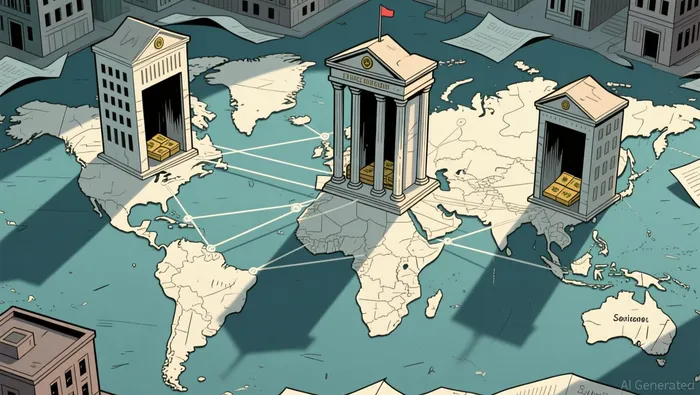
Fiscal space is the term. It means the room a government has to borrow more, cut taxes, or spend on stimulus when something breaks. When debt is 94% of GDP and climbing, the room is gone. The IMF has been saying this for months. At a February 2026 event in Saudi Arabia, Georgieva said we will "surely experience more shocks - but face them with depleted fiscal buffers, high spending pressures, and rising debt service costs." At the April 2026 spring meetings, she told reporters that countries need to rebuild fiscal buffers once conditions stabilize, and to do so without delay.
That is the first layer of the plumbing problem. The second layer is the IMF's own.
The IMF is not a printing press. It lends real money, pooled from member countries through their quota payments - essentially their membership dues. The fund's lending capacity is roughly $1 trillion, and while that sounds like a lot, it is fixed. It is a pool that can be drawn down, and when it is, the IMF either has to call on countries to put more money in - which requires political negotiation and time - or it cannot lend.
The April 2026 review of the IMF's precautionary balances (the fund's own reserve buffer, like a bank's capital) concluded the balances were adequate at that moment. But in the low-income lending window, the picture is already fragile: the concessional lending facility for the poorest countries could fall to just SDR 1 billion by 2026, according to a CGD analysis from mid-2025. The non-concessional window is bigger but not infinite. Both are subject to the same basic constraint: the IMF's ability to respond to a crisis depends on whether countries have already borrowed the money away.
So here is the structure, stripped down:
Every government has already spent its fiscal buffer on the last round of shocks - pandemic, inflation, energy, and whatever tariffs and trade disruptions are piling up now. So when the next shock hits, countries look to the IMF. But the IMF's pool of lendable money is a finite pot, and the more countries that need it at once, the thinner it gets. The institution whose job is to be the global backstop knows the mechanics of its own backstop better than anyone. And the mechanics are not reassuring.
This is not a story about whether Georgieva is right to be nervous. The interesting question is what sort of machine the IMF is, and what happens when that machine is asked to do more than its plumbing allows. The IMF is basically a mutual fund with a political problem. Member countries pool capital, get allocated a quota, and then vote on how the pool is used. When a country faces a balance-of-payments crisis, it borrows from the pool on the condition that it implements policy reforms. The reforms are the collateral. They are supposed to make the loan self-liquidating.
But that model works when individual countries need help, not when systemic stress hits and everyone needs help at once. In a broad crisis, the IMF faces something that looks like a run, except the depositors are the governments that are also the borrowers. The fund's precautionary balances - currently targeted at around SDR 25 billion, or roughly $32 billion - are the shock absorber inside the shock absorber. They protect the fund against losses on bad loans. If losses mount, the fund either draws down those reserves or asks members to contribute more.
The quiet part of the story is that asking for more money is not a technical step. It is a political negotiation among sovereign states that are simultaneously trying to save their own budgets. The 2025 quota reform - which doubled the IMF's total quotas to roughly $1 trillion - required two years of negotiation and the signature of two-thirds of members holding 85% of total voting power. The last thing the IMF wants is to have to run that gauntlet while a crisis is underway.
None of this means the world is about to break. It means the system's default response to stress - more borrowing, more spending, more IMF programs - is becoming less available at the exact moment it would be most needed. That is not a prediction. It is a description of the funding model.
For someone watching from the outside, the implication is simple: when fiscal buffers are depleted and the lender of last resort has its own capacity constraint, the next shock will not get met with the same response as the last one. That changes what sovereign risk looks like, what debt markets price, and where the first cracks appear. The machine can still function. It just has less slack than the headlines assume.
The IMF chief isn't really warning about the shocks themselves. She's warning about the gap between how many shocks the system can absorb and how many of them everyone has already used up.