

The $150 million number is a distraction. The structure is the story.
Long Table Growth Corp. (NASDAQ: LTGRU) priced its IPO of 15 million units at $10 each on June 3, raising $150 million to hunt for a fintech, proptech, or energy transition target. The press release reads like any growth investing pitch. The mechanics read like something else entirely.
This is a SPAC - a special purpose acquisition company, the blank-check shell that raises public cash, then spends 12 to 24 months shopping for a private company to merge with. The SPAC market is riding a "measured resurgence" narrative in 2026, with SPACs accounting for 40% of all U.S. IPO deal count last year and the pipeline continuing. But the comeback story ignores the part of the deal that never changed: the structure is designed so the sponsor wins before the target is even chosen.
The downsize was the first honest moment
Long Table Growth filed for $200 million in January. By May, it had cut the offering 25% to $150 million. That is not a confidence adjustment. That is what happens when the market won't absorb the full ask at the standard $10 SPAC price point, or when the sponsor's own network of committed capital wasn't sufficient to anchor the full deal.
Any astute SPAC watcher would have seen that the downsize reveals more about demand than the pricing does. The unit still contains one Class A share and half a warrant - the standard template. Nothing in the structure has changed to address why SPAC IPOs historically leave public investors with negative expected value.
Sponsor track record is not the same as investor track record
Gregory Ethridge, the chairman and CEO, has completed seven SPAC transactions raising over $1.5 billion in capital for merger targets, according to his sponsor group's website. That number sounds impressive until you ask the right question: what happened to the shareholders after the mergers closed?
The answer, across the industry, is well documented. Historically, more than 90% of de-SPAC companies... have traded below their $10 IPO price after completing deals. That is not a rough average. That is what happens to the vast majority.
Ethridge's "seven transactions" is a sponsor metric. It measures how many deals his firms have closed, not whether public investors in those vehicles came out ahead. The two numbers are not the same. They almost never are.
The redemption mechanic is the hidden tax
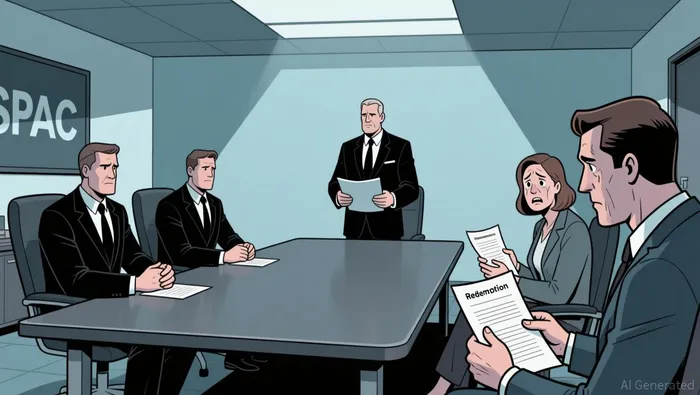
Here is what no press release explains: when a SPAC finally announces its merger target, existing shareholders can redeem their shares at trust value - effectively cashing out at roughly $10, regardless of whether the target is attractive or not. Redemption rates in recent SPAC deals have often exceeded 95%. That means in most cases, 95 cents of every dollar raised goes back to investors before the business even operates publicly.
What's left? The 5% that didn't redeem - often the same people who bought most of the sponsor's warrants - plus any PIPE (private investment in public equity) capital, if it exists. The merged company then has to grow from a fraction of the raised capital while carrying the warrant overhang and the sponsor's promote (a large block of shares the sponsor bought at a fraction of public price).
The redemption mechanic turns every SPAC merger into a test of who was willing to be locked in at $10 when the rest of the market voted with their feet. The answer, almost always, is the sponsor ecosystem and its allies. That is not growth investing. That is capital allocation engineering.
"Fintech, proptech, energy transition" is optionality for the sponsor, uncertainty for you
Long Table Growth's target sectors read like a menu designed to be impossible to reject. Fintech. Proptech. Energy transition. These are not sectors - they are press-release categories that overlap, shift, and absorb nearly everything in the middle market.
Compare this to a SPAC that names a specific technology or a defined subsector. Vagueness is not indecision. It is optionality. The sponsor keeps the widest possible net because the goal is to find any company that will accept the SPAC process - a private operator tired of waiting for a traditional IPO window, a founder who wants a public listing without the earnings scrutiny of a direct offering.
The investor pays $10 for a lottery ticket that hasn't been issued yet.
The SPAC comeback narrative is a structural illusion
The 2026 SPAC resurgence is real in deal count. It is not real in investor outcomes. PwC reported that 2026 IPOs are trading down approximately 1% as of late March, versus a roughly 5% decline in the S&P 500 - which sounds defensive until you recognize that SPACs are not comparable to organic IPOs. The SPAC buyer at $10 does not get a company. The SPAC buyer gets a promise that a company will exist within 18 to 24 months.
The SPAC comeback is a volume story, not a value story. More shells do not make the structure fairer. They make the sponsor economy more liquid.
The cross-currents
If you are watching LTGRU, here is the hierarchy of what matters:
- Primary driver: The SPAC structure itself. Redemption mechanics, warrant dilution, and the sponsor promote create a built-in headwind that no target quality can easily overcome. This is not a bear case against a company. It is a bear case against a vehicle.
- Secondary amplifier: The 25% downsize from $200M to $150M. Weak initial demand is a data point about what the market will actually pay for the sponsor's deal flow, not about the hypothetical future target.
- Background condition: The broad SPAC IPO resurgence. More activity means more attention and more retail liquidity, which can create short-term trading volatility in LTGRU units. That is noise, not signal.
Directionally, the structure weights against the public investor. The sponsor gets warrants, a promote, and extension options. The public investor gets a share in a trust account earning minimal interest, waiting for a merger that may never happen or may happen on terms the investor had no say in negotiating.
It is not as good as it looks. Long Table Growth's $150 million IPO is a textbook SPAC: a vehicle optimized for sponsor economics, dressed in sector keywords, priced at the standard $10, and launched into a market that is still learning the same lessons it forgot last time. You decide which was marketing fluff and which one was analysis.