

Manufacturing is expanding fast, but the inflation signal is just as important
U.S. manufacturing is not merely recovering; it is expanding at a fast pace. The S&P flash manufacturing PMI rose to 55.3 from 54.5 in April, ahead of the 53.8 forecast. The ISM manufacturing gauge reached 54.0. Both readings are well above the 50 threshold that separates expansion from contraction.
Why the growth looks encouraging
The bullish read is straightforward: factories are producing more, orders are improving, and the expansion is broad enough to matter. ISM reported growth across most manufacturing industries, which suggests this is not just a one-sector spike. If real demand is behind the numbers, the setup could support capital spending, employment, and earnings over time.
Why the inflation warning still matters
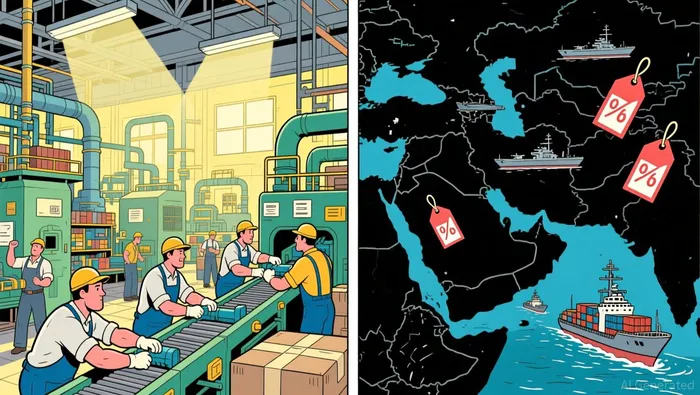
There is also a more cautious read. Reuters said manufacturers boosted inventories amid potential shortages and rising prices related to the war with Iran, while S&P said supplier delivery times worsened the most since August 2022. At the same time, both input costs and output charges rose at the fastest pace in nearly four years. That combination raises a simple question: how much of this strength reflects genuine end demand, and how much reflects fear buying around supply disruptions and higher prices?
Is the surge coming from real demand or from defensive stockpiling?
The evidence points both ways. New orders growth accelerated to a four-month high and production gained steam, which are constructive signs for manufacturing. But Bloomberg also said some of that strength may reflect customers trying to stockpile merchandise ahead of possible price hikes.
The case for a healthier recovery
Breadth in the ISM survey helps the bullish case. Nearly every manufacturing group reported growth, including electrical equipment and plastics. Susan Spence also said she believed more of the improvement in new orders and production reflected pent-up demand than companies simply buying ahead of trouble. If that view proves right, the surge says more about backlog clearance and real need than about a temporary timing game.
The case for a fear-driven pickup
The cautionary case rests on the same headline strength, but with a different interpretation. Reuters said manufacturers boosted inventories to guard against potential shortages and rising prices related to the war with Iran. S&P said stockpiling also played a role as firms tried to mitigate supply-chain disruption and price risk linked to the Middle East conflict. Bloomberg added that the effective closure of the Strait of Hormuz pushed up oil and other material costs.
The pricing data reinforces that concern. Both input costs and output charges rose at the fastest pace in nearly four years. Bulls can call that pricing power; bears can call it a sign that margins may come under pressure if costs rise faster than what customers will absorb.
There are also weak spots in the report card. Exports declined for the eleventh consecutive month, with firms citing geopolitical instability and tariffs. And private-sector employment measure drops to 21-month low even as manufacturing jobs improved. If end demand were fully solid, you would expect exports and broader hiring to be contributing more cleanly.
What would clarify the picture
Investors do not need a perfect answer today, but a few signals would make the recovery look more durable:
- Production and new orders stay firm.
- Exports stop sliding.
- Hiring broadens beyond the shop floor.
- Inventory building cools rather than accelerating.
If those signals improve together, the market can give this boom more credit. If output stays hot while exports and hiring remain weak, investors should treat part of the strength as businesses buying insurance rather than as a clean end-demand recovery.
Investors should focus on bottlenecks and price pass-through, not every manufacturing winner
The cleaner investment angle is to focus on the bottlenecks rather than assume every manufacturer that rose on the headline deserves the same setup. If supply stress is still doing work, exposure to energy, shipping, raw materials, and logistics may be more durable than stories that depend on a purely organic demand rebound. And investors should pay close attention to inflation, because both input costs and output charges rose at the fastest pace in nearly four years.
When the boom looks durable
Bulls have a reasonable case. Manufacturers are still working through accumulated demand, and new orders growth accelerated to a four-month high. If that demand is genuine backlog rather than pure insurance buying, companies may be able to pass through higher costs without breaking volume.
When the boom looks fragile
The bear case is simpler: ease the squeeze, and part of this surge can fade. Businesses boosted inventories to guard against shortages tied to Iran, while defensive stockpiling has been identified as a meaningful driver of recent activity. If geopolitical tension eases and that precautionary buying unwinds, top-line momentum could cool faster than many investors expect.
What to watch next
Signals that would support the idea of a durable recovery: - Energy prices stay elevated because of Middle East disruption. - Shipping conditions remain tight enough to keep delivery times under pressure. - Companies keep passing higher costs through to customers.
Signals that would weaken it: - Shipping normalizes and Hormuz risk cools. - Exports stop sliding. - Hiring broadens beyond manufacturing itself. - Inventory building eases as precautionary demand fades.