

We get it - the headline says "next-generation manufacturing talent pipeline," and it sounds like the kind of structural advantage that eventually shows up in margins, revenue growth, and maybe, just maybe, a dividend. But let's start with the simplest question: who is actually paying you?
First Mold - the company behind the university partnership announcement - is a private injection mold manufacturer. Not publicly traded. No stock to buy. No dividend to collect. The announcement is a real thing: companies in this business are desperate for skilled machinists and mold designers, and the chronic workforce shortage is a documented problem across U.S. advanced manufacturing. But none of that cash flow reaches a retail income investor's account.
If you're reading this because someone sent you the headline and you're wondering whether to pay attention, the answer depends on what you're trying to build. If you're looking for a new income position, this is not it. If you're already invested in manufacturing-adjacent plays and want to understand whether the talent story changes the structural outlook, there's more to unpack.
The publicly traded mold-making space is thin. Core Molding Technologies (CMT) trades on the NASDAQ and doesn't pay a dividend - its yield is 0.00%. In fiscal 2025, full-year tooling revenue jumped 19.5%, driven by elevated demand, with $63 million in new business wins booked. That sounds healthy, but first-quarter net income in the following fiscal year fell from $3.8 million to $2.2 million per diluted share, from $0.43 to $0.25. Revenue growth is real; earnings conversion is not keeping pace. No payout to fund a retirement income plan either way.
Nintech, another mold and injection molding manufacturer, just filed for its NASDAQ IPO in May 2026 at $4 to $5 per share - raising money for equipment upgrades. Startups going public to fund capex are the opposite of mature cash-flow generators.
So what's actually happening under the surface? The talent pipeline story matters because it's a proxy for a real constraint. This industry runs on highly skilled labor - CNC machinists, mold designers, toolmakers - and those people are aging out faster than replacements come through. First Mold itself announced a moderate price adjustment in April 2026 amid rising raw material costs for chemicals and steel. Cost pressure from both labor scarcity and input inflation is the operational reality these businesses navigate. University partnerships and apprenticeship programs are a response, not a competitive moat.
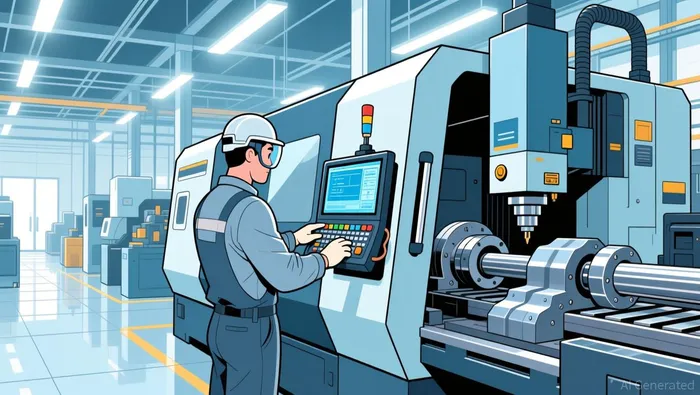
The sector-wide picture reinforces this. Registered apprenticeship programs in advanced manufacturing grew to 97,500 placements in 2025. Injection mold technician apprenticeships typically run four years, combining roughly 7,700 hours of on-the-job training with paid classroom instruction. These aren't quick fixes - they're multi-year investments that say "we need people and it takes time to build them." A necessary adaptation, not a growth catalyst you can trade on this quarter.
What should the income investor actually do? Nothing with this headline, directly. There is no security here that fits into a diversified income machine. If you hold positions in industrials or manufacturing-adjacent dividend payers - think machine tool companies, industrial conglomerates, or materials producers that serve this supply chain - the talent constraint supports a long-term view that skilled-labor-dependent businesses will maintain pricing power even when growth is modest. That pricing power is what eventually funds the dividend in upstream plays that actually pay one.
The mold-making talent shortage is a real structural problem with real economic consequences. It's just not an income opportunity. Focus your capital allocation on businesses that are already producing the cash flow you need to fund life now - not on workforce development PR from companies that don't have a public share you could buy even if you wanted to.