

The March retail sales report delivered a 1.7% jump-the kind of number that typically signals robust consumer strength. But the engine behind this gain wasn't shoppers rushing to buy furniture, electronics, or clothing. It was the pump. Gas station sales surged 15.5% in March, riding on the back of a 24.1% month-over-month spike in gasoline prices retail gasoline prices soared 24.1% in March. That price jump was the direct consequence of the U.S.-Israel conflict with Iran, which pushed global oil prices above $109 per barrel and sent a shockwave through American wallets oil prices reportedly topping $109 per barrel.
When you strip out gas stations and the other volatile categories-automobiles, building materials, and food services-March's retail sales grew just 0.6% excluding gas prices, the number was a slim 0.6%. That's a far cry from the headline figure, and it's a more honest read on what's happening with ordinary consumer demand. The 1.7% gain was essentially a cost pass-through: Americans are paying more at the pump, and that higher expenditure is showing up in the sales data even though it represents no increase in real purchasing power or economic welfare.
The timing matters here. The Iran conflict began in late February, and this was the first full month of data to capture its impact the report marks the first read on spending to capture the effects of the Iran war. Gas prices had already surged past $4 a gallon nationally-the first time since 2022-before the March report even came out U.S. gas prices jumped past an average of $4 a gallon for the first time since 2022. On the West Coast, drivers were seeing prices hit $5.89 in California prices reaching $5.89 per gallon in California.
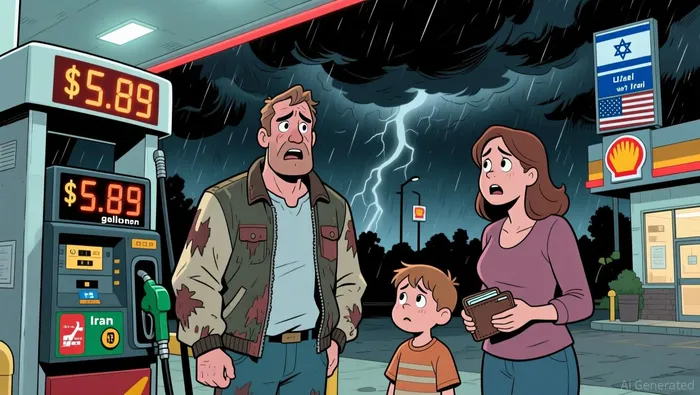
This is a classic supply-driven price shock, not a demand story. The retail sales number looks strong on the surface, but the underlying pressure is real: households are diverting money that would have gone to other categories toward fuel. The economic signal here is clear-the headline gain reflects energy cost pass-through, not consumer strength.
Underlying Spending Strength (Or Lack Thereof)
The 0.6% gain in retail sales excluding gas stations and other volatile categories tells the more honest story the number was a slim 0.6%. That's a fraction of the headline 1.7% gain, and it reveals consumer demand that is barely moving. This isn't the robust spending pattern you'd see in a genuinely healthy economy-it's the baseline activity of shoppers who have little extra to spend once the energy bill is paid.
Real retail sales-adjusted for inflation-posted a 0.8% gain in March, the second consecutive positive reading real retail sales were positive for a second month in March (0.8%). But context matters: this follows a streak of negative readings earlier in the year, and the marginally positive number masks a consumer base that's already under pressure. The energy shock hasn't just arrived-it's already reshaping behavior.
Some categories showed nominal strength. Department stores posted a 4.2% gain, and furniture stores rose 2.2% sales at department stores rose 4.2%, while sales at furniture and home furnishings stores were up 2.2%. But these gains were likely transient-supported by tax refunds hitting bank accounts and warm weather drawing shoppers out of the house rather than reflecting durable demand. Once the refund money is spent and the season shifts, these categories could easily slide back.
The real signal is in what's not happening. Consumer spending is barely moving because the energy shock is already diverting purchasing power. Every dollar spent at the pump is a dollar that can't be spent elsewhere-and that diversion is happening in real time. The 0.6% underlying gain, the modest real sales increase, the reliance on one-time refund boosts: they all point to the same conclusion. The consumer is holding on, but only just.
Inflation and Growth Implications
The retail data tells one story-strong headline numbers driven by energy costs-but the inflation picture confirms the pressure is real and spreading. Consumer prices jumped 0.9% in March, the biggest monthly gain in nearly four years, with gasoline pushing year-over-year inflation to 3.3% CPI jumped 0.9% in March, the biggest monthly gain in nearly four years. That's a sharp departure from the gradual disinflation path the Fed had been counting on. Gasoline prices alone accounted for the largest monthly increase in six decades, up more than 21% since February gasoline prices went up more than 21% since February.
This is where the retail sales story connects to the broader economy. The same energy shock that inflated the March retail sales number is now feeding directly into inflation. When households spend more at the pump, that's not just a transfer within the consumer budget-it's upward pressure on the price level that the Federal Reserve will need to respond to. The trajectory has shifted from a slow, gradual decline to a sharp increase further away from the Fed's 2% target inflation's trajectory shifted from gradual decline to sharp increase.
The growth implications are already being flagged by forecasters. The Conference Board now expects real consumption growth to slow to just 0.4% q/q SAAR in Q1 2026, down sharply from 1.9% in Q4 2025 real consumption growth to slow to 0.4% q/q SAAR in Q1 2026. That's a dramatic deceleration-consumption is the engine of the U.S. economy, and this slowdown reflects the double pressure of higher energy costs and the diversion of spending away from other categories.
The full-year GDP picture is equally constrained. The Conference Board projects growth of just 1.6% y/y for 2026, down from 2.1% in 2025 GDP growth of just 1.6% y/y, down from 2.1% in 2025. The energy shock isn't a one-month phenomenon-it's a structural headwind that will keep weighing on economic growth throughout the year. Every dollar diverted to fuel is a dollar not spent on goods and services that drive broader economic activity.
The thesis is clear: energy-driven price spikes are feeding inflation while simultaneously threatening to crowd out other spending. This creates a difficult policy environment for the Fed-facing higher inflation at the same time that real economic activity is slowing. The retail sales data from March looked strong on the surface, but the inflation and growth forecasts reveal the underlying strain.