

The Europa deal collapse changes the thesis
With the Europa transaction not proceeding and discussions therefore ceased, Marula is no longer a simple "wait for conflict to end" story. It is now a standalone liquidity and credibility test.
That matters because the market loses the near-term rerating path created by the 9 new shares in Europa for one share in Marula Africa structure and Europa's plan to apply for re-admission to AIM. Marula's current AQUIS-listed status remains the fallback market, not the source of the missed rerating.
What changes now
Bulls still have one clean argument: management says Marula is better positioned to deliver maximum value as a standalone Aquis-listed business. In the near term, however, bears have the stronger case. Without a working exit or admission route, the stock remains exposed as a liquidity problem rather than a clearly underwritten asset story.
The market can no longer lean on a public-market buyer to provide a reference price for the asset base. That was the practical value of the deal structure, not just the headline swap ratio. For now, the prudent stance is to keep Marula on the watchlist rather than call it investable. The only concrete support so far is the GBP25 million at-the-market equity facility and the USD2.0 million secured investment agreement. That is funding behind the story, not proof of longer-term alignment.
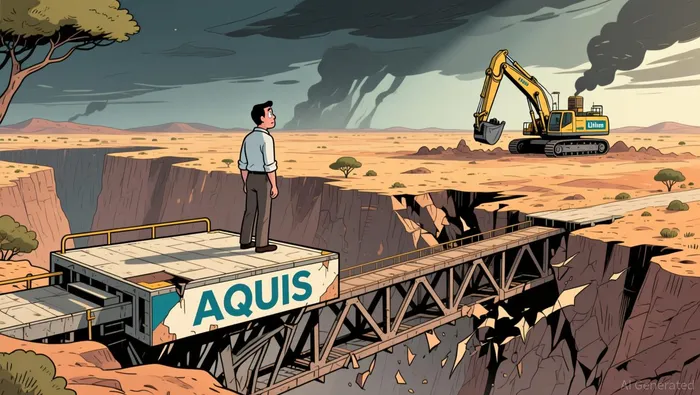
Why the lost transaction mattered more than the swap ratio
The route-to-market is gone
The lost transaction matters less for any single swap ratio than for what that ratio represented. The proposed 9 new shares in Europa for one share in Marula Africa structure, together with Europa's plan to seek re-admission to AIM, was not just a financing wrapper. It was a route-to-market: a path from an Aquis-listed platform toward a wider London investor base and clearer price discovery for Marula's African asset set. That route is now gone because the reverse takeover transaction will not be proceeding and discussions have ceased.
Why the premium has to be repriced
When investors expect a liquidity bridge, they sometimes price in part of that future access ahead of time. Once the bridge breaks, that expectation has to be repriced away. That is a market-structure issue, not a direct call on asset quality.
In practical terms, Marula now has to be valued as a company that still trades on AQUIS. The board says it believes Marula is better positioned to deliver maximum value to shareholders as a standalone Aquis-listed business, but that is a longer, slower valuation path. Until it is proven, the market is likely to apply a discount.
What bulls still have
The fair bull case is not about listing optics. It is about the operating base that remains. Marula still has recent and planned mine developments, strategic acquisitions, and ongoing corporate initiatives, along with a portfolio described by the company as aligned with global demand for critical metals.
More important, management is pushing beyond raw extraction. Marula is piloting a process for value-added lithium in South Africa, with plans to extend that capability to Zimbabwe, Zambia, and Tanzania. If that value-add story gains credibility, it gives the stock an operating narrative rather than just an asset-list narrative.
Kenya keeps the risk profile high
The missed Europa deal did not create Marula's Africa risk; it exposed it.
Kenya is the clearest execution risk
The old "wait for conflict to end" argument only works if the operating base is stable enough to survive the wait. That is harder to assume when Kenya is involved. Marula has engaged consultants from PwC for legal, transactional, and tax advice as it expands into Kenya, and the local environment still includes delicate issues to navigate, including environmental protections, restrictions on foreign investment, and social issues such as land ownership, displacement, and conflict over resource control.
That is why Kenya matters more than headline commodity optimism. It is not just policy risk; it is the risk that a key asset gets caught in a slow-moving mix of local politics, community dynamics, and regulatory friction. If that happens, standalone is not a strategy. It becomes a delay mechanism.
Bull case versus bear case
Bulls will argue that the company is not just digging rock and shipping it out. Marula is piloting a process for value-added lithium in South Africa, with plans to extend that capability to Zimbabwe, Zambia, and Tanzania. If that operating model spreads, Kenya becomes one node in a broader value chain rather than the whole thesis.
Bears have the sharper near-term read. The same market that already questions liquidity now has to worry about execution quality in a difficult operating environment. And so far, the clearest proof behind the story remains financial rather than behavioral: the GBP25 million at-the-market equity facility and the USD2.0 million secured investment agreement. That shows capital availability, not necessarily lasting alignment.
What would make Marula investable again
What would bring Marula back from watchlist to investable is not a better story. It is evidence that the company can replace the lost Europa rerating path with something the market can underwrite now.
Catalysts that matter
- A fresh strategic buyer or another listing/transaction route. The market needs a new access bridge after the reverse takeover transaction stopped.
- Committed funding for mine development. The board still points to recent and planned mine developments, strategic acquisitions, and ongoing corporate initiatives. That only works if investors see committed capital behind it, not just a project list.
- Visible progress on the lithium value-add pilot. Marula is piloting a process for value-added lithium in South Africa. A confirmed milestone here would matter because it would shift the stock from asset description toward operating execution.
Positioning signals
The right market behavior is harder to fake than management commentary:
- Insider buying or other management capital deployment
- Credible institutional accumulation
- Clear evidence that known fund holders increased exposure after the deal break
What would invalidate the setup
If management keeps pushing a broad development narrative while the stock still trades thinly, with no new capital route and no real alignment from insiders or institutions, the market will keep treating Marula as a liquidity discount story. And if optimism builds around Kenya without clear execution, that remains a market with delicate issues to navigate.
Marula remains a watchlist name until smart money shows skin in the game.