

McDonald's 2026 menu push has a clear centerpiece: the Big Arch Burger, a double-patty behemoth that's more marketing spectacle than practical menu addition. The question every customer will ask at the counter is simple: is this worth $10-11?
The Big Arch arrives with serious specs. Two quarter-pound beef patties, three slices of melted cheddar, both crispy onions and thin onion slices, lettuce, pickles, and a new tangy Big Arch Sauce-all packed inside a toasted sesame and poppy seed bun. The calorie count clocks in at 1,057 per burger in the U.K., nearly double what a standard Big Mac delivers there. At an estimated $10-11 in the U.S., it's positioning itself in the premium burger tier.
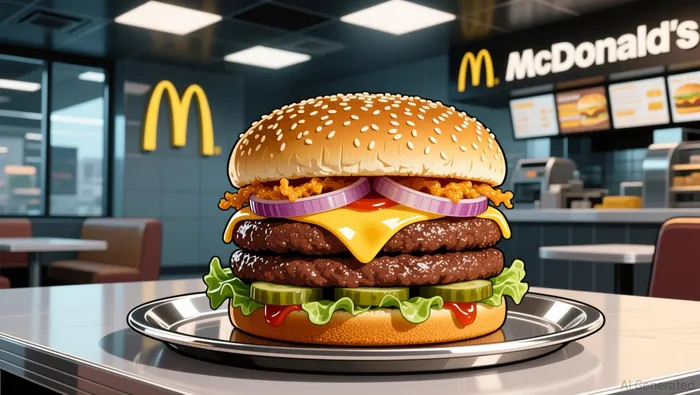
But here's where common sense kicks in. When a fast-food chain charges premium prices for a burger that's essentially a marketing stunt, you have to ask whether the product delivers real value or just viral headlines. The U.K. rollout already showed mixed results-social media critics called it "the messiest burger I've ever had" and "very onion forward," with some saying the new sauce doesn't compare to the classic Big Mac version. One commenter summed up the sentiment: "It's all a rip-off."
The pricing tells the real story. The Big Arch launched at £7.99 overseas, then jumped to £8.79-a roughly 10% hike that coincided with its permanent menu placement. That's a classic marketing play: create buzz with a limited-time offering, then lock in higher prices once the item has generated attention.
For McDonald's, this is about more than just burgers. The company is betting that bigger, bolder menu items will drive traffic at a time when consumers are growing more cautious about spending. But the real test is whether customers actually want to pay $10+ for a burger that delivers 1,057 calories and comes with more hassle than a standard meal. The smell test? This feels like marketing first, menu item second.
The Supporting Cast: Hot Honey, McNugget Caviar, and Nostalgia Bait
While the Big Arch grabs the headlines, McDonald's 2026 menu strategy includes a supporting cast of items that reveal the real story: this is a company chasing viral moments rather than solving what customers actually want.
The Hot Honey launch on January 27 arrived as a limited-time offering-the kind of trend-chasing move that generates social media chatter but doesn't address core value. Then came McNugget Caviar on February 10, a novelty kit that sold out in just three minutes according to coverage of the Valentine's Day release. Three minutes. That's not a product launch; that's a marketing stunt that creates artificial scarcity and online buzz.
But here's the question: does this build real customer loyalty, or just attract trend-followers who'll move on to the next viral food trend?
The nostalgia play continues with the Pokémon TCG Happy Meal rolling out February through March to celebrate the franchise's 30th anniversary, followed by the Super Mario Galaxy Movie Happy Meal on March 26 featuring 12 unique collectible toys. These are proven traffic drivers, no doubt-but they're also evidence of a brand that's leaning hard on borrowed IP rather than building its own menu strength.
Even the timing reveals the strategy. Shamrock Shake returns February 17 as an annual seasonal staple, the Crocs keychain Happy Meal arrives March 10 tied to the McDonald's All American Games-it's a calendar of novelty triggers designed to keep people talking.
The smell test here is straightforward. When a fast-food giant spends more energy crafting limited-time novelty items that sell out in minutes than it does on improving the core menu that millions buy every day, something's off. These items generate press. They fill social media feeds. But do they make customers want to come back next week for a regular meal? That's the real question McDonald's needs to answer.
The Cash Payment Controversy: Operational Change That Matters
While everyone's talking about the Big Arch Burger, there's a more significant customer experience change happening at McDonald's that has nothing to do with food. The cashless push is real, and it's generating real friction.
Starting in 2026, McDonald's will implement a rounding system for all cash payments. The context is a penny shortage-the U.S. Treasury is no longer producing new pennies-and the company's response is to round cash transactions either up or down depending on the total instead of altering its menu prices. Credit and debit card transactions remain exact. That means customers paying with cash may occasionally pay a few cents more or less than the listed price.
On paper, a few cents doesn't seem like much. But here's where common sense kicks in. For customers who rely on cash-whether they're budgeting strictly, unbanked, or simply prefer physical money-this creates real friction. You walk up to the counter with exact change for a $5.99 burger, hand over the bill, and the register tells you the total is actually $6.00 because of rounding. That psychological hit-the sense that the price just went up-may be enough to push people toward cards and mobile payments, even if they'd rather not use them.
Critics argue the rounding system lets McDonald's pocket extra change from each transaction. Supporters say it's already standard in countries like Canada. But this isn't just about a few pennies-it's part of the broader shift in the restaurant industry away from cash as the preferred form of payment with the slow and steady decline of cash. When a brand as visible as McDonald's makes this move, it signals to the entire industry that cash is becoming an afterthought.
The smell test here is straightforward. A fast-food chain serving millions of customers daily should be thinking about accessibility, not creating barriers for cash-dependent patrons. If the goal is convenience, why make people adjust their payment method to fit your system? This operational change affects every customer who walks through the door, not just the ones chasing viral burgers. And that makes it more significant than any menu item McDonald's could launch.
What to Watch: Signals This Strategy Will (Or Won't) Work
Here's the bottom line: McDonald's can generate all the social media buzz it wants, but the real test is whether any of this brings customers back for regular meals. The company is betting that bigger menu items and novelty launches will drive traffic at a time when consumers are getting cautious about spending. But traffic without repeat visits is just expensive advertising.
So what should we actually be watching?
Traffic data is the first signal. Are more people walking through the door because of the Big Arch Burger and the novelty items? The company's aggressive expansion-opening more than 8,000 new locations worldwide in the next two years to reach 50,000 restaurants globally-suggests they're betting on growth. But new locations don't equal repeat customers. We need to see whether existing restaurants are experiencing higher foot traffic that sticks around after the novelty wears off.
Comparable sales tell the real story. If the Big Arch and other premium items are worth their weight, customers should be spending more per visit. The question is whether that higher check size is sustainable or whether people try the Big Arch once, post about it online, and never come back specifically for it. Fast food runs on habit, not one-time splurges.
Digital adoption is another critical metric. McDonald's is pushing hard on technology and loyalty programs as part of its broader modernization effort digital ordering habits. If these menu promotions are working, we should see more people ordering through the app, signing up for rewards, and returning for regular meals-not just showing up for limited-time novelty items.
Menu consolidation will be the ultimate tell. McDonald's has a history of cutting items that don't perform. If the Big Arch, Hot Honey, and McNugget Caviar don't drive real repeat business, they'll be gone. The fact that the Big Arch already saw a price increase after its limited-time run from £7.99 to £8.79 suggests the company is testing whether customers will pay premium prices long-term.
The smell test here is simple. A strategy built on viral moments and novelty triggers might generate headlines, but it doesn't build the kind of customer loyalty that keeps restaurants busy on a Tuesday night. What matters is whether people come back for the Big Mac, the fries, the McNuggets-the stuff that actually shows up on the regular menu. If these promotions don't translate into repeat visits and higher comparable sales, they're just expensive marketing experiments. And at the end of the day, that's a cost, not a strategy.