

McEwen's first-quarter results delivered a clear signal. The company posted a net income of $33.4 million, a dramatic reversal from the $6.3 million net loss it reported in the same period last year. This turnaround is built on a solid operational base, with revenue of $74 million generated from its existing gold and silver mines. The bottom line here is a direct function of the commodity balance: how much metal is being produced and sold, and at what price relative to costs.
The numbers point to a favorable shift in that balance. A profitable quarter from its core mining operations suggests that production levels were sufficient and that the company was able to sell its output at prices that comfortably covered its operating costs. This is the fundamental driver of the reported income. However, the company's future path introduces a new pressure point. McEwen is actively pursuing a high-cost copper development project, which will require significant capital investment. This creates a potential future strain on the balance sheet.
The thesis for sustained profitability, therefore, hinges on maintaining the current commodity strength. The Q1 results are a snapshot of a favorable moment, but they must be offset against the capital demands of future growth. The company's ability to fund its copper ambitions without diluting shareholders or taking on excessive debt will depend on whether gold and silver prices remain robust enough to generate the cash flow needed to cover both its existing operations and its expansion plans. For now, the commodity balance is in McEwen's favor. The question for the coming quarters is whether that balance can hold.
The Commodity Balance Sheet: Gold/Silver Cash Flow vs. Copper Capital Drain
The company's financial setup reveals a clear tension between its current cash generators and its future capital drain. McEwen's core operations-the Black Fox Complex in Canada, the Gold Bar mine in Nevada, and a 49% stake in the San José mine in Argentina-are the source of its immediate cash flow. These are established, producing assets that generate the revenue needed to fund day-to-day operations and, as seen in Q1, deliver a profit. The strategic pivot in 2023-2024, which involved monetizing copper optionality and spinning out McEwen Copper, was explicitly designed to raise capital for the subsidiary's development. The company successfully raised over $130 million for McEwen Copper, a move that directly funded the advancement of the Los Azules copper project.
This creates a straightforward funding dynamic. The existing gold and silver operations are providing the cash to fund the development of the copper project. The Los Azules project itself is a future asset, currently in the development phase with >80,000 m of drilling completed and a focus on feasibility engineering and financing plans. It represents a major growth opportunity but is not yet a source of revenue. Instead, it is a significant capital requirement, with the company having raised >$300 million equity into McEwen Copper since 2022.
The bottom line is a balance sheet in transition. The precious metals operations are the engine, producing the fuel. The copper project is the destination, requiring a sustained investment of that fuel to reach production. For McEwen's strategy to succeed, the cash flow from its gold and silver mines must be sufficient to cover both its operational costs and the capital needs of its copper subsidiary without straining the balance sheet. The Q1 profitability shows the engine is running, but the real test will be whether it can keep the tank full for the long journey ahead.
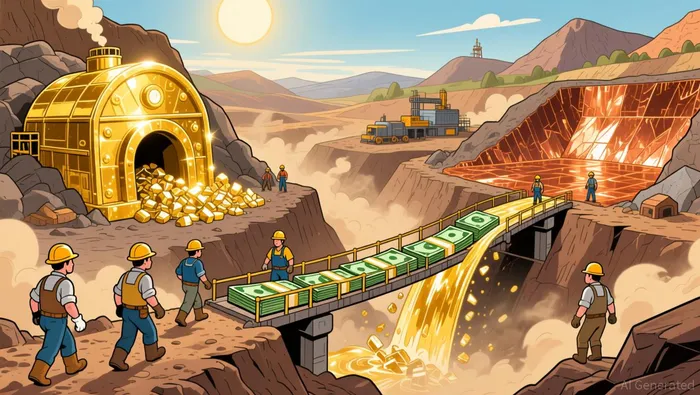
Financial Health and the Price-Production Nexus
The company's ability to fund its ambitious growth internally is now a direct function of the commodity balance. McEwen's strategy of using cash flow from its existing gold and silver operations to finance the development of its copper project is a classic capital allocation play. The Q1 profitability proves the engine is running, but the real test is whether it can generate enough fuel to cover both operational costs and the substantial capital needs of the Los Azules project. The company has already raised over $300 million equity into McEwen Copper since 2022, a significant sum that must be replenished through operating cash flow if future equity raises become difficult.
This setup makes the company acutely sensitive to commodity price movements and production trends. Any sustained weakness in gold or silver prices would directly pressure the cash flow available for the copper subsidiary. Similarly, production issues at key assets like the Black Fox Complex or the Gold Bar mine would reduce the revenue stream needed to fund growth. The pivot to fund higher-return projects, as noted in the evidence, is a logical move for capital efficiency, but it concentrates risk on the successful execution of the copper development timeline. The company's investments in other ventures, like its stake in Goliath Resources, represent a diversification strategy but also tie up capital that could otherwise flow to the core growth project.
The bottom line is a balance sheet that is working hard to support a dual mandate. The current commodity balance, as evidenced by the profitable Q1, supports the strategy. However, the path to doubling production by 2030 relies on maintaining that balance under pressure. The company must navigate the volatility of precious metals prices while advancing a high-cost copper project, all while managing its debt profile. For now, the cash flow from operations is sufficient to cover the immediate capital drain. The sustainability of that support, and the company's financial health, will be determined by how well it can manage the price-production nexus over the coming years.
Catalysts and Risks: The Coming Commodity Test
The near-term test for McEwen's Q1 turnaround is now in motion. The company will host its Q1 2026 conference call on May 7, 2026, where management will discuss results and project developments. This event is the primary catalyst, offering a direct line to details on production guidance, cost trends, and the timeline for its major copper project. Investors will be listening for any shifts in the operational narrative that could confirm or challenge the sustainability of the reported profitability.
The key risks that will determine whether this is a lasting inflection point are multifaceted. First is the inherent volatility of the precious metals market. Gold and silver prices are subject to swings driven by macroeconomic forces, central bank policy, and geopolitical events. Any sustained weakness would directly pressure the cash flow from the core mines, which is essential for funding the copper development. Second is the execution risk and potential for cost overruns on the Los Azules copper project. The project has advanced to feasibility and is targeting financing, but moving from study to construction is fraught with delays and budget challenges common in large-scale mining. The company's strategy of using existing gold and silver cash flow to fund this high-cost venture concentrates its financial risk on a single, future asset.
A third, often overlooked, pressure point is rising interest expense. As the company funds its growth internally, it may still carry debt or face higher borrowing costs. Increased interest payments would directly squeeze the operating margins that the Q1 results demonstrated were achievable. This is a classic balance sheet pressure that can erode profitability even if production and commodity prices hold steady.
The ultimate test of McEwen's strategy, however, is its long-term production doubling target by 2030. This ambitious goal requires not just a one-time profitable quarter, but a sustained period of operational excellence and successful project execution. It means maintaining robust output from its existing mines while navigating the complex development of Los Azules. The company's ability to deliver on this target will be the clearest signal of whether its current commodity balance is strong enough to support its growth ambitions without overextending its financial resources. For now, the engine is running. The coming months will show if it can keep the tank full for the long haul.