

The title is deliberate. Medicare Fraud Prevention Week runs June 1 through June 5 - 6/5 is when most Americans become eligible for Medicare. The campaign involves brochures, webinars, and local events run by CMS and Medicare Advantage organizations. It matters.
But it is not the story you should be thinking about.
The story is this: healthcare fraud is a compounding, structural problem that is getting worse at the same time the government is finally building the technology infrastructure to stop it. That infrastructure is mission-critical. It has pricing power. And the largest public company in the space is currently trading as if the problem itself might go away.
That is where the opportunity starts.
The numbers the awareness week doesn't want you to forget
Healthcare fraud costs the United States approximately $68 billion annually. That is the National Health Care Anti-Fraud Association's estimate, and it is likely conservative. The Medicare Part C improper payment rate - claims paid that shouldn't have been, whether through error or intentional fraud - rose to 6.09% in fiscal year 2025, representing $23.67 billion in improper payments, up from 5.61% and $19.07 billion the prior year.
The improper payment rate is climbing. The fraud problem is growing.
Meanwhile, CMS itself reports a record $41.9 billion in Medicare program integrity savings in FY2025, up 59% from $26.3 billion. CMS's COO Kim Brandt said the agency saved $2 billion using artificial intelligence to combat fraud and prevent contract duplication. CMS is now using AI "every day" to flag suspicious claims and recruiting 1,200 new hires - engineers, cybersecurity specialists, data scientists - to expand that capability.
I believe what's happening here is a structural arms race. As healthcare spending grows and more of it flows through digital claims processing, fraud evolves faster than manual detection can handle. The response - AI-driven claims intelligence - is becoming mission-critical infrastructure that neither the government nor private insurers can afford to lose.
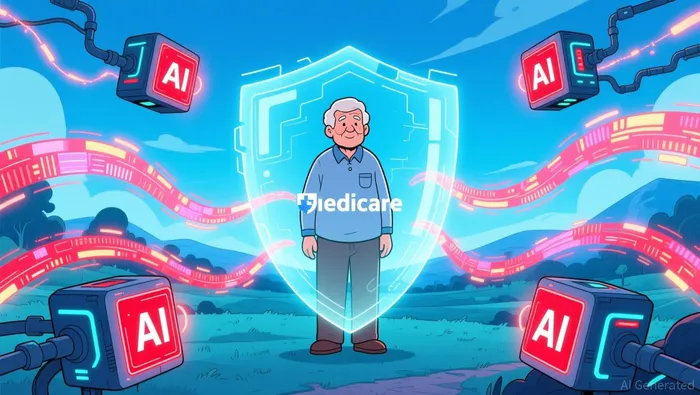
This matters because mission-critical infrastructure with pricing power is exactly what the portfolio needs. And it is being overlooked.
Why this gets worse before anyone builds enough of it
Medicare's population is growing from roughly 54 million beneficiaries today to over 80 million by 2030 as the baby boomer cohort fully ages into the program. CMS projects Medicare spending growth will average 9.7% per year until 2030. More beneficiaries means more claims means more opportunities for fraud - and more demand for the technology that detects it.
The demographic driver is secular. It does not reverse. It is not cyclical. It is a 20-year ramp that most investors are not pricing into healthcare technology businesses because they are focused on near-term margin pressure or regulatory headlines.
But the equity yield curve approach says the near-term noise is exactly when you start building the position. You buy the business that becomes indispensable when the sector is in pain, not when everyone has already noticed the tailwind.
Optum Insight: the public market's claims intelligence play
UnitedHealth Group's Optum Insight segment generates $5.13 billion in annual revenue providing software, analytics, and platforms for clinical, administrative, and financial claims processing. It is one of the largest healthcare fraud detection and claims intelligence operations in the country. When CMS needs AI-driven fraud detection, when Medicare Advantage plans need to verify claims, when hospitals need to prevent payment errors - Optum Insight's platforms are the plumbing.
The segment is not immune to near-term headwinds. Optum Insight operating earnings declined 17.3% in the latest reported quarter while revenue grew just 2%. UnitedHealth's stock has fallen approximately 18-20% year-to-date in 2026, pressured by stagnant Medicare Advantage reimbursement rates, soaring medical expenses, and intense antitrust scrutiny.
Here is the critical distinction. The near-term headwinds are real but they are cyclical and regulatory. The long-term driver - the need for claims intelligence as Medicare spending compounds toward 2030 - is structural and irreversible. The pricing power of fraud detection technology does not disappear because reimbursement rates are tight. If anything, tighter reimbursement makes the detection capability more valuable, not less.
The dividend case
UnitedHealth's dividend has grown from $1.45 per share in 2022 to $2.21 per share in 2025 - a compound annual growth rate of approximately 12%. The current yield sits between 2.4% and 2.9% depending on share price. The current dividend yield for UnitedHealth Group is 2.90%. That is the sweet spot of the equity yield curve: a moderate yield with strong growth. A 2.5% yield growing at 12% compounds into something substantial over a decade. In 20 years, even with no price appreciation, that becomes a 60% yield on cost.
The payout profile is supported. UnitedHealth's consolidated revenues were $447.6 billion in 2025, up 12% year-over-year. Earnings from operations were $19.0 billion. The balance sheet is investment-grade. The interest coverage is strong. This is not a company stretching to maintain its dividend.
From an income and risk/reward point of view, the appeal is clear: a growing payout in a business that becomes more mission-critical as the problem it solves gets worse. You are not betting on one policy outcome or one regulatory decision. You are positioning for the 20-year compounding of an aging population that cannot opt out of Medicare.
The risks - because there always are
I don't think the risks here are about the underlying need for fraud detection. They are about execution and valuation discipline.
UnitedHealth faces real antitrust scrutiny targeting its Medicare Advantage and Optum businesses. Regulatory pressure could reshape how the company operates, even if it cannot eliminate the need for its technology. Medicare Advantage reimbursement policy remains volatile - the January 2026 outlook was revised downward as the gap between stagnant rates and rising medical costs widened. Optum Insight's margin compression signals that the technology business is not immune to competitive or pricing pressure.
I expect these headwinds to create the exact kind of entry point the equity yield curve framework rewards. But they are real. This is not a position where you ignore the balance sheet and assume compounding solves everything. You need to monitor the regulatory trajectory and the segment-level margin trends.
This may not fit every investor. If you need guaranteed income with zero volatility, dividend growth stocks in a company facing regulatory scrutiny are not the answer. But for investors who understand that concentration in businesses with pricing power and durable tailwinds can compound purchasing power through cycles - this is the kind of setup that belongs in the income-growth sleeve.
The bigger picture
Medicare Fraud Prevention Week ends in five days. The awareness campaign will produce metrics on calls to hotlines and seminars held. Then the calendar resets.
The fraud problem does not reset. The demographic driver does not reset. The need for AI-driven claims intelligence does not reset.
What I believe is happening is that the market is reacting to cyclical regulatory pressure on UnitedHealth while ignoring the structural tailwind that makes its Optum Insight segment increasingly indispensable. The improper payment rate is rising. The Medicare population is growing. The government is doubling down on AI detection. And the largest public company in the space is trading as if the future is smaller than the present.
That contradiction is what creates the entry point. I don't need Medicare Advantage reimbursement to stabilize for this thesis to hold. From a risk/reward perspective, the case is that you are buying pricing power in mission-critical healthcare infrastructure at a discount - with a dividend that compounds faster than inflation - in a business that cannot opt out of the biggest demographic trend in American economic history.