

Summary
- Micron (MU) and SanDisk (SNDK) are among the most extended stocks in the market - Micron is up roughly 550% over the past year, SanDisk more than 4,000%.
- The consensus narrative, reinforced by an IDC report in early May declaring an "unprecedented inflection point", is that AI has structurally broken the memory market's boom-bust cycle.
- The data is more complicated: AI demand is real, but US$200b bet On AI mean supply will respond, and the cycle - not the thesis - will return.
- Neither stock pays a meaningful dividend. At current valuations, all investor return depends on price appreciation continuing, which is the single riskiest form of return.
- I rate both names as Holds. The thesis isn't broken, but the market has run so far ahead of reality that patience, not conviction, is the right posture.
I've been very surprised that the market has accepted the "AI broke the memory cycle" narrative without asking the one question that should stop every investor cold: when supply finally catches up, what happens to these valuations?
The story is seductive. IDC analysts declared in early May that the memory market is at an "unprecedented inflexion point, with demand materially outpacing supply". The implication is clear - the classic boom-bust memory cycle has been permanently rewritten by AI, and the two biggest beneficiaries are Micron and SanDisk. Both stocks have responded accordingly. Micron is trading around $745, up roughly 550% over the past year. SanDisk, which spun off from Western Digital in early 2025 and priced its IPO at $33, is now trading near $1,500 - a gain of more than 4,000%.
But here's what gets lost when the narrative takes over: memory is a manufacturing business, not a software business. No matter how strong demand is, if enough capacity comes online, prices fall. That's not a cyclical fear - it's the physics of supply and demand. And the data shows the supply side is already responding.
Let me decompose this into the structural pillars that matter.
1. The demand thesis is real - but so is the supply response
Micron's 2026 high-bandwidth memory (HBM) output is fully contracted. HBM is the specialized memory used in AI accelerators, and demand for it is the engine behind the memory rally. Micron's fiscal Q2 results showed $23.86B revenue and 75% margins. SanDisk's latest quarter delivered 78.4% and free cash flow at $2.955 billion. These are not numbers that suggest a bubble - they suggest a company catching a secular wave.
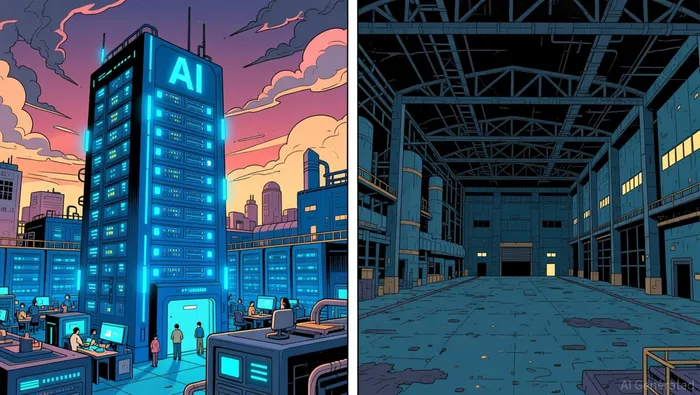
That being the case, the real question isn't whether demand is strong. It's how long supply stays constrained. Micron has committed about US$200b of new capacity. SK Hynix, Samsung, and every other player in this space are doing the same. The market is simultaneously celebrating the shortage and ordering the cure for it. When that capacity comes online - and it will, because capex commitments at this scale don't quietly disappear - pricing pressure returns. Not because the AI thesis was wrong, but because the market has front-run five years of earnings growth into two years of stock appreciation.
2. The dividend check fails - for both
I always check free cash flow and dividends first, because these are the metrics that survive narrative shifts. Micron's trailing-twelve-month free cash flow has improved dramatically, from deeply negative territory to roughly $4.652 billion. That's an enormous turnaround. But the company doesn't pay a meaningful dividend. SanDisk doesn't either - its trailing twelve-month dividend cash flow is effectively zero.
That matters because it means every dollar of investor return in both stocks depends entirely on the price going higher. There's no dividend floor, no yield cushion, no capital return commitment independent of the narrative. When the next memory downcycle hits - and it will, because the $200 billion in capex is already committed - shareholders have nothing but the hope that the next upcycle comes back. That's not investing; that's timing.
3. The valuation math assumes perfection
Consensus estimates put Micron's fiscal 2026 EPS around $58, with fiscal 2027 already expected to surpass $100. At $745, Micron trades at roughly 13x this year's earnings and 7.5x next year's. SanDisk has gone from $33 to $1,500 in roughly 15 months, a move that prices in flawless execution across every quarter for years to come.
These valuations aren't crazy if you believe earnings grow exactly as forecast. They're catastrophic if you believe the cycle returns even partially on schedule. Memory chips have a documented history of brutal downcycles - gross margins that collapse from 75% to single digits, quarters of negative free cash flow. Micron was burning $-6.117B in free cash flow as recently as fiscal 2023. The market has written that off as a thing of the past. In my opinion, that's the false narrative doing its most dangerous work: convincing investors that history has been rewritten when what's actually changed is the timeline.
The counterargument, and why it doesn't change my view
The strongest case for both stocks is straightforward: AI demand growth is unlike anything the memory industry has seen, and this time the capex is locked into multi-year AI infrastructure contracts, not speculative PC and smartphone cycles. There's merit here. The structural AI buildout is real, and the memory shortage has been more persistent than the last several cycles.
But the market has priced this as permanent, not extended. There's a difference. I believe the AI demand inflection is genuine - the "semiconductors are cyclical" dismissal is lazy when applied to AI infrastructure. But the market's conclusion that these stocks can sustain current momentum is where the narrative outruns the data. The $200 billion in capex is the structural counterweight, and it's already underway.
That being the case, here's my call
I rate both Micron and SanDisk as Holds. The AI-driven memory demand story is real, and both companies are structurally positioned to benefit from years of AI infrastructure buildout. But at current valuations, with no dividend cushion and supply response already baked into $200 billion in capex commitments, the risk-reward has inverted. These stocks don't need to be sold - they need to be held, monitored, and only added to if the cycle delivers a meaningful pullback. The thesis isn't broken. The price just assumed the thesis would never face a downquarter again.
For investors who entered early, the gains speak for themselves. For anyone looking at these names today, the question isn't whether AI is transforming memory. It's whether you're comfortable owning a manufacturing business with no dividend yield at a valuation that prices in perfection through the next supply glut.
In my opinion, the answer for most investors should be patience.